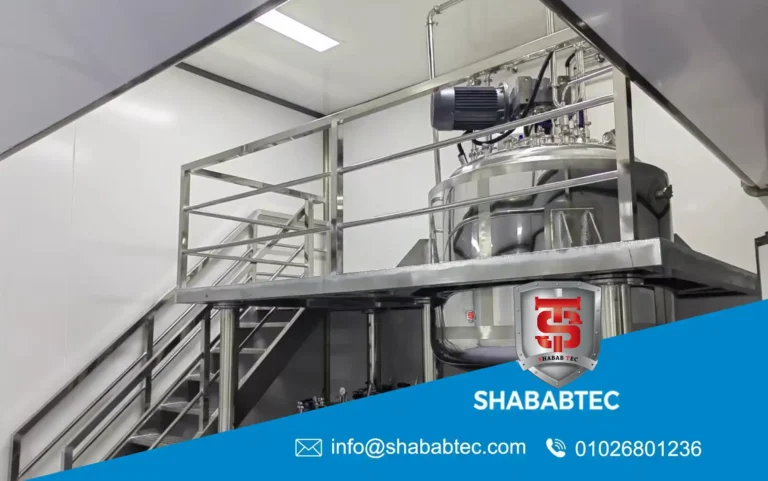
Cooling Mixing Tank Systems by ShababTec
Cooling Mixing Tank
In modern manufacturing industries, temperature control is not just an option — it’s a critical factor for product quality and production efficiency. A cooling mixing tank plays a key role in ensuring consistent temperature during mixing processes, especially in industries like cosmetics, food, pharmaceuticals, and chemicals.
If you are searching for a reliable cooling tank industrial solution, understanding how these systems work and choosing the right design can significantly impact your production line. In this guide, we’ll break down everything you need to know about mixing tank cooling system technology and how ShababTec delivers high-performance solutions tailored for the Egyptian market.
See Also: Industrial Stainless Steel Mixing Tanks – Complete Guide
What is a Cooling Mixing Tank?
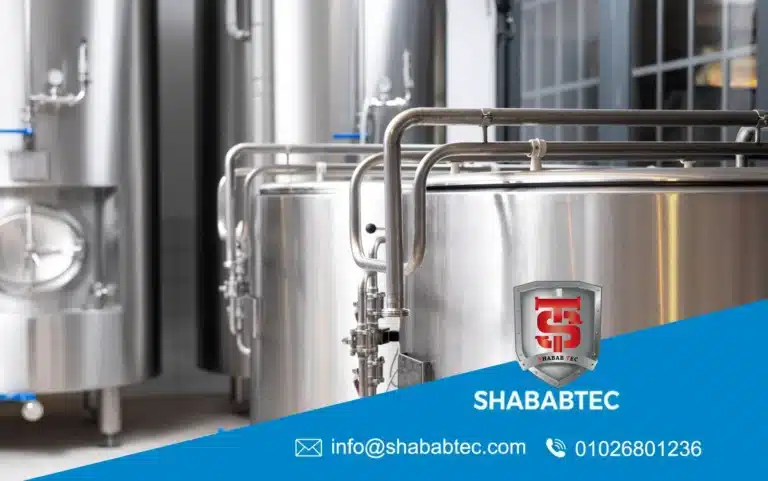
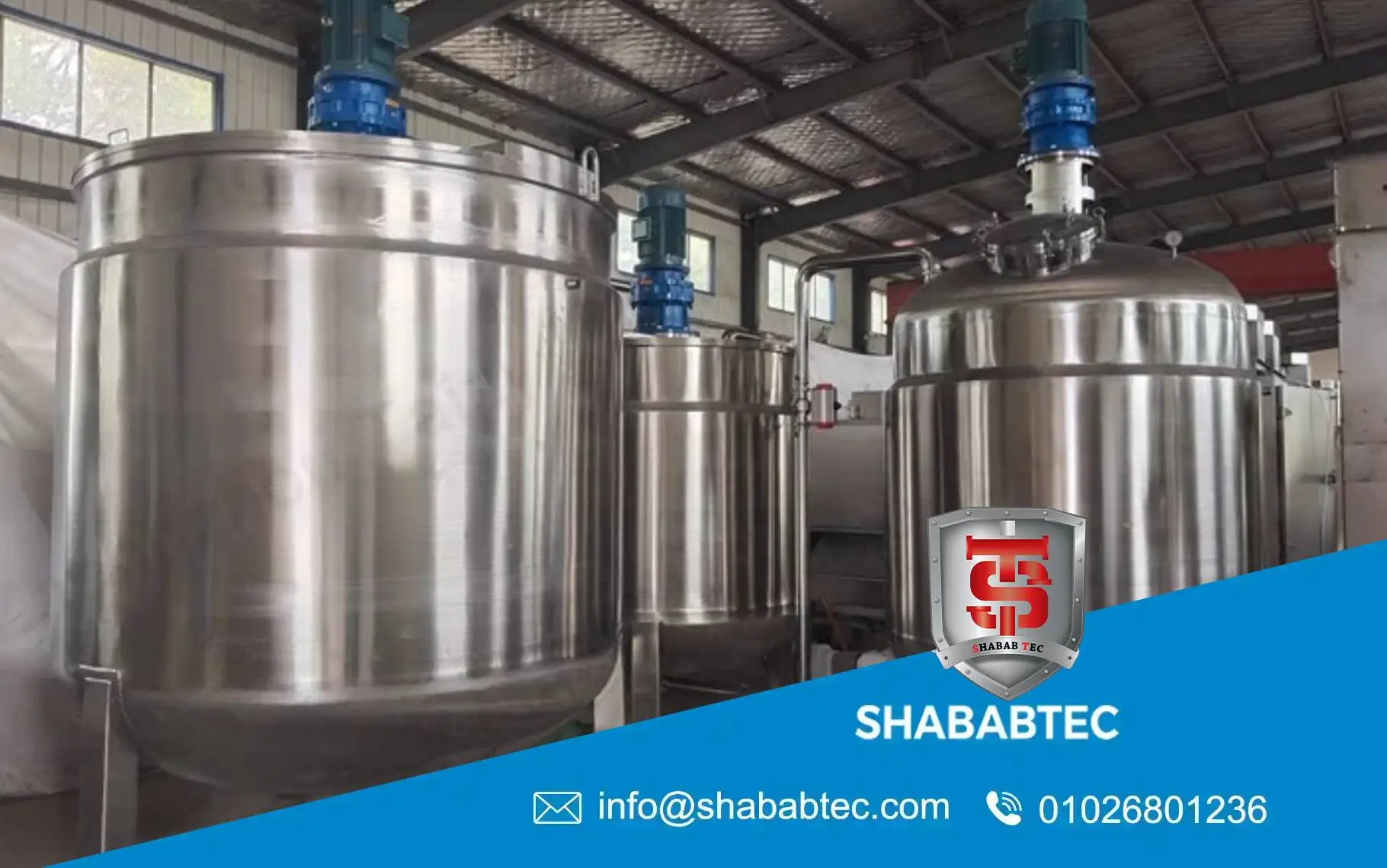
A cooling mixing tank is an industrial vessel designed to mix materials while controlling temperature through an integrated cooling system. This type of tank is commonly used when heat is generated during mixing or when materials must be cooled to maintain their properties.
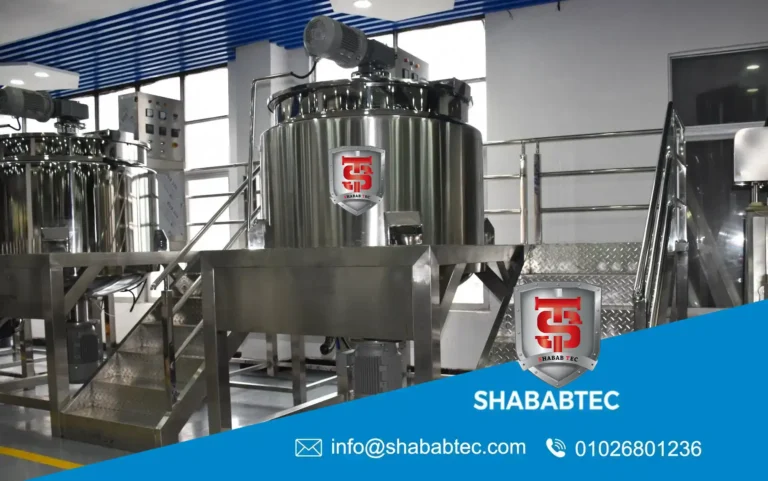
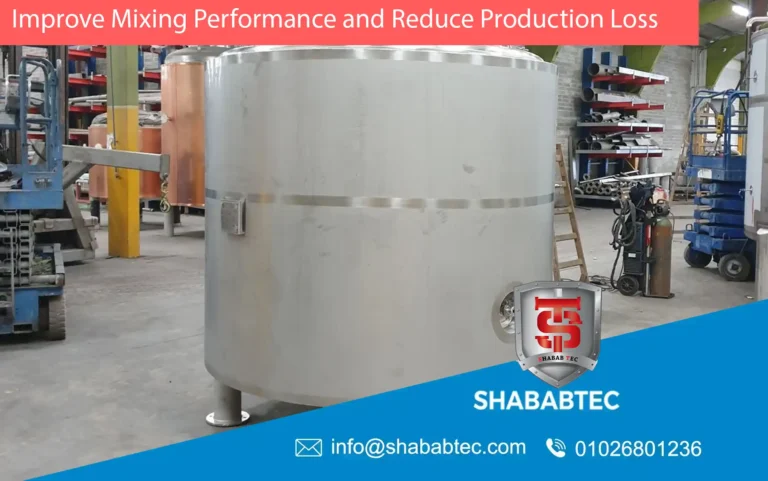
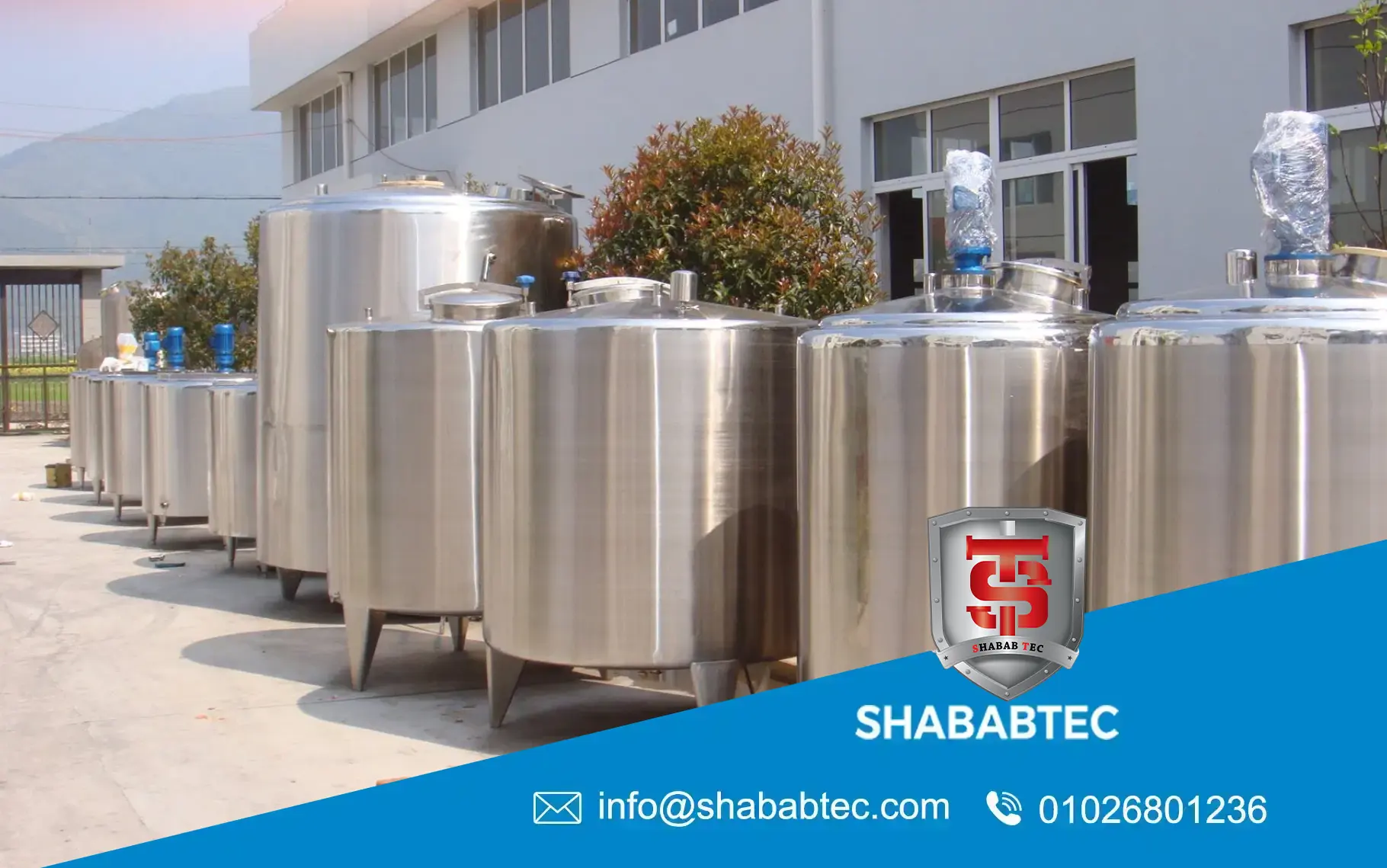
These tanks are typically made from stainless steel and equipped with agitators, cooling jackets, or coils that allow precise temperature regulation during processing.
Why Cooling is Important in Mixing Processes
Many industrial processes generate heat due to friction, chemical reactions, or external heating. Without proper cooling, this can lead to:
- Product degradation
- Loss of viscosity control
- Reduced product quality
- Safety risks in chemical reactions
A well-designed industrial cooling tank ensures stable processing conditions, which is essential for consistent results.
See also: How Stainless Steel Mixing Tanks Improve Production Efficiency
Key Components of a Mixing Tank Cooling System
A high-quality mixing tank cooling system consists of several essential components working together:
1. Tank Body
The main vessel is usually made from high-grade stainless steel such as 304 or 316L, ensuring durability and corrosion resistance. :contentReference[oaicite:0]{index=0}
2. Cooling Jacket or Coil
This is the core of the cooling system. It allows chilled water or another coolant to circulate around or inside the tank, removing excess heat efficiently.
3. Agitator System
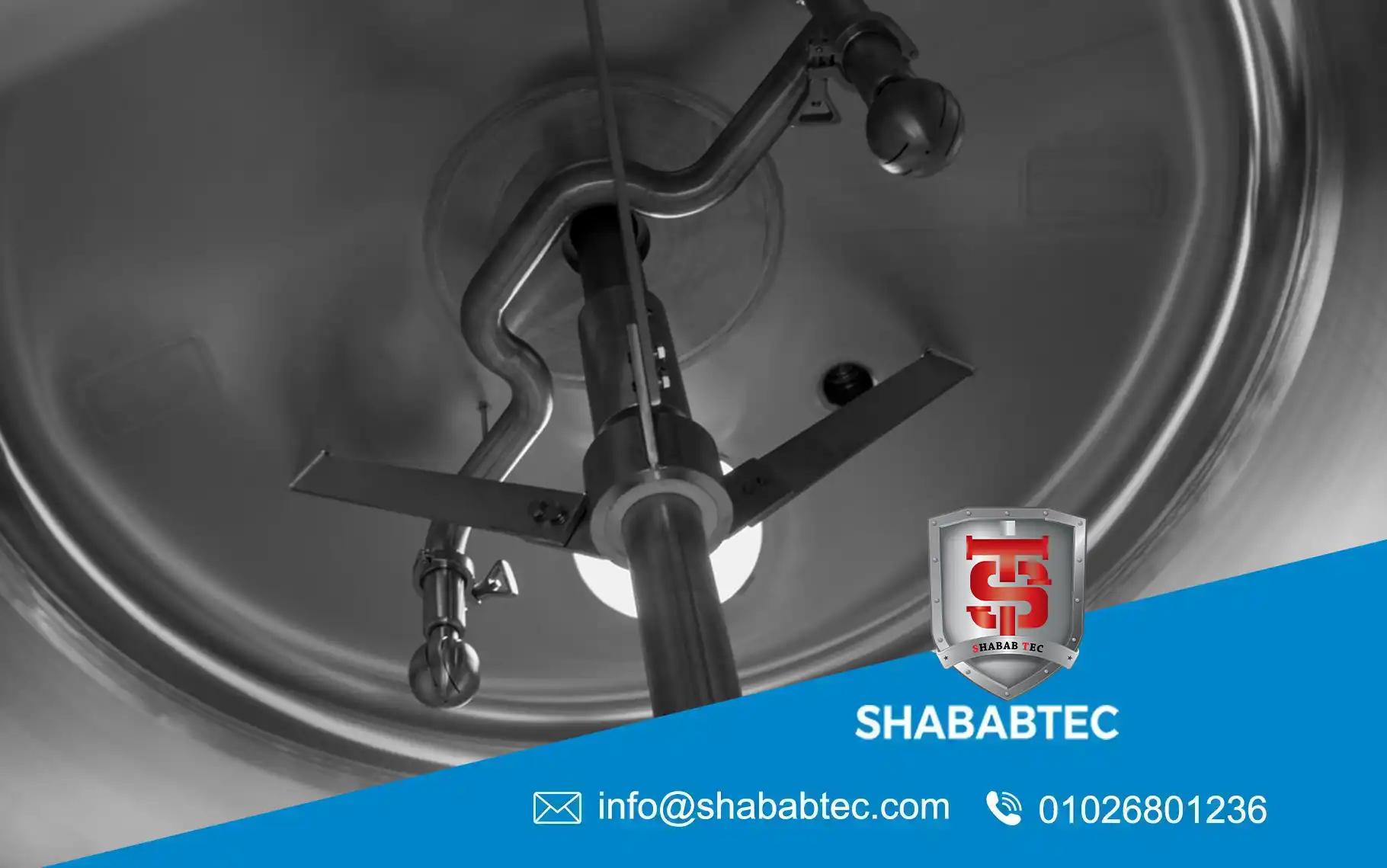
The agitator ensures uniform mixing and even temperature distribution throughout the material.
4. Temperature Control System
Sensors and control panels help monitor and regulate temperature precisely.
5. Sealing and Safety Features
Modern tanks include safety valves, pressure gauges, and sealing systems to ensure safe operation. :contentReference[oaicite:1]{index=1}
Applications of Cooling Mixing Tanks
A stainless steel cooling tank is widely used across multiple industries due to its versatility:
Cosmetics Industry
- Skin creams
- Lotions
- Shampoos
- Hair gels
Food Industry
- Sauces
- Chocolate
- Jam
Pharmaceutical Industry
- Syrups
- Ointments
- Liquid medicines
Chemical Industry
- Detergents
- Paints
- Adhesives
These applications highlight why investing in a reliable process cooling tank is essential for maintaining product quality.
Types of Industrial Cooling Tanks
Depending on your production needs, there are several types of cooling tank industrial systems:
Jacketed Cooling Tanks
These tanks use an external jacket where coolant flows around the vessel.
Coil Cooling Tanks
Internal coils allow direct heat exchange with the product.
Vacuum Cooling Mixing Tanks
These combine cooling with vacuum systems for faster processing and better product consistency.
Multi-Function Tanks
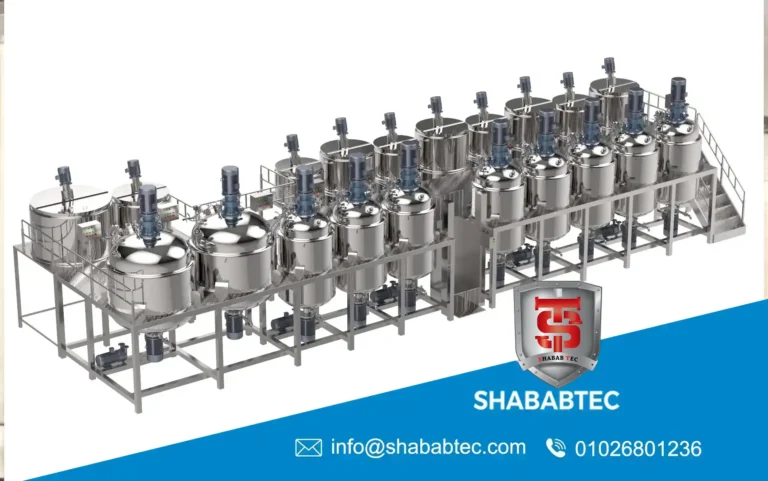
Advanced systems integrate mixing, heating, cooling, and homogenizing in one unit, reducing production time. :contentReference[oaicite:2]{index=2}
Advantages of Stainless Steel Cooling Tanks
Choosing a stainless steel cooling tank offers several benefits:
- High corrosion resistance
- Easy cleaning and maintenance
- Long service life
- Hygienic surface for food and pharma use
- Strong structural durability
These advantages make stainless steel the preferred material for industrial applications.
How to Choose the Right Cooling Mixing Tank
Selecting the right cooling mixing tank depends on several factors:
1. Product Type
Viscosity and sensitivity to temperature determine the tank design.
2. Capacity Requirements
Choose tank size based on your production volume.
3. Cooling Efficiency
Evaluate whether you need a jacket or coil system.
4. Material Quality
Stainless steel 316L is ideal for high-purity applications.
5. Automation Level
Modern systems offer automated control for better efficiency.
Why Choose ShababTec for Industrial Cooling Tanks?
ShababTec stands out as a trusted provider of industrial cooling tank solutions in Egypt, offering:
- High-quality stainless steel construction
- Custom-designed tanks for different industries
- Advanced mixing and cooling integration
- Durable and cost-effective equipment
- Local expertise with international standards
The company designs tanks with optimized structure, efficient mixing systems, and optional heating and cooling features to meet diverse production needs. :contentReference[oaicite:3]{index=3}
Mid-Article CTA
If you’re planning to upgrade your production line, now is the right time to invest in a high-performance mixing tank cooling system. Contact ShababTec today to get a customized solution that fits your exact requirements.
Maintenance Tips for Cooling Mixing Tanks
Proper maintenance ensures long-term performance and efficiency:
- Regular cleaning to prevent contamination
- Inspect cooling system for leaks
- Check agitator and motor performance
- Monitor temperature sensors
- Ensure proper sealing
Routine maintenance reduces downtime and extends equipment lifespan.
Future Trends in Process Cooling Tanks
The future of process cooling tank systems is moving toward:
- Smart automation and IoT integration
- Energy-efficient cooling systems
- Compact multi-functional designs
- Improved hygiene standards
Manufacturers like ShababTec are already adopting these innovations to provide advanced solutions for modern industries.
Final Thoughts
A cooling mixing tank is a vital investment for any production facility that requires precise temperature control. Whether you need a cooling tank industrial system for food, cosmetics, or pharmaceuticals, choosing the right equipment can significantly improve product quality and operational efficiency.
With strong expertise and high-quality manufacturing, ShababTec delivers reliable industrial cooling tank solutions designed to meet real production challenges in Egypt and beyond.
Final CTA
Looking for a durable and efficient stainless steel cooling tank? Get in touch with ShababTec today and discover how the right process cooling tank can transform your production process.
FAQ – Cooling Mixing Tank
What is a cooling mixing tank used for?
It is used to mix materials while controlling temperature, commonly in food, cosmetics, pharmaceutical, and chemical industries.
What is the difference between a jacketed and coil cooling system?
A jacketed system cools the tank externally, while a coil system uses internal piping for direct heat exchange.
Why is stainless steel preferred for cooling tanks?
Because it is durable, corrosion-resistant, hygienic, and suitable for high-purity applications.
Can a cooling mixing tank also heat materials?
Yes, many systems are designed to both heat and cool materials depending on the process requirements.
How do I choose the right industrial cooling tank?
You should consider product type, capacity, cooling efficiency, material quality, and level of automation.
See Also: heating mixing tank | الصناعية mixer thick مواد