
Pharmaceutical Water Softener Systems for RO Pretreatment
Water-softening systems engineered around feed-water hardness, required flow, operating requirements and the downstream RO process.
ShababTec integrates water softening into pharmaceutical and industrial water-treatment projects where feed-water conditions require hardness reduction before downstream treatment.
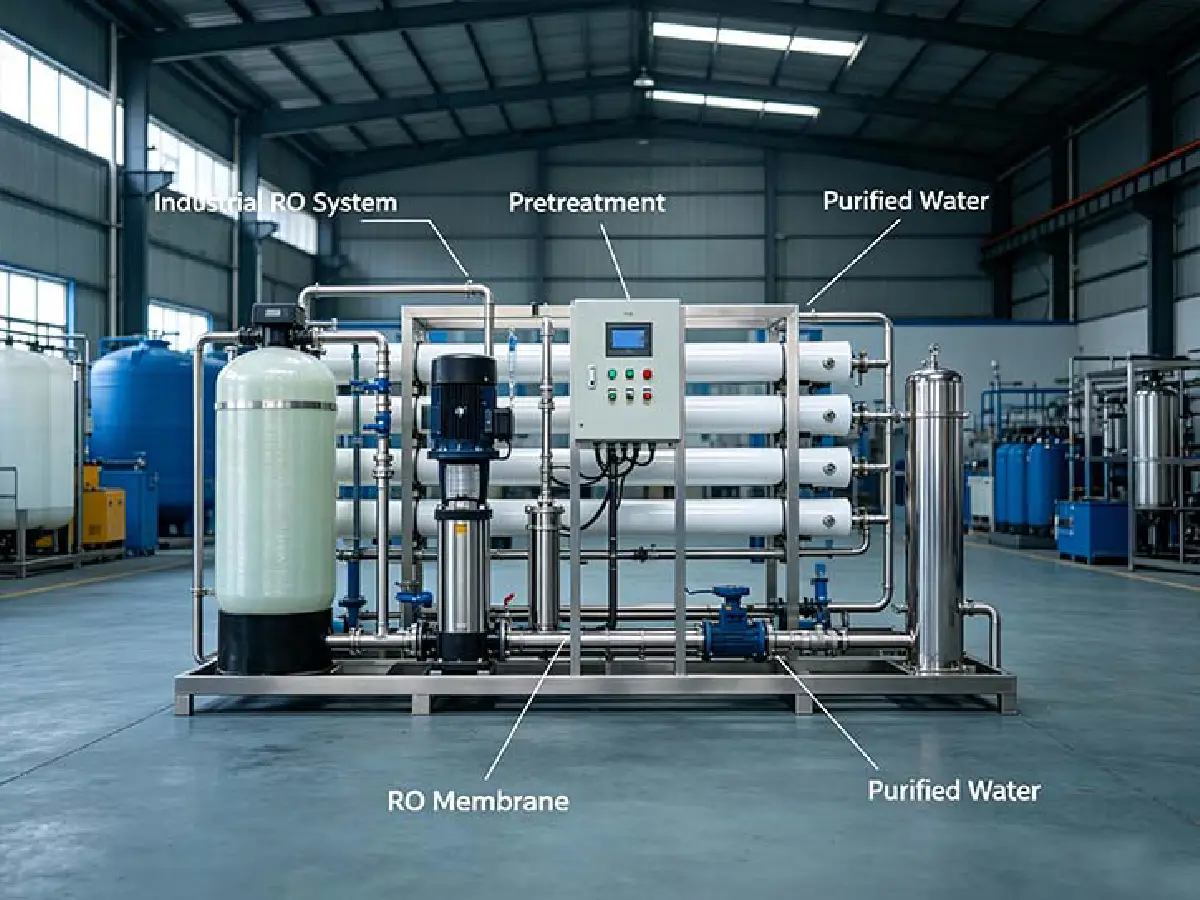
Why Hard Water Matters Before Reverse Osmosis
Calcium and magnesium hardness can contribute to scale formation and should be evaluated when designing RO pretreatment.
Under suitable concentration and water-chemistry conditions, hardness-related salts can deposit on process equipment and membrane surfaces.
Ion-exchange water softening is therefore commonly used where feed-water conditions require hardness reduction before the downstream RO stage.
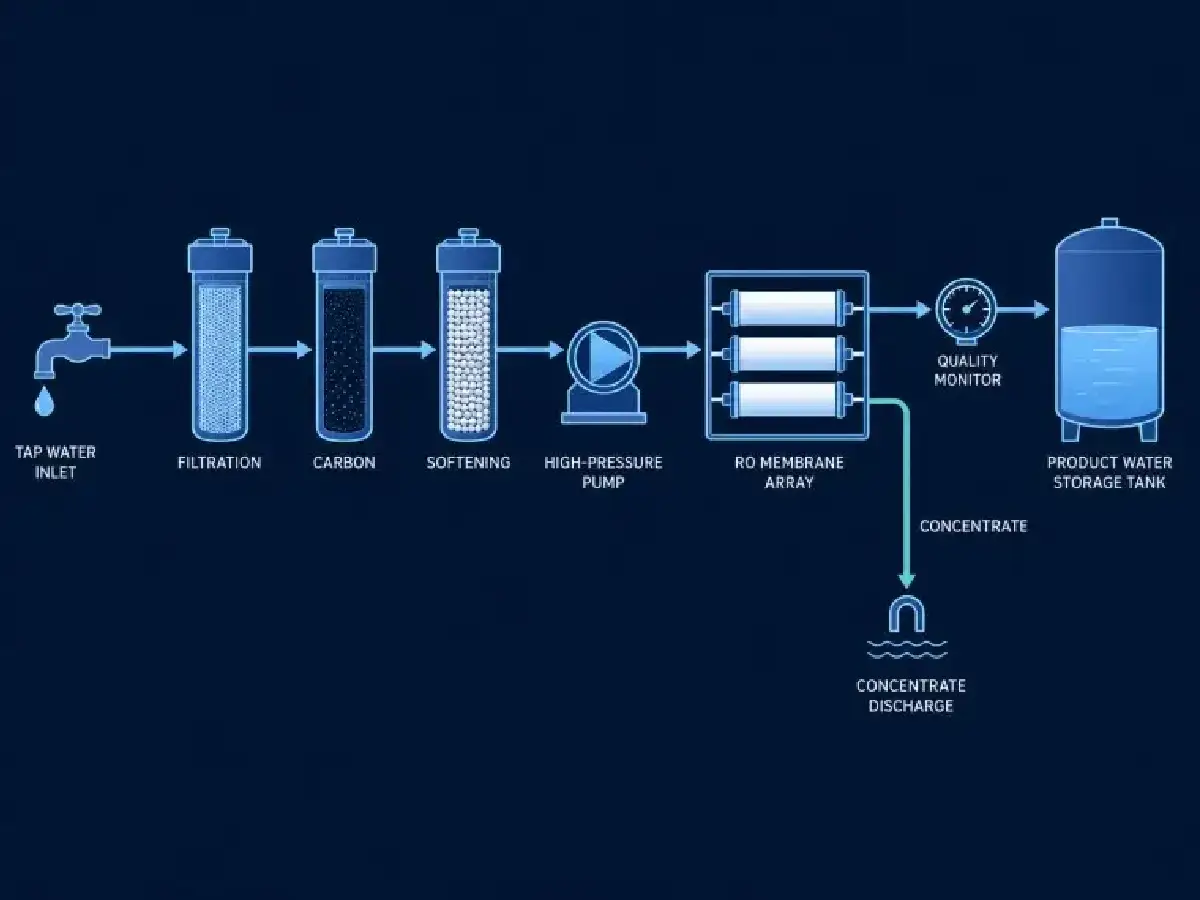
How Conventional Water Softening Works
Sodium-cycle ion exchange removes hardness by exchanging calcium and magnesium ions with sodium on the resin bed.
Hard Water Enters
Feed water containing calcium and magnesium enters the ion-exchange vessel.
Water Contacts Resin
The feed water passes through the active cation-exchange resin bed.
Hardness Is Exchanged
Calcium and magnesium are retained by the resin while sodium is exchanged into the water.
Softened Water Leaves
Reduced-hardness water continues to the next selected treatment stage.
Water Softening Is One Pretreatment Function
The softener should solve a hardness problem. Other feed-water conditions may require separate treatment stages.
What Softening Addresses
What Should Be Evaluated Separately
The complete pretreatment train should be selected from the feed-water analysis rather than assuming the softener solves every water-quality problem.
When Should a Water Softener Be Added Before RO?
Softening is selected when the actual water analysis and downstream treatment requirement justify hardness reduction.
Determine the calcium and magnesium hardness entering the system.
Review the wider water chemistry and downstream concentration conditions.
Define the feed-water conditions required by the selected RO design.
Consider other scale-control or pretreatment approaches in the system.
Production flow and operating hours affect resin loading and regeneration.
Determine whether the process can tolerate temporary softener downtime.
The requirement should follow the actual feed-water analysis, scaling-control strategy and downstream treatment design.
What Defines Water Softener Size & Operating Cycle?
Vessel diameter alone is not enough. The design must account for both instantaneous flow and the total hardness load between regenerations.
Feed-Water Hardness
Actual hardness concentration is one of the main sizing inputs.
Required Flow
State normal and peak operating water demand where available.
Daily Water Demand
Total consumption influences how quickly resin capacity is used.
Operating Hours
Continuous and intermittent plants provide different regeneration windows.
Target Outlet Condition
Define the hardness requirement required by the downstream treatment process.
Regeneration Strategy
Operating frequency and available downtime influence configuration.
Feed Pressure
Hydraulic conditions must suit the complete pretreatment train.
Drain Availability
Regeneration and rinse stages require an appropriate drain arrangement.
Brine Arrangement
Regeneration salt storage and operating access need to fit the facility.
Redundancy Requirement
Continuous softened-water demand can change the system architecture.
Service, Regeneration & Return to Operation
Ion-exchange resin has a finite operating capacity and must periodically be regenerated.
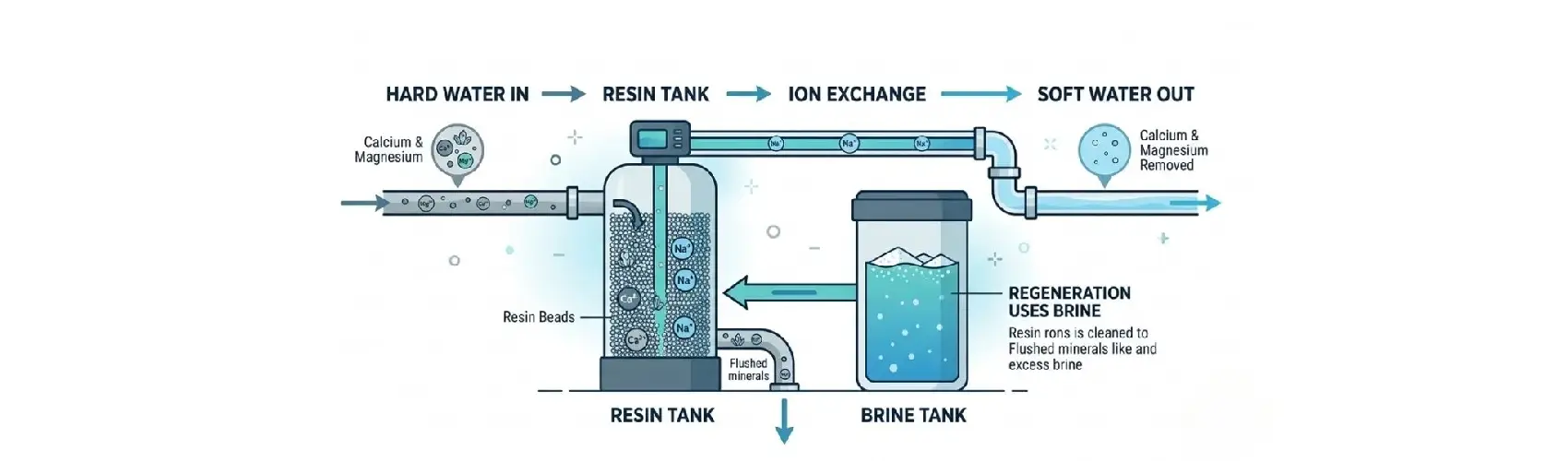
Service
Feed water passes through active resin and hardness is exchanged.
Capacity Use
Calcium and magnesium progressively occupy available resin capacity.
Regeneration
Brine is used to restore the resin toward the sodium form.
Rinse
The system is prepared for return to the normal service condition.
Return to Service
The regenerated softener resumes hardness-reduction duty.
Single or Duplex Softener?
The operating schedule and allowed regeneration downtime can influence whether one or more treatment vessels should be considered.
When Regeneration Downtime Is Acceptable
A single softener can be considered where regeneration can be scheduled during production stops or where temporary interruption of softened-water production is acceptable.
When Continuous Availability Is Required
Multi-vessel arrangements can be considered when softened-water production needs to continue while another unit regenerates or is temporarily unavailable.
The Softener Is One Stage of the Complete Water System
The softener should be coordinated with the treatment stages before and after it rather than selected as an isolated vessel.
Start with the actual source and water analysis.
Address feed-water conditions identified by analysis.
Reduce hardness where the treatment design requires it.
Continue to the membrane-treatment stage.
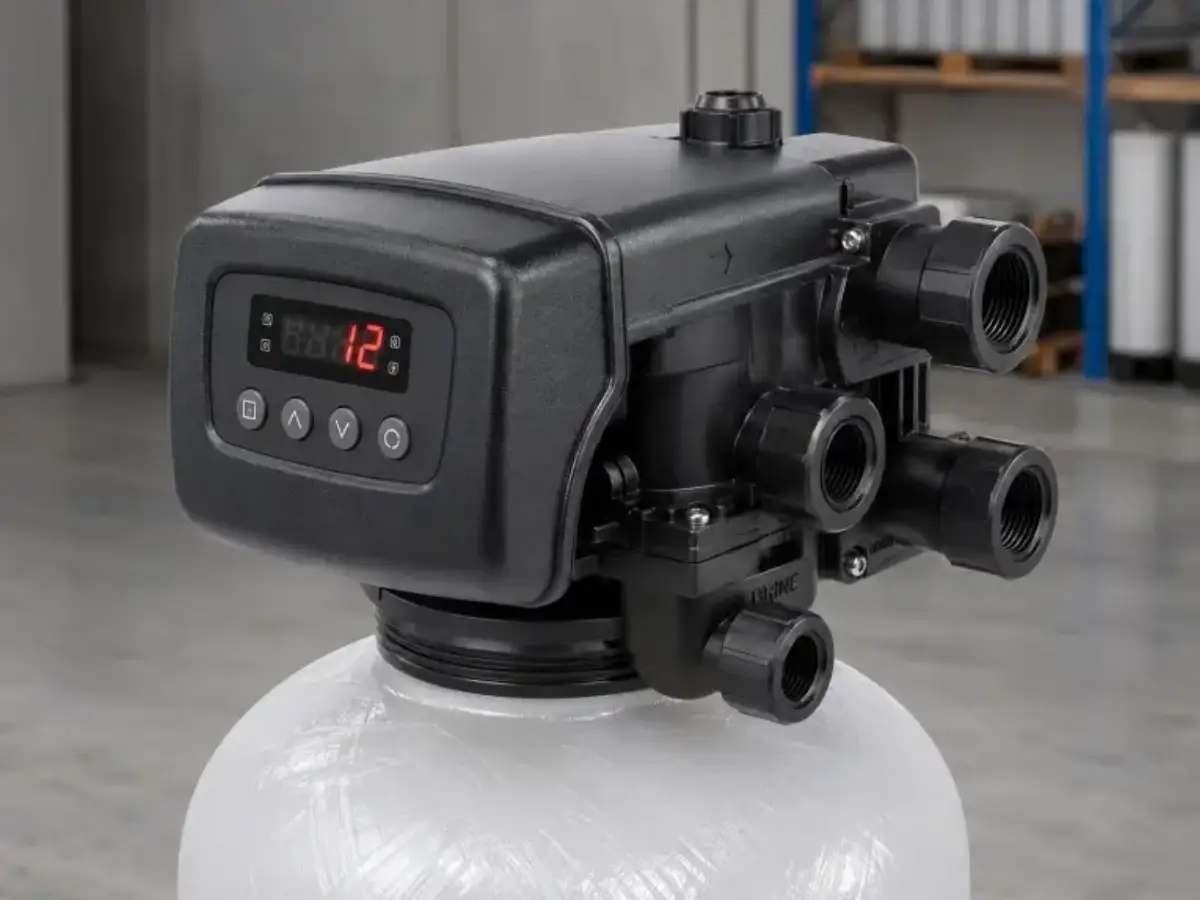
Regeneration Controls Are Model-Specific
Water softeners can use different control approaches depending on the equipment, regeneration strategy and required level of automation.
Control can potentially be based on operating time, treated-water volume, hardness-management strategy or integration with the wider water-treatment control system.
ShababTec's overall water-treatment platform supports Manual, Automatic, PLC and HMI control architectures, but the exact controls for an individual Soft Water System must be confirmed in its own project specification.
Plan Regeneration & Maintenance Before Installation
Provide practical storage and operating access for the selected regeneration arrangement.
Operators should be able to inspect and service the regeneration system.
Backwash and regeneration discharge need an appropriate drainage route.
Operating performance and resin condition should be monitored according to the selected equipment and maintenance plan.
Regeneration and service valves must remain accessible for inspection.
The facility should define how softened-water performance is checked against the downstream process requirement.
From Feed-Water Analysis to Commissioning
The softener can be coordinated with the complete water-treatment and RO project rather than installed as an isolated pretreatment component.
Requirement Study
Review feed-water analysis, hardness, water demand and downstream requirement.
Engineering Selection
Define treatment duty, regeneration concept and system interfaces.
System Preparation
Prepare the approved softening equipment and associated project components.
Installation
Coordinate water, drain, brine, electrical and downstream connections.
Testing & Commissioning
Check operation and integration with the selected pretreatment and RO scope.
After-Sales Support
Provide technical assistance and maintenance guidance after handover.
What to Send for a Water Softener Quotation
Water Analysis
Send the latest available feed-water analysis.
Total Hardness
Provide the measured hardness and reporting unit.
Required Flow
State normal and peak water demand where available.
Daily Demand
Provide expected total softened-water consumption.
Operating Hours
State operating schedule and available regeneration window.
Downstream Equipment
Identify the RO or treatment stage receiving the softened water.
Continuity Requirement
State whether water supply may stop during regeneration.
Available Utilities
Provide water pressure, drain, power and relevant site information.
Send the Hardness Data with Your RO Requirement
ShababTec can review the feed-water conditions and downstream water-treatment requirement before defining the softener configuration.
Pharmaceutical Water Softener FAQ
What does a pharmaceutical water softener do?
A conventional ion-exchange water softener reduces calcium and magnesium hardness by exchanging those ions with sodium on a cation-exchange resin. It can be used in pharmaceutical water pretreatment where the downstream system requires hardness reduction.
Why is a water softener used before RO?
Calcium and magnesium contribute to scale-forming conditions. Where feed-water analysis shows that hardness reduction is required, softening can be used as part of the pretreatment strategy to protect downstream RO operation.
Does every RO system require a water softener?
No. Pretreatment should be selected from the actual feed-water analysis, scaling potential, RO design and overall treatment strategy. A softener should not be added automatically to every RO system.
How does ion-exchange water softening work?
Water passes through cation-exchange resin in the sodium form. Calcium and magnesium are retained on the resin and sodium is released into the treated water. After the available resin capacity is used, the resin is regenerated.
How is water-softener resin regenerated?
In conventional sodium-cycle softening, a sodium-chloride brine is used to displace accumulated calcium and magnesium from the resin and restore its sodium form. The exact regeneration sequence and chemical requirement are equipment-specific.
How is a pharmaceutical water softener sized?
Important inputs include feed-water hardness, required flow, daily water demand, operating hours, required softened-water condition, regeneration strategy, available pressure, drain arrangement and required operating continuity.
Should I use a single or duplex water softener?
A single system may be suitable where regeneration downtime is acceptable. A duplex or duty-standby approach may be considered where softened-water availability must continue during regeneration. The actual ShababTec configuration must be confirmed during engineering.
Does a water softener remove all water contaminants?
No. Softening is primarily intended to reduce hardness. Other feed-water characteristics may require separate pretreatment or downstream treatment stages according to the complete water analysis.
What outlet hardness does ShababTec guarantee?
No universal outlet-hardness value is published on this page. The required performance must be defined and confirmed in the approved technical specification for the selected system.
What information should I send for a water softener quotation?
Send the feed-water analysis, total hardness, required flow, daily water demand, operating hours, downstream RO or water-treatment requirement, continuity requirement and available site utilities.
Size the Softener Around the Water & RO Requirement
Share your water analysis, hardness, required flow, daily demand, operating schedule and downstream RO requirement. ShababTec can review the pretreatment requirement before the final Soft Water System configuration is defined.