High Viscosity Mixer Best Mixer Choices
High Viscosity Mixer Best Mixer Choices for Thick Materials and Heavy Production
Mixing thick materials is one of the most common problems in industrial production. Products such as creams, ointments, gels, pastes, adhesives, chocolate, jam, heavy sauces, coatings, and semi-solid formulas do not move like water. They need stronger torque, suitable blade design, reliable motor power, and proper tank structure. This is why choosing the right high viscosity mixer is important for stable production and consistent product quality.
Many factories ask about the best mixer for viscous materials after facing real production problems: weak mixing, material sticking to tank walls, motor overheating, slow discharge, air bubbles, uneven texture, or product separation. These problems usually happen when a normal liquid mixer is used for thick products.
A proper high viscosity mixer should be selected according to product thickness, batch capacity, required texture, heating or cooling needs, discharge method, and whether the product needs dispersion, emulsification, or homogenizing. This guide explains the difference between high shear mixer, emulsifying mixer, homogenizer mixer, and other mixer types used for thick industrial materials. It also helps buyers understand how to choose الصناعية mixer thick مواد for real factory conditions.
See Also: Industrial Stainless Steel Mixing Tanks – Complete Guide
What is a High Viscosity Mixer?
A high viscosity mixer is an industrial mixing system designed to handle thick, sticky, heavy, or semi-solid products that cannot be mixed properly with a simple liquid agitator. It provides stronger product movement and higher torque to move materials from the tank wall, bottom, and center.
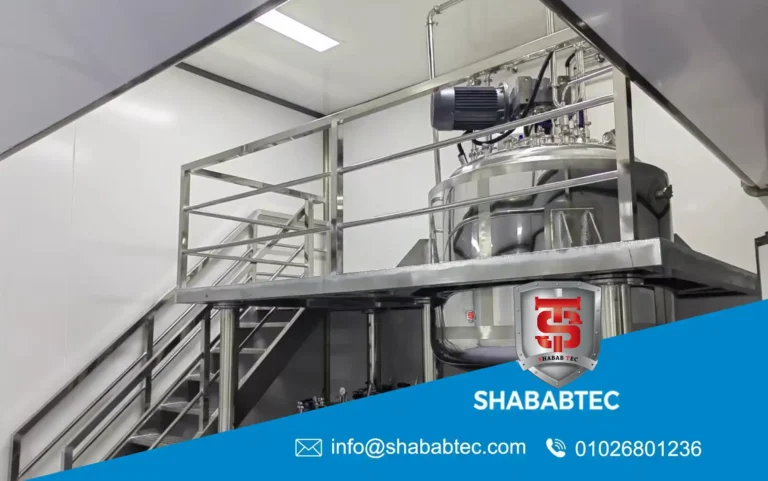
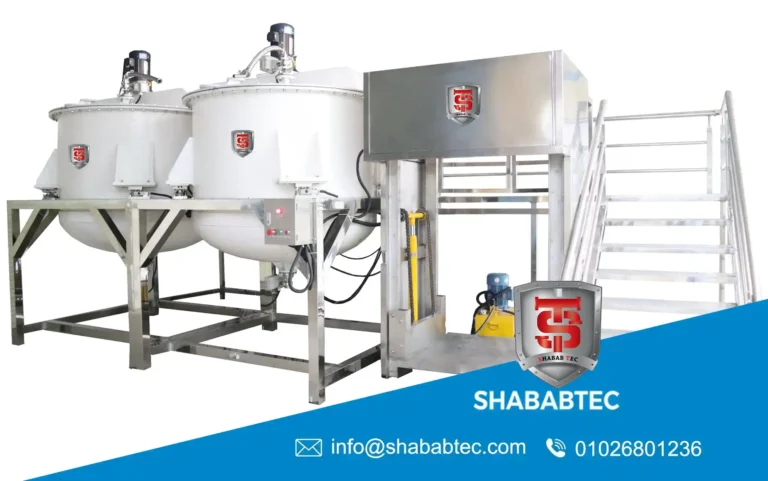
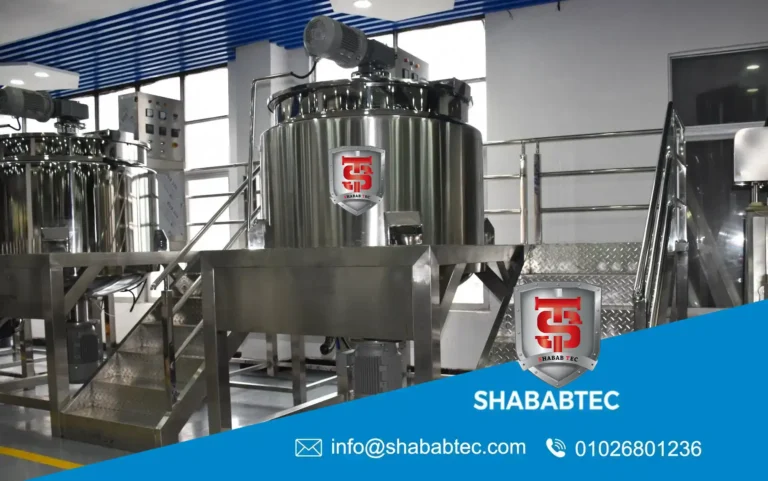
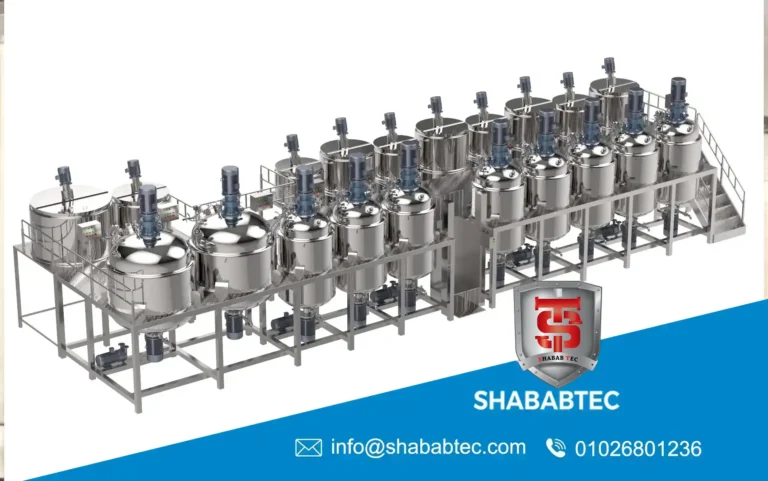
This type of mixer is used in many industries, including pharmaceuticals, cosmetics, food, chemicals, adhesives, coatings, detergents, and semi-solid production. It can be installed inside a mixing tank, vacuum emulsifying tank, jacketed process tank, or heavy-duty industrial mixer system.
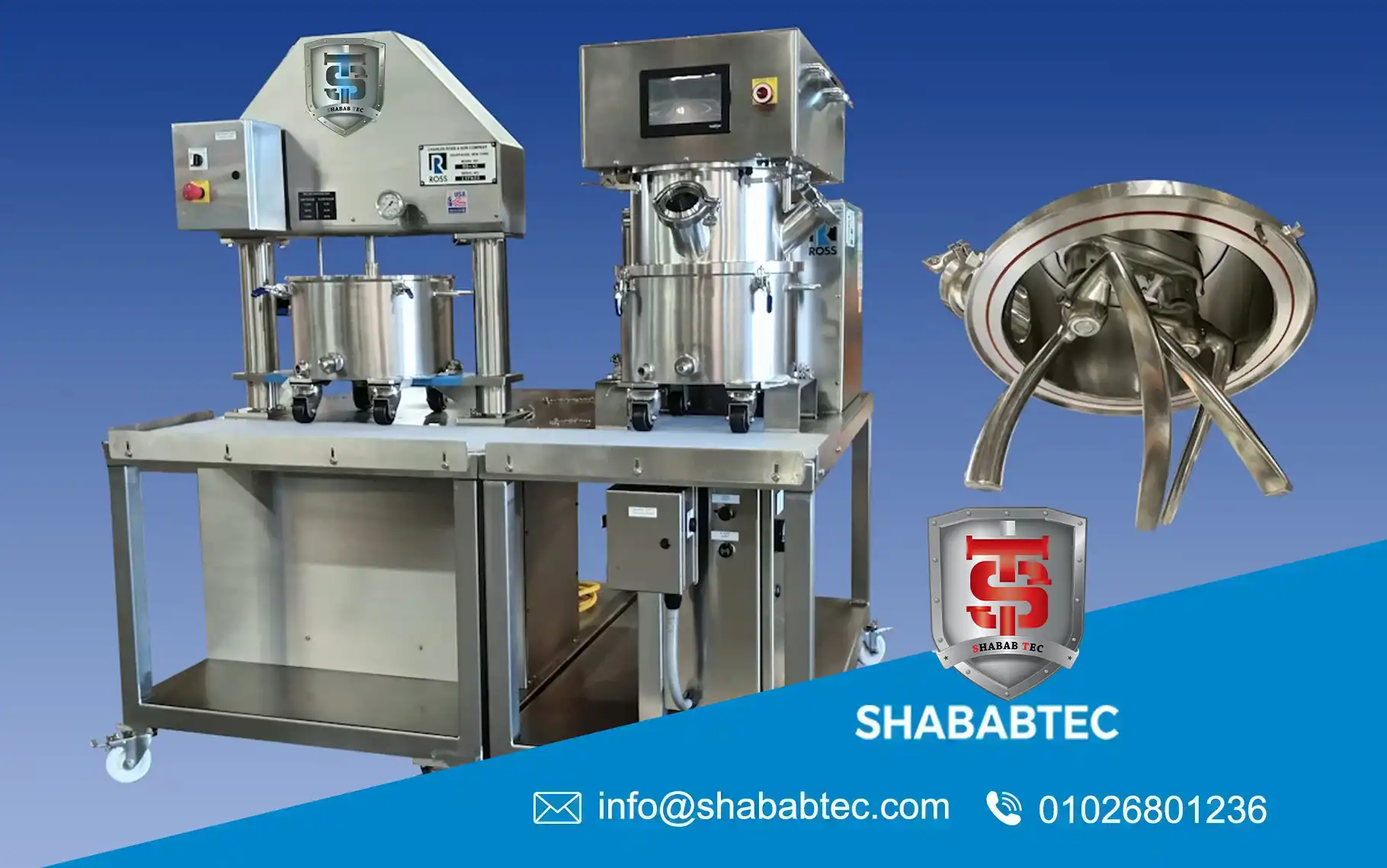
A high viscosity mixer may include anchor blades, scraper blades, paddle blades, planetary movement, high-shear head, homogenizer, or a combination of different mixing systems depending on the product.
Why Normal Mixers Fail with Viscous Materials
Normal liquid mixers are usually designed for products that flow easily. When the product becomes thick, sticky, or heavy, the mixer may not create enough movement inside the tank. This leads to dead zones, poor ingredient distribution, and motor overload.
Factories often face these problems when using the wrong mixer for viscous materials:
- Product remains unmixed near the tank wall
- Material collects at the bottom
- Motor overheats during operation
- Mixing takes too long
- Product texture becomes uneven
- Powders form lumps inside the mixture
- Air bubbles become trapped in the product
- Discharge becomes slow and difficult
- Cleaning takes too much time after production
This is why choosing the best mixer for viscous materials should always start with the real product behavior, not only the tank size.
Common Products That Need a High Viscosity Mixer
Pharmaceutical Ointments and Gels
Ointments, gels, pastes, and semi-solid pharmaceutical products need controlled mixing to distribute active ingredients evenly. A high viscosity mixer helps create smooth texture and reduce unmixed zones inside the batch.
Cosmetic Creams and Lotions
Cosmetic creams, body butters, lotions, gels, and emulsions may need an emulsifying mixer or homogenizer mixer to blend oil and water phases and create stable texture.
Adhesives and Glue
Adhesives are often sticky and difficult to move. They may need anchor mixing, scraper movement, and strong torque. A simple mixer may fail quickly with adhesive products.
Chocolate and Food Pastes
Chocolate spreads, fruit pastes, jam, thick sauces, and bakery fillings need controlled heating and strong mixing. A suitable mixer prevents burning, improves texture, and supports smooth discharge.
Paints and Coatings
Thick coatings and pigment-loaded products may need a high shear mixer to disperse powders and pigments properly into the liquid base.
Detergent Gels and Thick Cleaning Products
Some detergent formulas become thick after adding thickeners or salts. The mixer must handle viscosity changes without creating too much foam.
Best Mixer for Viscous Materials Based on Product Type
Anchor Mixer
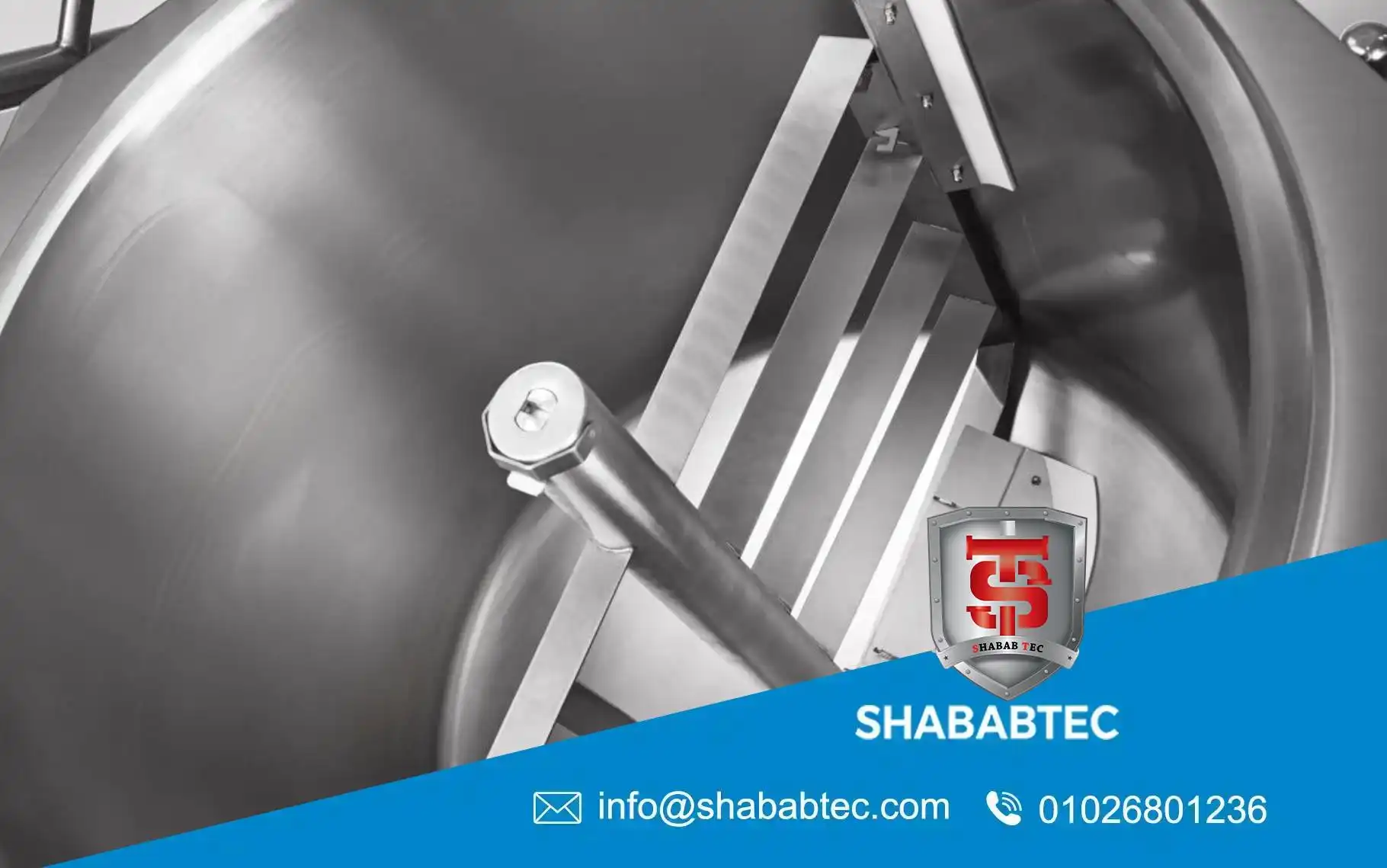
An anchor mixer is one of the most common choices for thick products. It moves close to the tank wall and helps keep viscous materials moving. It is suitable for creams, gels, sauces, adhesives, ointments, and semi-solid products.
When combined with scrapers, an anchor mixer becomes more useful for products that stick to the wall during heating or cooling.
Scraper Mixer
A scraper mixer removes material from the inner tank wall and returns it to the mixing area. This is important for thick, sticky, and heated products. It helps improve heat transfer, reduce burning, and lower product waste.
Scraper mixers are useful in chocolate, jam, cream, ointment, adhesive, gelatin, and paste production.
High Shear Mixer
A high shear mixer creates strong mixing force to disperse powders, break down particles, and improve product uniformity. It is useful when the product needs fine dispersion or fast ingredient breakdown.
It is commonly used in creams, emulsions, paints, coatings, gels, lotions, and some pharmaceutical products. However, it may not be enough alone for very thick products, so it is often combined with an anchor or scraper mixer.
Emulsifying Mixer
An emulsifying mixer is designed to combine oil and water phases into a stable emulsion. It is important in products such as creams, lotions, ointments, mayonnaise-like products, and cosmetic emulsions.
This mixer helps create smoother texture and reduce separation. It is often used with heating, cooling, and vacuum options.
Homogenizer Mixer
A homogenizer mixer is used to create a more uniform product by reducing particle or droplet size. It improves smoothness, stability, and consistency.
It is useful for pharmaceutical creams, cosmetic lotions, gels, emulsions, sauces, and products that need a fine and stable texture.
Planetary Mixer
A planetary mixer is used for very thick products where the mixing tool moves around the bowl or tank while rotating. It is common in pastes, dough-like materials, heavy creams, and extremely viscous products.
High Shear Mixer vs High Viscosity Mixer
A high shear mixer and a high viscosity mixer are not always the same thing. A high shear mixer focuses on dispersion, emulsification, and particle reduction. A high viscosity mixer focuses on moving thick materials inside the tank.
For example, a cream may need both. The anchor mixer moves the thick product around the tank, while the high shear mixer creates smooth emulsion and better texture. If the product is thick and only a high shear head is used, the mixer may create strong action in one area but fail to move the whole batch.
The best system for thick products often combines:
- Anchor or scraper mixing for full product movement
- High shear mixing for dispersion or emulsification
- Heating and cooling for viscosity control
- Vacuum when air bubbles must be reduced
Emulsifying Mixer for Thick Products
An emulsifying mixer is important when the product contains oil and water phases that must be blended into a stable emulsion. Thick creams, lotions, ointments, and cosmetic products often need emulsification to prevent separation and improve product feel.
The emulsifying mixer works by creating strong mixing action that reduces droplet size and distributes one phase inside another. This helps create a smoother and more stable product.
For thick products, an emulsifying mixer is usually more effective when combined with a slow anchor mixer or scraper system. This combination allows full tank movement and strong emulsification at the same time.
Homogenizer Mixer for Smooth Texture
A homogenizer mixer is used when the final product needs fine texture, uniform structure, and stable ingredient distribution. It is common in pharmaceutical, cosmetic, food, and chemical applications.
A homogenizer mixer can help with:
- Reducing particle size
- Improving emulsion stability
- Creating smoother texture
- Distributing active ingredients
- Reducing lumps
- Improving product appearance
For products such as creams, gels, ointments, lotions, sauces, and emulsions, homogenizing can make a clear difference in final product quality.
How to Choose the Best Mixer for Viscous Materials
Check Final Viscosity
The mixer should be selected based on the final viscosity, not only the starting liquid stage. Many products become thicker after cooling, after adding powders, or after adding thickeners.
The best mixer for viscous materials must be able to move the product at its thickest point.
Know the Product Behavior
Some products stick to the wall. Some trap air. Some need strong dispersion. Some need gentle mixing. Some need heating to become flowable. Product behavior decides the mixer type.
Choose the Right Motor Power
High-viscosity products need stronger motor power and higher torque. A weak motor may work during testing but fail during full production.
Use Gearbox When Needed
A gearbox reduces speed and increases torque. This is useful for thick materials that need slow and powerful movement.
Consider Scraper Movement
If the product sticks to the wall or needs heating, scraper movement can improve mixing and heat transfer. It also helps reduce product loss.
Review Heating and Cooling Needs
Heating may reduce viscosity and improve mixing. Cooling may be needed before filling or to develop final texture. Thick products often benefit from jacketed tanks.
Think About Discharge
Even if the product mixes well, production will be slow if the product cannot leave the tank easily. Thick products may need bottom discharge, larger valves, or pump support.
Control Air Bubbles
Some thick products trap air during mixing. Vacuum mixing can help remove bubbles and improve appearance, especially in creams, gels, ointments, and cosmetic products.
Industrial Mixer Thick Materials: Important Design Points
When choosing الصناعية mixer thick مواد, the factory should focus on full system design, not only the mixer name. Thick products need a complete setup that supports strong movement, stable operation, and easy discharge.
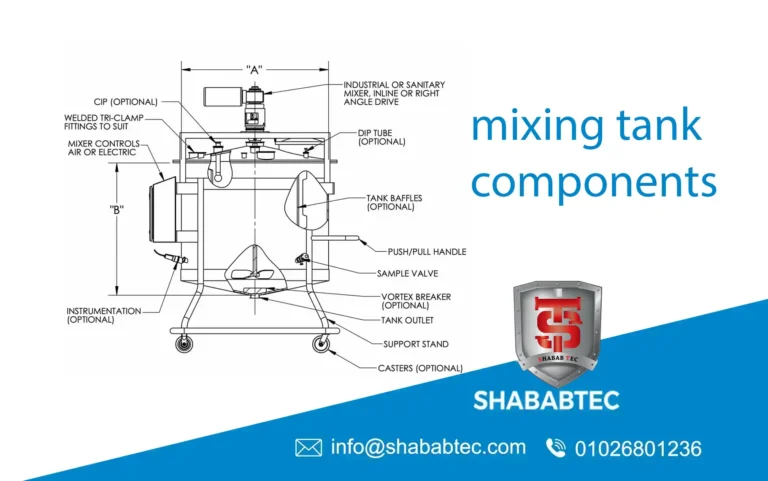
Important design points include:
- High-torque motor
- Suitable tank gearbox
- Strong agitator shaft
- Anchor or scraper blade design
- Optional high shear mixer
- Optional emulsifying mixer
- Optional homogenizer mixer
- Heating and cooling jacket when needed
- Strong tank structure
- Proper shaft seal
- Large discharge outlet or pump connection
- Smooth internal stainless steel surface
- Easy cleaning access
This approach helps the mixer handle thick materials more reliably during real production.
Common Problems When Mixing Thick Materials
Dead Zones Inside the Tank
Dead zones happen when some areas inside the tank do not receive enough movement. Thick products are especially sensitive to this issue. Anchor and scraper systems can help reduce dead zones.
Motor Overheating
Motor overheating usually means the mixer is underpowered or the gearbox is not suitable. High-viscosity products need correct torque selection.
Product Sticking to Tank Walls
Sticky products may remain on the wall and not mix properly. Scraper blades help bring material back into the mixing zone.
Lumps and Poor Dispersion
Powders, polymers, pigments, or active ingredients can form lumps if they are not dispersed properly. A high shear mixer or homogenizer mixer can help solve this problem.
Air Bubbles
Thick products often trap air. Vacuum mixing or controlled speed can reduce air bubbles and improve final appearance.
Slow Discharge
Thick materials may not flow through small outlets. A larger bottom outlet or pump-assisted discharge can improve production speed.
Uneven Texture
Uneven texture happens when the mixer cannot move the full batch. A properly designed high viscosity mixer improves product uniformity.
High Viscosity Mixer in Pharmaceutical Production
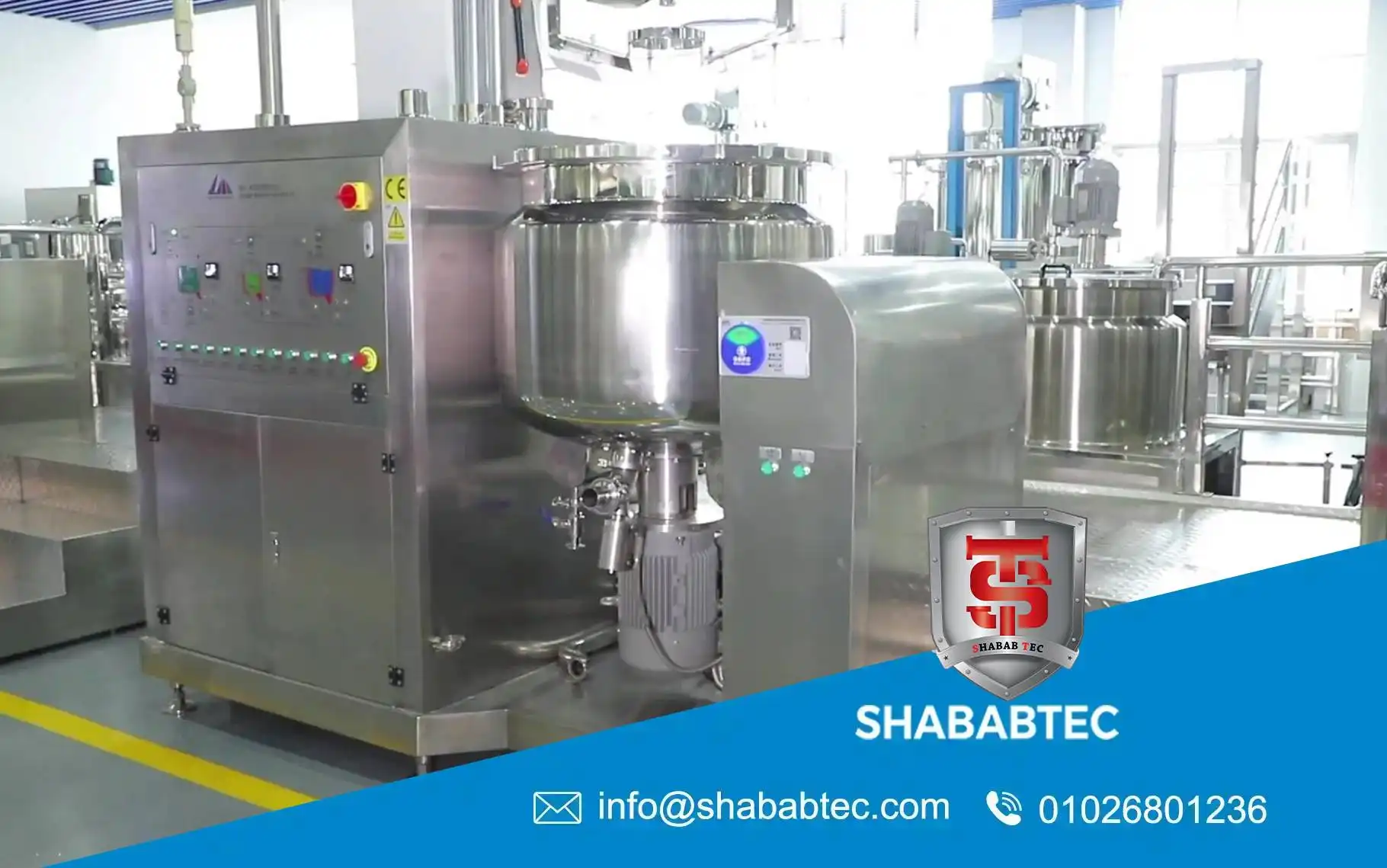
Pharmaceutical products such as ointments, gels, creams, and pastes need careful mixing because active ingredients must be distributed evenly. A high viscosity mixer helps reduce unmixed areas and supports smoother texture.
In many pharmaceutical applications, the system may need heating, cooling, vacuum, scraper, and homogenizer mixer options. Hygiene, stainless steel grade, sealing, and cleaning access are also important.
High Viscosity Mixer in Cosmetic Production
Cosmetic products such as creams, lotions, body butter, gels, masks, and balms often need an emulsifying mixer or homogenizer mixer to create smooth and stable texture.
For thick cosmetic products, the best design often combines anchor mixing, scraper movement, homogenizing, heating, cooling, and vacuum. This helps produce better texture and reduces air bubbles.
High Viscosity Mixer in Food Production
Food products such as chocolate, jam, fruit fillings, thick sauces, spreads, and pastes need strong mixing and temperature control. A high viscosity mixer helps prevent burning, improve heat distribution, and support stable texture.
In food production, scraper systems are very useful because many thick food products stick to heated tank walls.
High Viscosity Mixer in Chemical Production
Chemical products such as adhesives, sealants, coatings, thick detergents, pastes, and pigment mixtures need strong mechanical design. The best mixer for viscous materials in chemical production depends on viscosity, chemical compatibility, filler content, and required dispersion.
Paints and coatings may need a high shear mixer. Adhesives may need high torque and scraper movement. Thick detergents may need controlled mixing to reduce foam.
How ShababTec Supports High Viscosity Mixer Selection
ShababTec provides stainless steel equipment and industrial mixing systems for liquid and semi-solid preparation. The company supports factories working with food, cosmetics, pharmaceuticals, chemicals, adhesives, detergents, gels, creams, ointments, sauces, chocolate, jam, syrups, and other thick materials.
For factories looking for a high viscosity mixer, ShababTec can help review product viscosity, batch capacity, heating and cooling needs, discharge method, motor power, gearbox, scraper requirement, and whether a high shear mixer, emulsifying mixer, or homogenizer mixer is needed.
This helps buyers choose equipment based on actual production behavior instead of selecting a general mixer that may not handle thick products properly.
Maintenance Tips for High Viscosity Mixer
Regular maintenance is important because thick products create higher load on the mixer, motor, gearbox, shaft, seal, and blades. A good maintenance routine helps reduce downtime and protect equipment lifetime.
- Clean the mixer after each batch before product residue hardens
- Check scraper blades for wear or buildup
- Inspect agitator shaft alignment
- Monitor motor temperature during operation
- Listen for unusual gearbox noise
- Check shaft seal for leakage
- Inspect discharge valve for blockage
- Check high shear mixer or homogenizer parts if available
- Review motor load when changing product formulas
- Follow a fixed maintenance schedule
Final Thoughts
A high viscosity mixer is essential when the product is thick, sticky, heavy, or semi-solid. The right mixer helps improve texture, reduce dead zones, control viscosity, prevent wall buildup, and support smoother discharge.
The best mixer for viscous materials depends on the product. A high shear mixer is useful for dispersion, an emulsifying mixer is useful for oil and water blending, and a homogenizer mixer is useful for smooth and uniform texture. For very thick products, these systems may need to work with anchor mixing, scraper movement, strong motor power, and gearbox support.
If your factory is choosing الصناعية mixer thick مواد, the best decision is to review the full production process before buying. ShababTec can support factories with practical mixing solutions designed for thick materials and real industrial production conditions.
FAQ – High Viscosity Mixer
What is a high viscosity mixer used for?
A high viscosity mixer is used to mix thick, sticky, heavy, or semi-solid products such as creams, ointments, gels, pastes, adhesives, chocolate, jam, sauces, and coatings.
What is the best mixer for viscous materials?
The best mixer for viscous materials depends on the product. Thick products may need anchor mixing, scraper movement, strong motor power, gearbox support, and sometimes high shear or homogenizing.
When should I use a high shear mixer?
A high shear mixer is useful when the product needs dispersion, particle reduction, powder wetting, emulsification, or smoother ingredient distribution.
What is the role of an emulsifying mixer?
An emulsifying mixer blends oil and water phases into a stable emulsion and is commonly used for creams, lotions, ointments, and cosmetic emulsions.
What does a homogenizer mixer do?
A homogenizer mixer improves product uniformity by reducing particle or droplet size, creating smoother texture, and improving stability.
Why do thick materials need special industrial mixer design?
Thick materials need special industrial mixer design because they require higher torque, stronger shafts, suitable blades, scraper movement, and better discharge support than normal liquids.