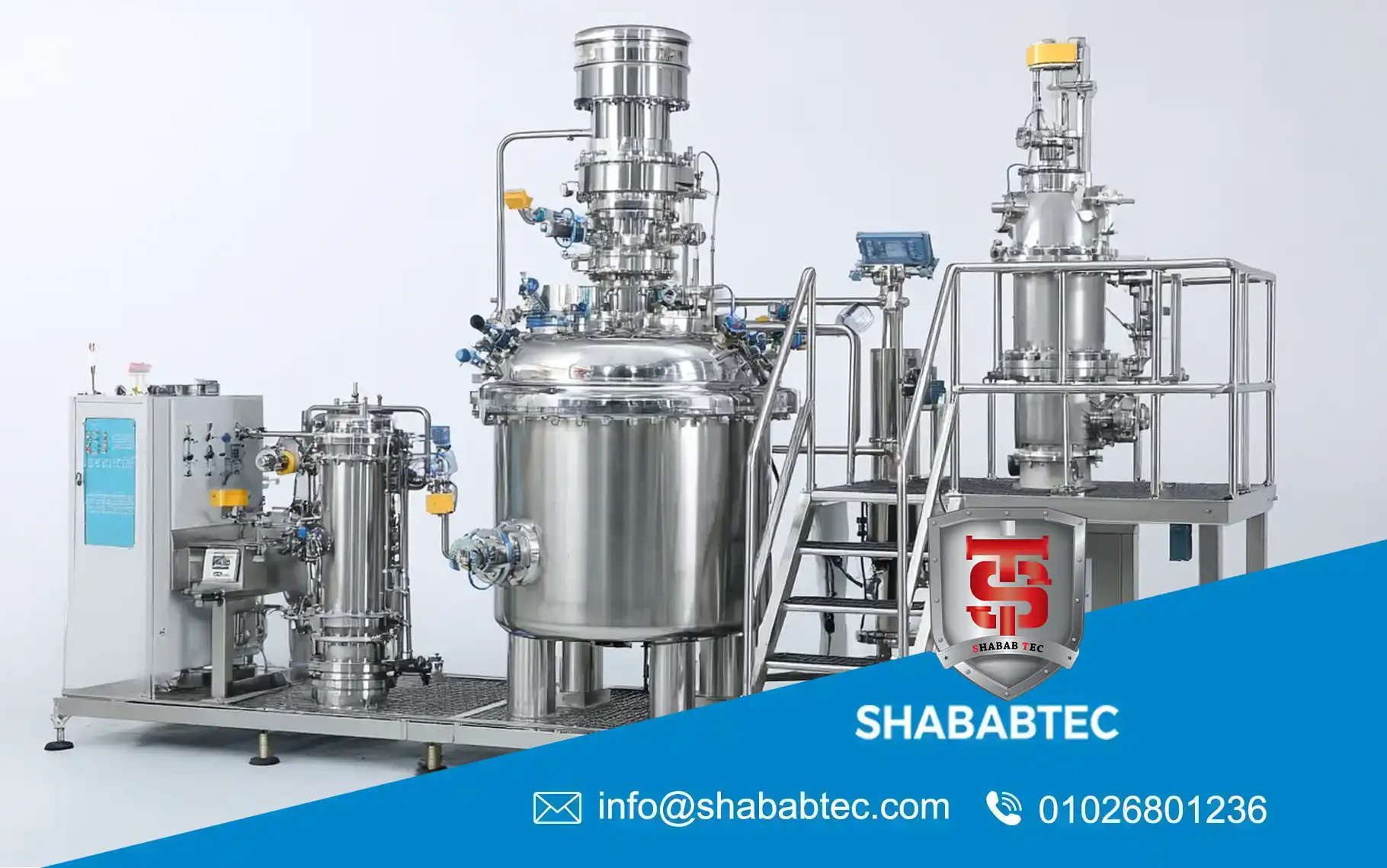
High Shear Mixing vs Low Shear Mixing Comparison for Better Industrial Mixer Selection
High Shear Mixing | Low Shear Mixing Comparison for Better Industrial Mixer Selection
Understanding the difference between high shear mixing and low shear mixing is important for any factory that wants stable product quality, shorter production time, and fewer mixing problems. Not every product needs strong shear. Some products need gentle movement to protect texture, reduce foam, or avoid air bubbles. Other products need powerful shear to break particles, disperse powders, create emulsions, or complete the homogenization process.
A clear shear mixing comparison helps production managers, engineers, and buyers choose the right mixer before investing in equipment. Choosing the wrong mixer type can cause product separation, poor texture, excessive foam, damaged ingredients, weak dispersion, unstable viscosity, or long batch time.
This guide explains the main differences between high shear and low shear, how mixing shear rate affects product behavior, and how to choose between different industrial mixer types for food, cosmetics, pharmaceuticals, chemicals, detergents, adhesives, sauces, creams, gels, lotions, ointments, paints, and semi-solid products.
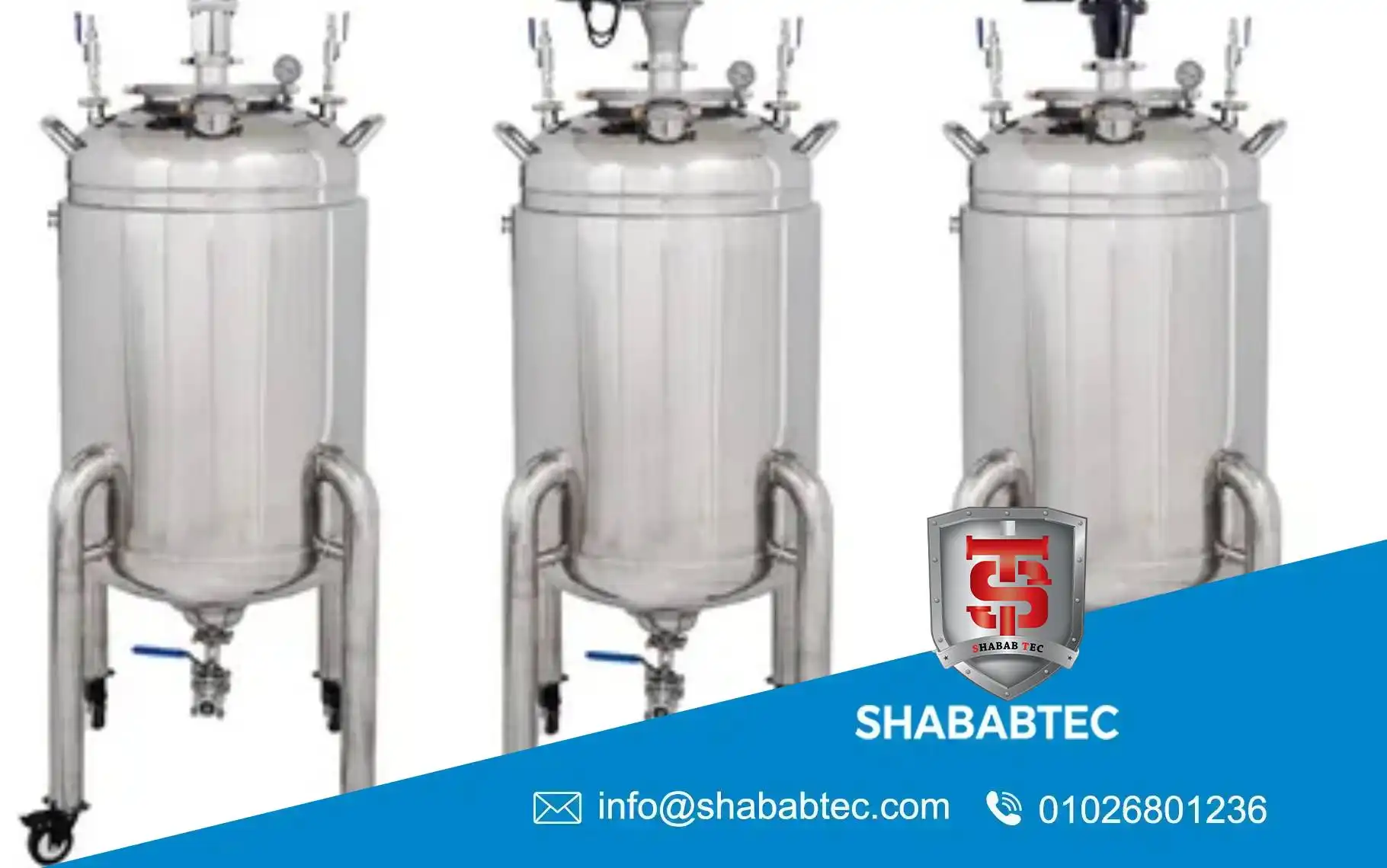
See Also: Industrial Stainless Steel Mixing Tanks – Complete Guide
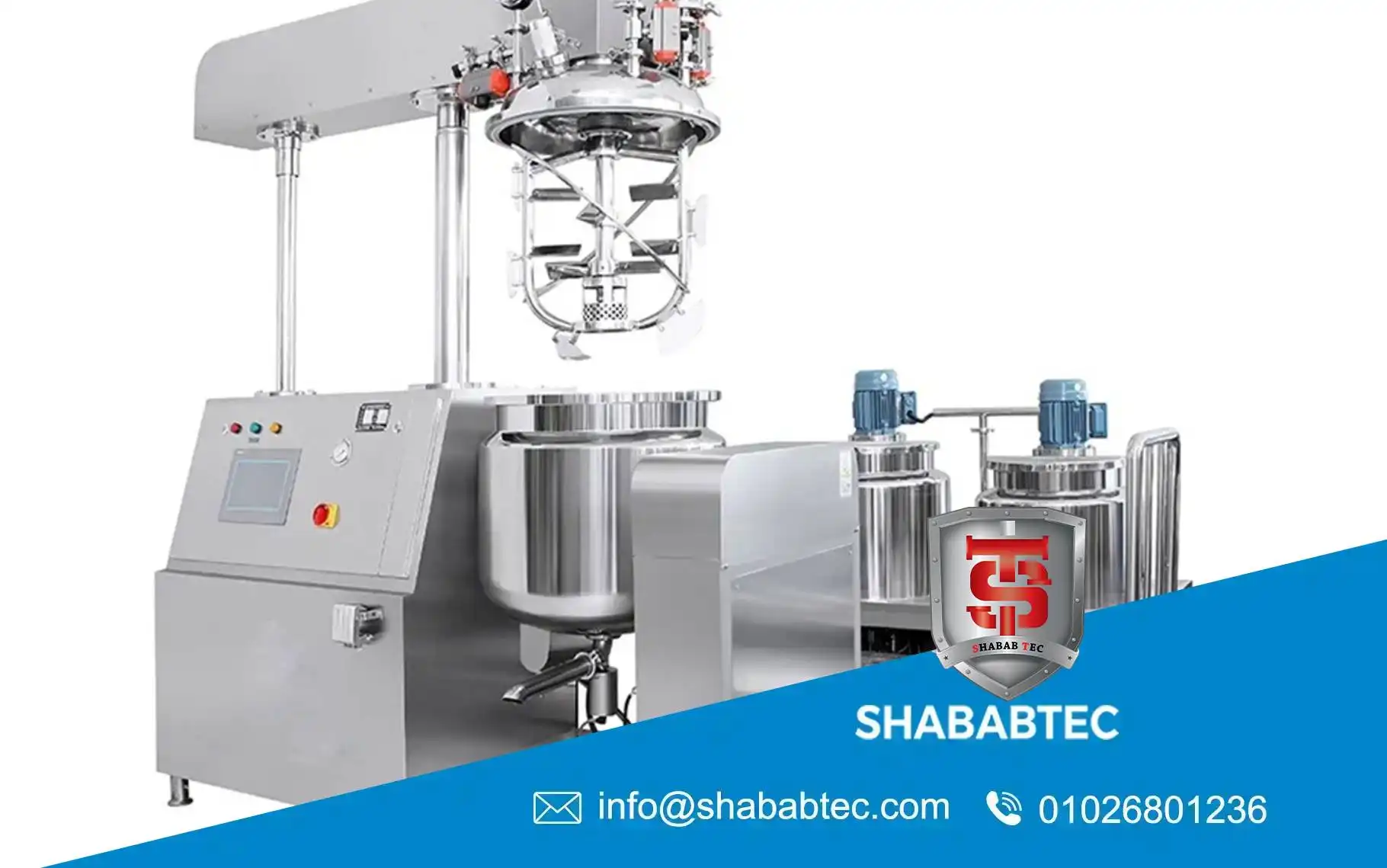
What is Shear in Industrial Mixing?
Shear in mixing means the mechanical force created when layers of product move at different speeds inside the tank. This force can stretch, break, disperse, emulsify, or gently move ingredients depending on mixer design and speed.
In simple terms, shear controls how aggressively the mixer works on the product. A high-shear mixer creates strong mechanical action, while a low-shear mixer creates softer movement. The correct choice depends on the product formula and final quality target.
For example, a cosmetic cream may need high shear during emulsification to create smooth texture, then low shear during cooling to protect viscosity and reduce air bubbles. A detergent may need low shear to reduce foam. Paint may need high shear to disperse pigments. Jam may need low to medium shear to protect fruit texture.
What is High Shear Mixing?
High shear mixing is a strong mixing method that applies intense mechanical force to the product. It is used when ingredients need to be broken down, dispersed, emulsified, or homogenized.
A high-shear mixer usually works with a rotor-stator head, high-speed blade, disperser disc, or homogenizing head. These parts create strong turbulence and cutting action inside the product. This makes high shear useful when simple agitation is not enough.
High shear mixing is commonly used for:
- Powder dispersion
- Pigment dispersion
- Emulsification
- Homogenizing creams and lotions
- Breaking lumps
- Reducing particle or droplet size
- Improving texture smoothness
- Creating stable emulsions
- Improving active ingredient distribution
However, high shear is not suitable for every product. If used incorrectly, it can create foam, air bubbles, overheating, texture damage, or over-processing.
What is Low Shear Mixing?
Low shear mixing is a gentler mixing method that moves the product without applying strong cutting or particle breakdown force. It is used when the goal is blending, circulation, suspension, gentle folding, or maintaining uniformity without damaging product structure.
Low shear mixers may use propeller blades, paddle blades, anchor agitators, or slow-speed scrapers depending on product viscosity. The main goal is to move the batch evenly while protecting the product.
Low shear mixing is commonly used for:
- Simple liquid blending
- Foam-sensitive products
- Fragrance and color distribution
- Gentle mixing during cooling
- Products with particles or fruit pieces
- Viscous products that need slow movement
- Holding tank circulation
- Final mixing after homogenization
Low shear is useful when the product does not need particle size reduction or aggressive emulsification. It is also important when the final product texture must be protected.
High Shear Mixing vs Low Shear Mixing
The main difference between high shear mixing and low shear mixing is the level of mechanical force applied to the product. High shear is aggressive and designed for dispersion, emulsification, and homogenization. Low shear is gentle and designed for blending, circulation, and product protection.
| Comparison Point | High Shear Mixing | Low Shear Mixing |
| Main action | Strong cutting, dispersion, emulsification, and particle reduction | Gentle circulation, blending, and product movement |
| Best for | Powders, pigments, emulsions, creams, lotions, suspensions | Foam-sensitive liquids, final blending, cooling, delicate products |
| Effect on texture | Can create smoother and finer texture | Protects texture and reduces product damage |
| Foam risk | Higher if not controlled | Lower |
| Heat generation | Can generate more heat | Usually lower heat generation |
| Typical equipment | High-shear mixer, homogenizer, disperser | Propeller, paddle, anchor, scraper |
This shear mixing comparison shows that one method is not always better than the other. The correct choice depends on what the product needs.
Mixing Shear Rate | Why It Matters
Mixing shear rate describes how strongly and how quickly product layers move against each other during mixing. Higher shear rate means stronger mechanical action. Lower shear rate means gentler movement.
The mixing shear rate affects:
- Droplet size in emulsions
- Particle dispersion
- Powder wetting speed
- Product viscosity
- Foam formation
- Air bubble formation
- Heat generation
- Texture smoothness
- Ingredient stability
For products like creams, lotions, sauces, paints, and pharmaceutical emulsions, controlling the shear rate can improve quality. For products like liquid soap, shampoo, and detergent, too much shear may create unwanted foam. For fruit products and chunky sauces, excessive shear may damage particles or change product appearance.
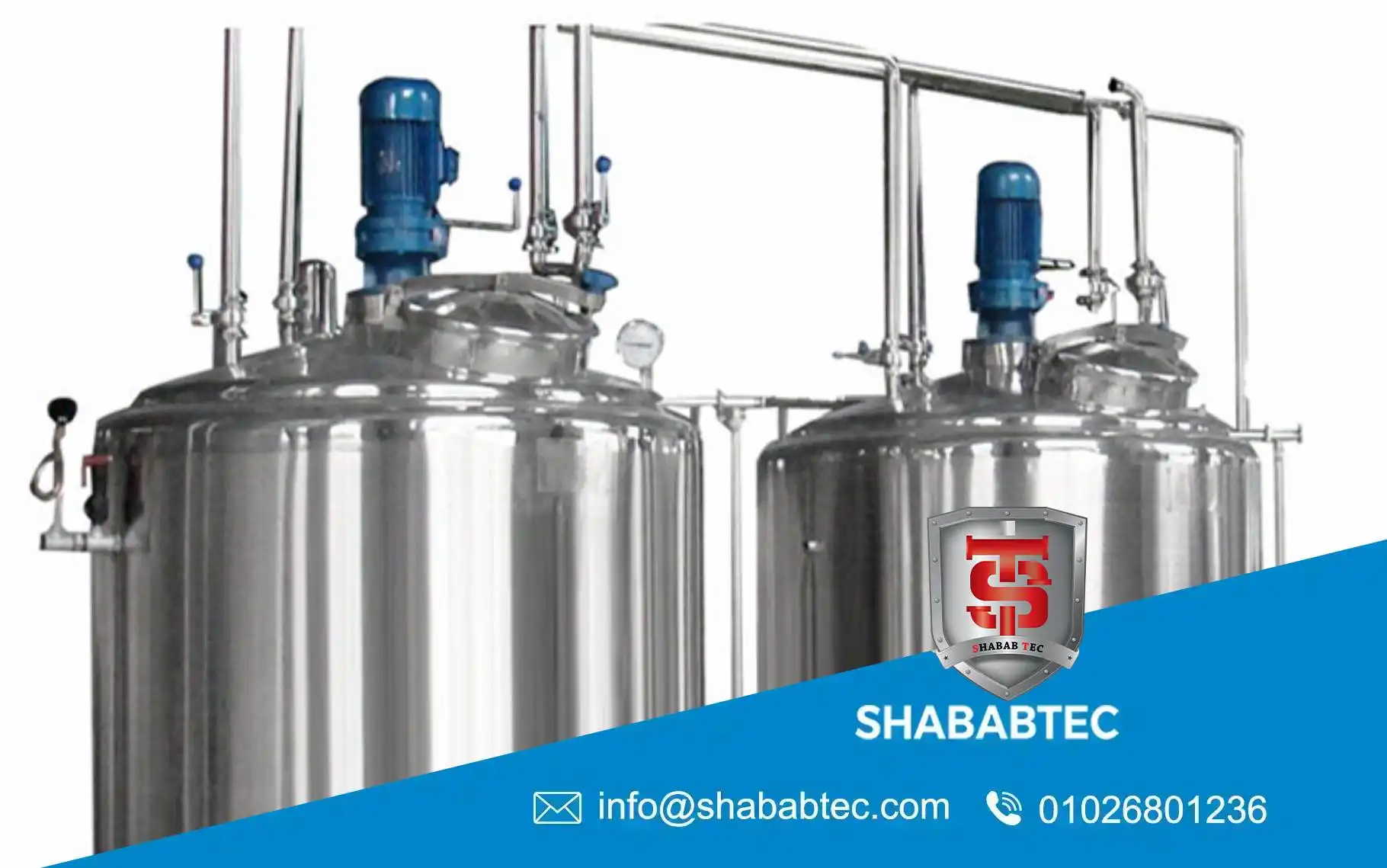
High Shear Mixing in the Homogenization Process
The homogenization process is used to make a product more uniform by reducing droplet or particle size. High shear is often part of this process because it applies strong force to break larger droplets into smaller ones.
In cosmetic cream production, the homogenization process helps create a smooth cream with better skin feel. In pharmaceutical gels and ointments, it helps distribute active ingredients more evenly. In sauces and dressings, it improves texture and reduces separation. In paint, it helps disperse pigments and improve color strength.
High shear equipment used in homogenization may include:
- Rotor-stator homogenizer
- Inline homogenizer
- Bottom homogenizer inside a tank
- High-shear emulsifier
- Disperser blade
The homogenizer should be selected based on product viscosity, batch size, required texture, and whether the product needs heating, cooling, vacuum, or scraper movement.
Low Shear Mixing After Homogenization
Many products need low shear after high shear processing. After the homogenization process, the product may need gentle mixing during cooling, fragrance addition, color correction, final viscosity adjustment, or holding before filling.
For example, a cream may be homogenized at high shear, then cooled under slow anchor mixing. This protects the emulsion and reduces air intake. A sauce may be homogenized for smoothness, then gently mixed to maintain texture before filling.
This is why many industrial tanks use more than one mixer type in the same system. A tank may include a low-speed anchor agitator and a high-speed homogenizer. Each one has a different role.
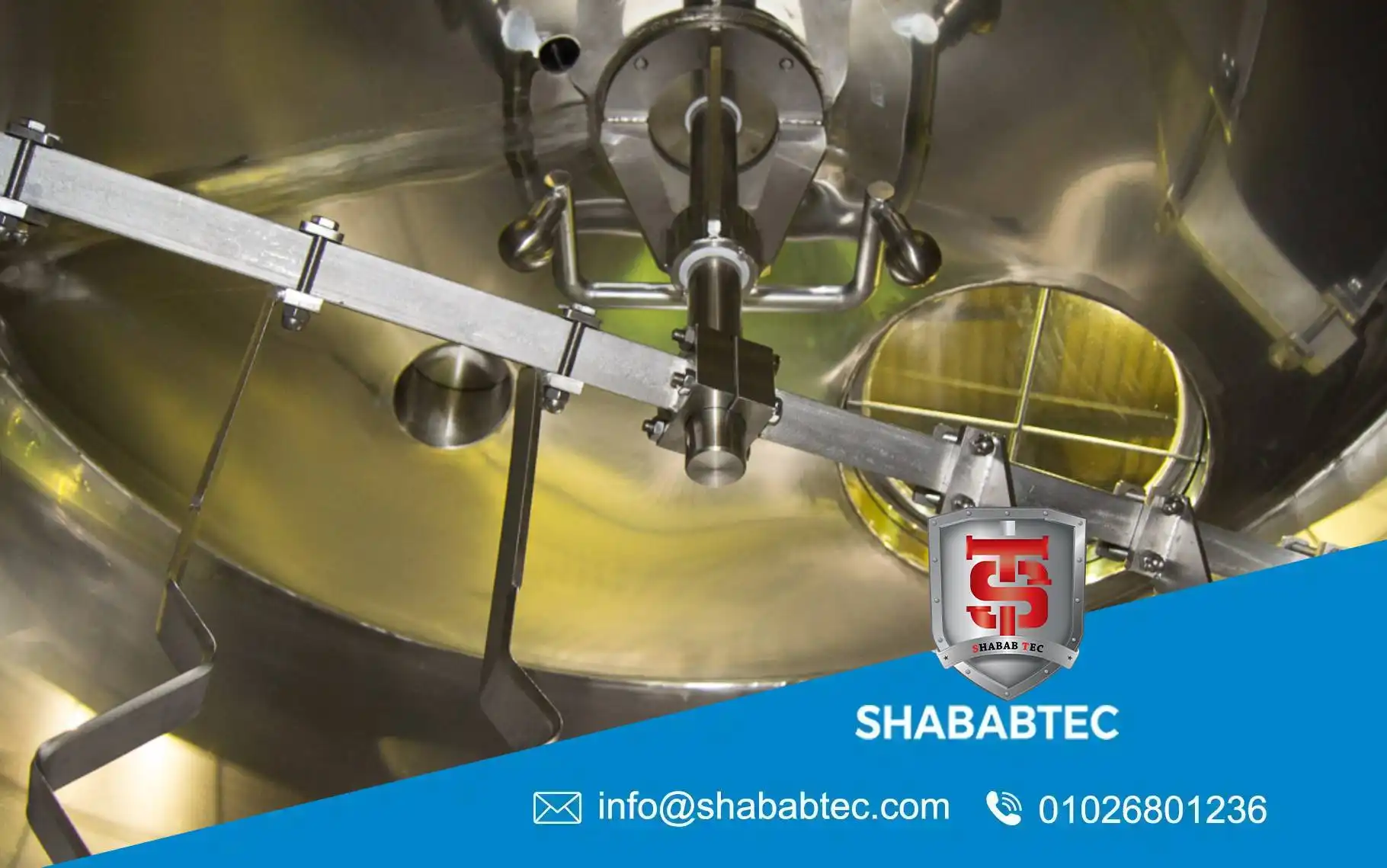
Industrial Mixer Types Based on Shear Level
Propeller Mixer
A propeller mixer is usually used for low to medium shear applications. It creates circulation in low-viscosity liquids and is suitable for simple blending, light detergents, liquid chemicals, and storage tank movement.
Paddle Mixer
A paddle mixer provides gentle movement and is useful for controlled blending. It is suitable when the product needs uniform mixing without aggressive shear.
Anchor Mixer
An anchor mixer is used for medium and high-viscosity products. It creates low to medium shear and moves product near the tank wall. It is common in creams, gels, sauces, adhesives, and semi-solid products.
Scraper Mixer
A scraper mixer is a low to medium shear system used for sticky products. It removes product from the tank wall and improves heat transfer during heating or cooling. It is useful for chocolate, jam, cream, ointment, adhesive, and thick sauces.
High-Shear Mixer
A high-shear mixer creates strong mechanical action for dispersion, emulsification, and particle reduction. It is useful in creams, lotions, gels, paints, coatings, sauces, and pharmaceutical emulsions.
Homogenizer
A homogenizer is used when the product needs a fine and uniform texture. It is commonly used in the homogenization process for cosmetics, pharmaceuticals, sauces, emulsions, and high-quality semi-solid products.
Disperser
A disperser is used to wet and disperse powders, pigments, and fillers. It is common in paint, coating, ink, chemical, and pigment paste production.
Shear Mixing Comparison by Industry
Cosmetic Production
Cosmetic creams, lotions, gels, and emulsions often need both high shear mixing and low shear mixing. High shear helps with emulsification and smooth texture. Low shear helps during cooling, fragrance addition, and final blending.
A cosmetic tank may include an anchor agitator, scraper, homogenizer, heating jacket, cooling jacket, and vacuum system.
Pharmaceutical Production
Pharmaceutical syrups, gels, ointments, creams, and suspensions need controlled mixing. High shear may be required for active ingredient dispersion or homogenization. Low shear may be needed to protect viscosity and reduce air bubbles.
The correct mixing shear rate is important because over-processing may affect sensitive ingredients, while under-processing may cause poor distribution.
Food Production
Food products vary widely. Sauce, mayonnaise-like products, dressings, and chocolate fillings may need high shear or homogenizing. Jam, fruit fillings, and chunky sauces may need lower shear to protect texture and particles.
A good shear mixing comparison in food production should always consider final product appearance and mouthfeel.
Chemical Production
Chemical products such as paint, coating, adhesive, detergent, fertilizer, and specialty liquids need different shear levels. Paint often needs high shear for pigments. Adhesives may need low-speed high-torque mixing. Detergents may need low shear to reduce foam.
This is why industrial mixer types should be selected based on the formula, not only tank volume.
When to Use High Shear Mixing
Use high shear mixing when the product needs strong mechanical action to become stable, smooth, or uniform.
High shear is suitable when you need to:
- Break powder lumps
- Disperse pigments or fillers
- Create stable emulsions
- Reduce droplet size
- Improve cream smoothness
- Improve sauce texture
- Support pharmaceutical uniformity
- Improve product consistency
High shear is useful, but it should be controlled. Too much shear can create heat, foam, air bubbles, or damage sensitive ingredients.
When to Use Low Shear Mixing
Use low shear mixing when the product needs gentle movement, texture protection, or foam reduction.
Low shear is suitable when you need to:
- Blend compatible liquids
- Mix fragrance or color gently
- Reduce foam in detergent or soap
- Maintain texture after homogenizing
- Cool cream or lotion gently
- Protect fruit pieces or particles
- Move viscous products slowly with high torque
- Hold product uniform before filling
Low shear does not mean weak mixing. In thick products, low-speed anchor mixing can still require strong motor torque.
Common Mistakes in Shear Mixing Selection
Using High Shear for Every Product
Some factories think stronger mixing is always better. This is not true. High shear can damage delicate textures, create foam, or introduce air into the product.
Using Low Shear When Dispersion is Needed
If the product contains pigments, powders, fillers, or oil-water phases, low shear alone may not be enough. The product may show lumps, separation, or poor texture.
Ignoring Product Viscosity
Viscosity affects shear performance. A high-shear head may work well in thin products but fail to process the full batch if the product is very thick without bulk agitation.
Ignoring Temperature
Temperature changes viscosity. A product may need high shear while warm and low shear during cooling. Heating and cooling should be part of the process plan.
No Speed Control
Fixed-speed mixers limit production control. Variable speed helps operators adjust shear level based on each stage.
Forgetting Cleaning
High-shear heads, homogenizers, scrapers, and blades need proper cleaning after each batch. Poor cleaning affects future batches and equipment life.
How to Choose the Right Shear Level
Before choosing between high shear mixing and low shear mixing, factories should review the product and final quality target.
Important questions include:
- Does the product contain powders or pigments?
- Does the product contain oil and water phases?
- Does the product need a smooth texture?
- Does the product foam easily?
- Does the product contain delicate particles?
- Is the product low, medium, or high viscosity?
- Does the product need heating or cooling?
- Does the product need homogenization?
- Does the product need gentle final mixing?
- What batch capacity is required?
- How will the tank be cleaned?
These answers help define the correct mixing shear rate, mixer type, motor power, speed control, and tank design.
Why Choose ShababTec for Shear Mixing Applications?
ShababTec helps factories choose suitable mixing systems based on real product behavior, not only equipment names. This is important because the right shear level changes from one product to another.
For products that need high shear mixing, ShababTec can support mixer selection for dispersion, emulsification, and the homogenization process. This includes high-shear mixers, homogenizers, emulsifying tanks, and systems that improve texture and uniformity.
For products that need low shear mixing, ShababTec can support gentle agitator designs, anchor mixers, scraper systems, and speed-controlled tanks that reduce foam, protect texture, and maintain stable product movement.
ShababTec can also help compare different industrial mixer types and recommend the best solution based on viscosity, batch size, heating and cooling needs, discharge method, cleaning access, and daily production target.
How ShababTec Supports Industrial Mixer Types Selection
Different products need different mixer combinations. ShababTec can help factories select or fabricate systems such as:
- Low-speed agitator tanks for simple blending
- Anchor mixers for viscous products
- Scraper tanks for sticky and heated products
- High-shear mixers for dispersion
- Homogenizer systems for smooth texture
- Vacuum emulsifying tanks for creams and gels
- Jacketed tanks for heating and cooling control
- Custom stainless steel tanks for industrial production
This practical approach helps factories avoid using high shear when gentle mixing is enough, and avoid using low shear when the product needs dispersion or homogenizing.
Maintenance Tips for High Shear and Low Shear Mixers
High Shear Mixer Maintenance
- Clean the rotor-stator or mixing head after every batch
- Inspect blades or teeth for wear
- Check motor temperature during operation
- Monitor vibration and unusual noise
- Inspect shaft seal for leakage
- Do not operate dry if the design does not allow it
- Review speed settings when changing products
- Check product buildup around the mixing head
Low Shear Mixer Maintenance
- Clean agitator blades after every batch
- Inspect anchor or paddle arms for buildup
- Check scraper blades if available
- Monitor gearbox noise and motor load
- Check shaft alignment
- Inspect discharge valve for residue
- Check tank wall condition
- Review mixing speed for foam-sensitive products
Final Thoughts
High shear mixing and low shear mixing both have important roles in industrial production. High shear is best for dispersion, emulsification, particle reduction, and the homogenization process. Low shear is best for gentle blending, foam control, cooling, texture protection, and final product movement.
A correct shear mixing comparison should consider product viscosity, powder content, oil-water phases, foam sensitivity, temperature, batch size, cleaning requirements, and final texture target. The right mixing shear rate can improve product stability and reduce production problems.
For factories comparing industrial mixer types, ShababTec can help choose and fabricate practical mixing systems based on real production needs, whether the product requires high shear, low shear, homogenization, scraper movement, vacuum, heating, cooling, or a complete customized stainless steel tank.
FAQ – High Shear Mixing and Low Shear Mixing
What is high shear mixing?
High shear mixing is a strong mixing method that applies intense mechanical force to disperse powders, break particles, emulsify phases, and improve product smoothness.
What is low shear mixing?
Low shear mixing is a gentle mixing method used for blending, circulation, cooling, foam control, texture protection, and maintaining product uniformity without aggressive cutting force.
What should a shear mixing comparison include?
A shear mixing comparison should include product viscosity, powder content, oil-water phases, foam risk, texture target, temperature control, batch size, and required mixer type.
What are common industrial mixer types?
Common industrial mixer types include propeller mixers, paddle mixers, anchor mixers, scraper mixers, high-shear mixers, homogenizers, dispersers, and vacuum emulsifying tanks.
What is mixing shear rate?
Mixing shear rate describes the level of mechanical action created when product layers move at different speeds during mixing. It affects dispersion, emulsification, foam, texture, and viscosity.
How does high shear help the homogenization process?
High shear helps the homogenization process by reducing droplet or particle size and creating a more uniform, smooth, and stable product.
See Also: mixing tank maintenance | mixing tank soap