Emulsifying Mixer vs Homogenizer: Key Differences, Applications, and Choosing the Right Machine
Emulsifying Mixer vs Homogenizer Industrial Mixer Comparison for Better Production Decisions
Choosing between an emulsifying mixer vs homogenizer is a common question for factories that produce creams, lotions, ointments, gels, sauces, pharmaceutical emulsions, cosmetic products, and liquid or semi-solid formulas. Both machines can improve product texture and stability, but they do not work in exactly the same way. Choosing the wrong technology can lead to poor texture, weak stability, separation, air bubbles, long production time, or unnecessary equipment cost.
Many buyers compare homogenizer vs emulsifier because both are used in products that need smoothness and uniformity. However, the right choice depends on the formula, viscosity, droplet size target, production capacity, heating and cooling needs, and whether the product needs simple blending, emulsification, dispersion, or particle size reduction.
This guide provides a practical mixing technologies comparison for industrial production. It explains the difference between emulsifiers, homogenizers, normal mixers, and complete mixing tank systems. It also helps factories make a smarter industrial mixer comparison before investing in a homogenizer machine, emulsifying system, or general mixer.
See Also: Industrial Stainless Steel Mixing Tanks – Complete Guide
What is an Emulsifying Mixer?
An emulsifying mixer is a machine designed to combine two phases that normally do not mix easily, such as oil and water. It is commonly used in cosmetic creams, lotions, pharmaceutical ointments, sauces, mayonnaise-like products, emulsified gels, and some chemical products.
The main job of an emulsifying mixer is to create a stable emulsion. It breaks one phase into smaller droplets and distributes it inside the other phase. With the help of emulsifiers in the formula, these droplets remain more stable and reduce the chance of separation.
When comparing emulsifier vs mixer, the emulsifier is more specialized. A normal mixer can move ingredients around the tank, but an emulsifying mixer creates stronger mechanical action to help oil and water phases combine more effectively.
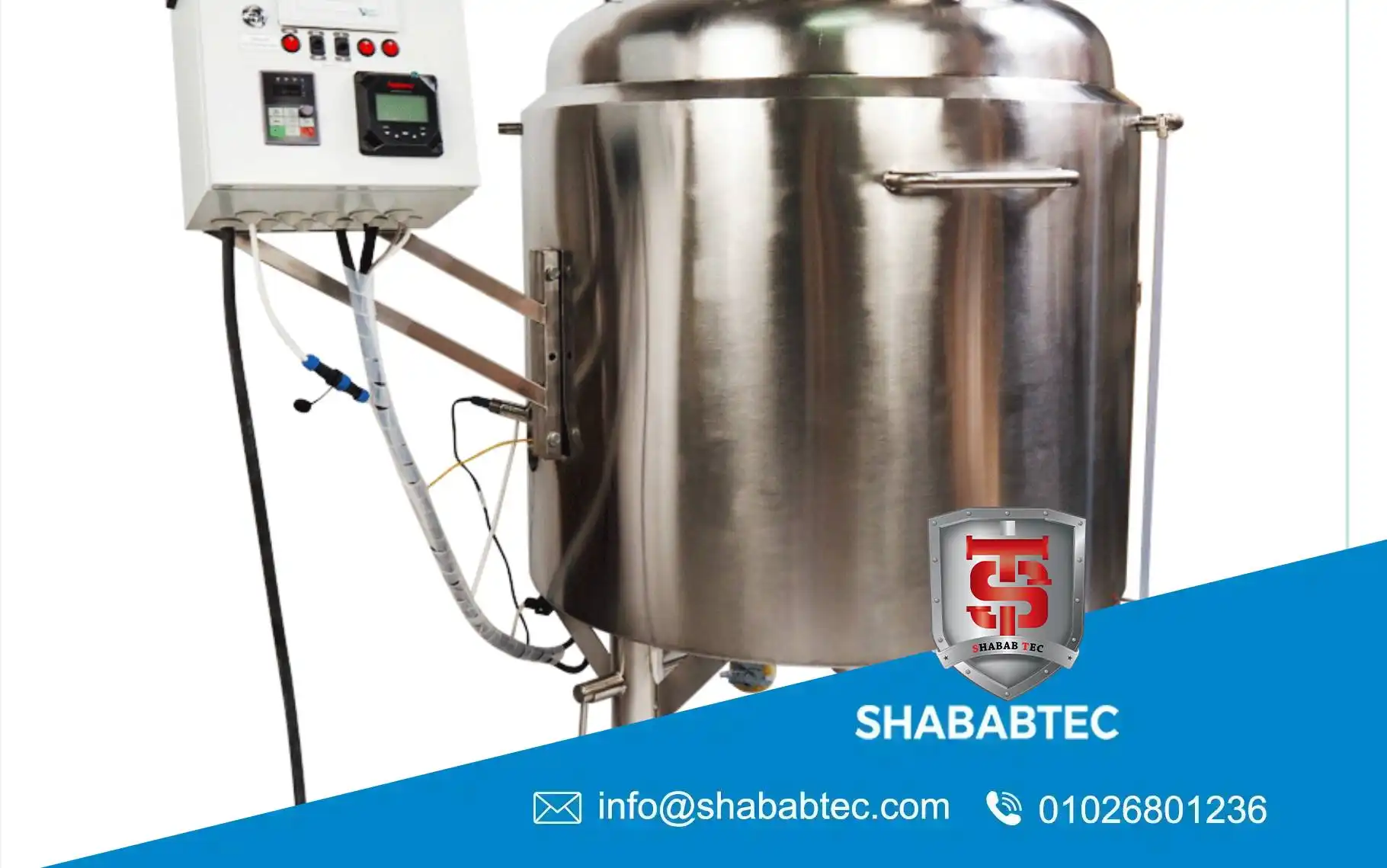
What is a Homogenizer Machine?
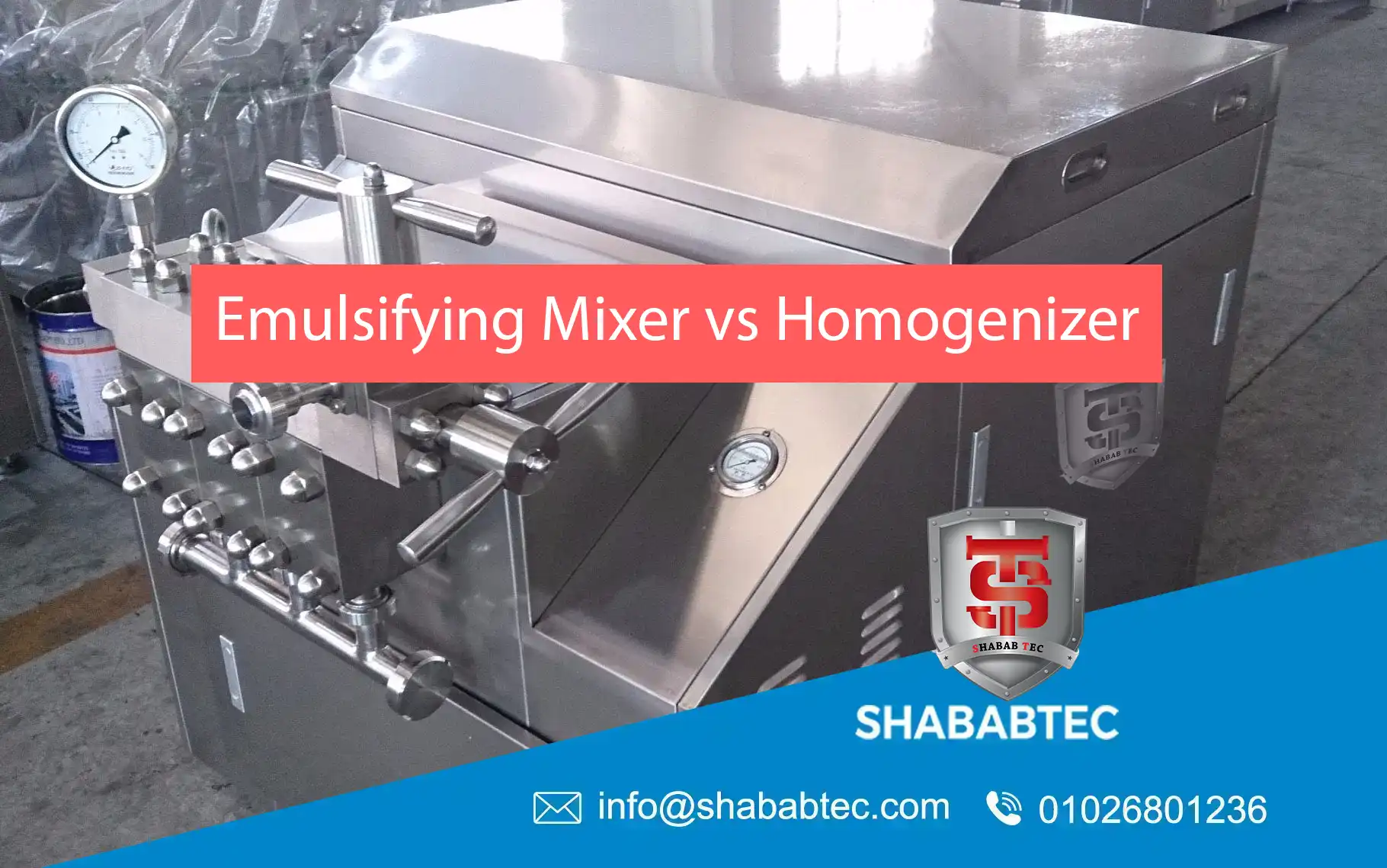
A homogenizer machine is used to make a product more uniform by reducing particle or droplet size and distributing materials evenly throughout the batch. It can improve smoothness, stability, texture, and consistency.
A homogenizer is commonly used in pharmaceutical creams, cosmetic emulsions, lotions, gels, food sauces, dairy-like products, suspensions, and products that require fine texture. It applies strong shear, turbulence, and mechanical force to create a more consistent product structure.
In a homogenizer vs emulsifier comparison, the homogenizer focuses more on uniformity and size reduction. The emulsifier focuses mainly on forming and stabilizing an emulsion between phases that normally separate.
Emulsifying Mixer vs Homogenizer: The Main Difference
The main difference between emulsifying mixer vs homogenizer is the primary purpose. An emulsifying mixer is used to create an emulsion, while a homogenizer is used to make the product more uniform and reduce particle or droplet size.
| Comparison Point | Emulsifying Mixer | Homogenizer Machine |
| Main purpose | Combines oil and water phases into a stable emulsion | Reduces droplet or particle size for better uniformity |
| Common use | Creams, lotions, sauces, emulsions | Creams, gels, suspensions, sauces, fine-texture products |
| Best for | Oil-water blending and emulsion formation | Smooth texture, stability, and uniform distribution |
| Effect on texture | Creates stable emulsion and creamy structure | Improves smoothness and consistency |
| When needed | When phases naturally separate | When product needs finer particle or droplet size |
| Can work together? | Yes | Yes |
In many industrial systems, both technologies can be used together. For example, a cosmetic cream may need emulsification to combine oil and water, then homogenizing to improve smoothness and stability.
Homogenizer vs Emulsifier: Which One Do You Need?
The choice between homogenizer vs emulsifier depends on the production problem you want to solve.
If the main problem is oil and water separation, the factory likely needs an emulsifying mixer or emulsifying tank. If the main problem is rough texture, large particles, poor smoothness, or weak uniformity, the factory may need a homogenizer machine.
For many products, the best solution is not choosing only one. A complete system may include a slow agitator for bulk movement, an emulsifying mixer for phase combination, and a homogenizer for final texture improvement.
Emulsifier vs Mixer: Why Normal Mixing May Not Be Enough
The emulsifier vs mixer comparison is important because many factories first try to use a normal mixer for products that actually need emulsification. A normal mixer can blend ingredients, but it may not create enough shear to form a stable emulsion.
A standard mixer is useful for:
- Simple liquid blending
- Dissolving ingredients
- Maintaining product movement
- Gentle mixing
- Holding product uniformity before filling
An emulsifier is more suitable for:
- Oil and water phase blending
- Cream and lotion production
- Emulsion stability improvement
- Droplet size reduction
- Smooth cosmetic or food texture
If a cream, lotion, sauce, or emulsion separates after production, a normal mixer may not be enough. The process may need a dedicated emulsifier or homogenizing system.
Mixing Technologies Comparison by Function
A useful mixing technologies comparison should look at the function of each technology. Different mixers solve different problems.
Simple Agitator
A simple agitator moves liquid inside the tank. It is suitable for low-viscosity liquids and basic blending. It is not usually enough for stable emulsions or fine homogenizing.
Anchor Mixer
An anchor mixer is used for thicker products. It moves material near the tank wall and helps reduce dead zones. It is useful for creams, gels, sauces, adhesives, ointments, and semi-solid products.
Scraper Mixer
A scraper mixer removes product from the tank wall. It is useful for heated products, sticky materials, and high-viscosity products such as cream, jam, chocolate, ointment, paste, and adhesive.
High-Shear Mixer
A high-shear mixer creates strong mechanical force for dispersion, emulsification, and particle breakdown. It is often used in creams, lotions, paints, coatings, sauces, and gels.
Emulsifying Mixer
An emulsifying mixer is used to create stable oil-water systems. It is useful in cosmetic, pharmaceutical, food, and chemical emulsions.
Homogenizer Machine
A homogenizer machine improves product uniformity, smoothness, and stability by reducing droplet or particle size. It is useful when the product needs a finer and more consistent structure.
Industrial Mixer Comparison by Product Type
Cosmetic Creams and Lotions
In cosmetic production, the emulsifying mixer vs homogenizer decision usually depends on texture and formula structure. Creams and lotions often need both emulsification and homogenizing. The emulsifying mixer forms the oil-water emulsion, while the homogenizer improves smoothness and product feel.
For thick creams, an anchor and scraper system may also be needed to move the full batch and prevent product buildup on tank walls.
Pharmaceutical Ointments and Gels
Pharmaceutical products may need accurate active ingredient distribution and smooth texture. A homogenizer machine can help improve uniformity, while an emulsifying mixer is needed when the formula contains oil and water phases.
For high-viscosity ointments, a scraper mixer and strong tank design are also important.
Food Sauces and Dressings
Food sauces, mayonnaise, dressings, chocolate emulsions, and creamy fillings may need emulsification to prevent separation. A homogenizer can improve texture, while a standard mixer may only be suitable for simple sauces that do not require fine emulsion stability.
Paints and Coatings
Paint and coating production often requires dispersion more than classic emulsification. Pigments and fillers need strong mixing force. In this case, high-shear mixing may be more important than choosing between homogenizer vs emulsifier.
Liquid Detergents
Detergents may need controlled mixing to reduce foam and stabilize viscosity. A normal mixer may be enough for some formulas, while high-shear or homogenizing may be useful when the product contains difficult-to-disperse ingredients.
When to Choose an Emulsifying Mixer
Choose an emulsifying mixer when the product contains phases that naturally separate, especially oil and water. This is common in creams, lotions, emulsified sauces, ointments, and cosmetic emulsions.
An emulsifying mixer is a good choice when the production goal is:
- Creating a stable emulsion
- Combining oil and water phases
- Reducing separation
- Improving cream or lotion structure
- Producing smooth cosmetic emulsions
- Making emulsified food products
In an industrial mixer comparison, the emulsifying mixer is usually selected when phase stability is the main issue.
When to Choose a Homogenizer Machine
Choose a homogenizer machine when the product needs finer texture, better uniformity, smaller droplets, or improved stability. Homogenizing is useful when the product is already mixed but still needs to become smoother and more consistent.
A homogenizer is a good choice when the production goal is:
- Improving smoothness
- Reducing droplet size
- Reducing particle size
- Improving active ingredient distribution
- Improving emulsion stability
- Reducing grainy texture
- Creating a premium product feel
In a homogenizer vs emulsifier comparison, the homogenizer is usually chosen when product uniformity and fine texture are the main goals.
When a Normal Mixer is Enough
In some cases, a normal mixer is enough. Not every product needs emulsifying or homogenizing. Simple liquid products may only need basic agitation.
A normal mixer may be enough for:
- Simple liquid blending
- Light detergent products
- Basic syrup mixing
- Color or fragrance distribution
- Low-viscosity chemical solutions
- Storage tank circulation
However, if the product separates, contains oil and water phases, needs fine texture, or contains powders that form lumps, a normal mixer may not solve the problem.
Can One Machine Be Both Emulsifier and Homogenizer?
Some industrial systems can perform both functions depending on the design. A high-shear head inside an emulsifying tank may support emulsification and homogenizing at the same time. However, the result depends on the machine design, speed, head type, product viscosity, and process method.
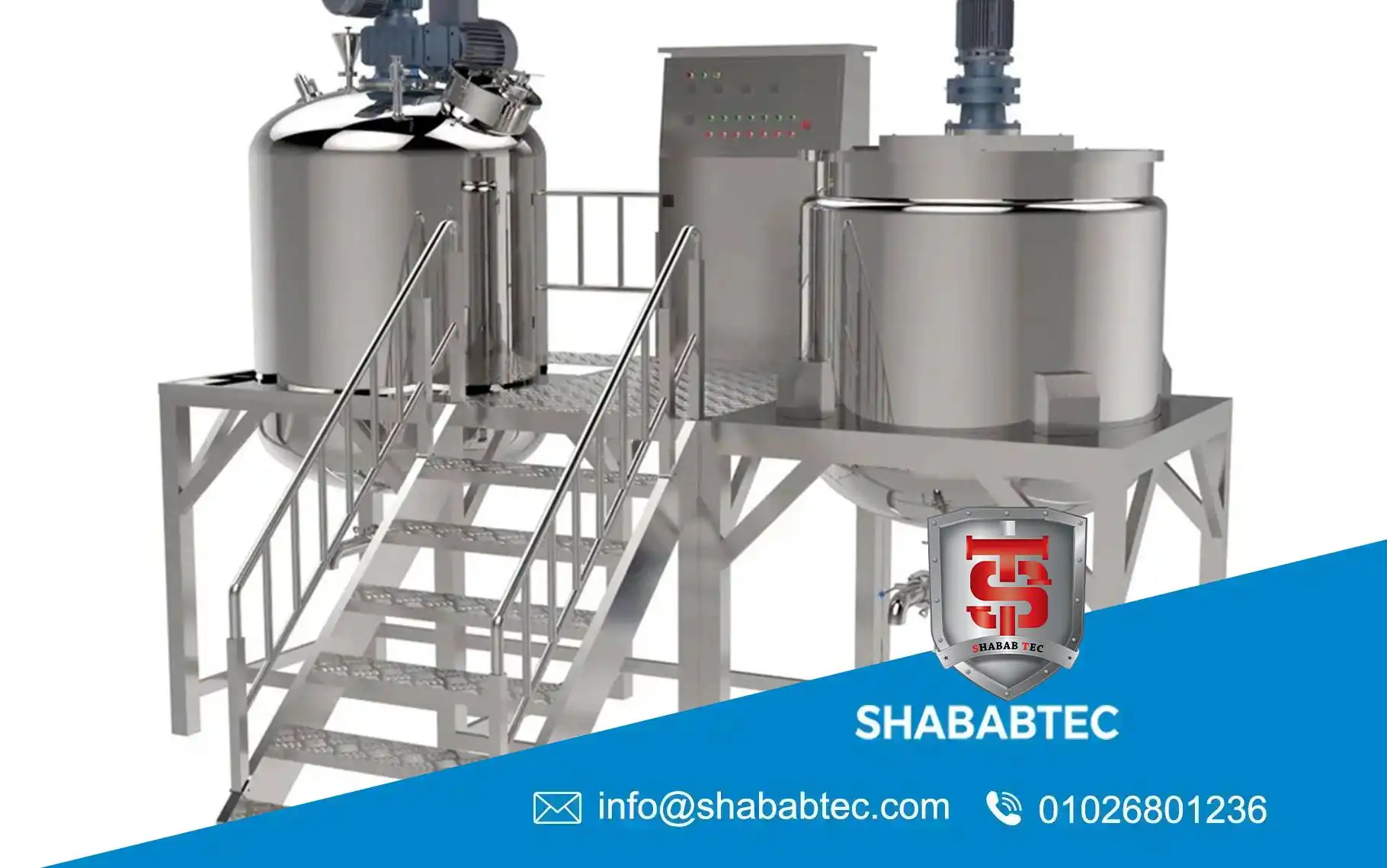
For example, a vacuum emulsifying tank may include an anchor mixer, scraper system, and bottom homogenizer. In this case, the system supports bulk mixing, emulsification, and homogenizing in one unit.
Still, buyers should not assume that every emulsifier is a full homogenizer or that every homogenizer can handle all emulsion types. A clear mixing technologies comparison is important before buying.
Emulsifying Mixer vs Homogenizer in High-Viscosity Products
High-viscosity products need special attention. A homogenizer machine may create strong action in one area, but if the product is very thick, it may not move the full batch properly. This can create uneven processing.
For thick products, a complete system may need:
- Anchor mixer for full batch movement
- Scraper system to remove product from tank walls
- Emulsifying mixer to combine phases
- Homogenizer machine to improve smoothness
- Heating and cooling jacket for viscosity control
- Vacuum system to reduce air bubbles
This is why thick creams, ointments, gels, pastes, and heavy sauces often require more than one mixing technology.
Industrial Mixer Comparison by Production Problem
| Production Problem | Recommended Technology |
| Oil and water separation | Emulsifying mixer |
| Rough texture | Homogenizer machine |
| Product sticks to tank walls | Scraper mixer |
| Thick material does not move | Anchor mixer or high-viscosity mixer |
| Powder lumps | High-shear mixer or homogenizer machine |
| Air bubbles | Vacuum mixing system |
| Burning during heating | Scraper mixer with jacketed tank |
| Simple blending only | Standard agitator |
This industrial mixer comparison shows that the right technology depends on the problem. One mixer type cannot solve every production issue.
Mixing Technologies Comparison for Cost and Value
Cost is important, but the cheapest option is not always the best. A normal mixer costs less than a homogenizer or emulsifying system, but it may not produce the required product quality. A homogenizer machine may cost more, but it can improve texture and stability in products where smoothness matters.
When comparing cost, buyers should consider:
- Final product quality
- Batch consistency
- Production speed
- Cleaning time
- Waste reduction
- Maintenance needs
- Energy use
- Future product expansion
A complete mixing technologies comparison should focus on long-term value, not only the first purchase price.
Common Mistakes When Comparing Homogenizer vs Emulsifier
Thinking They Are Always the Same
Some buyers use the words homogenizer and emulsifier as if they always mean the same thing. They may overlap in some machines, but their functions are not always identical.
Ignoring Product Viscosity
High-viscosity products need bulk movement. A homogenizer alone may not move the full batch if the product is too thick.
Choosing Based on Machine Name Only
The machine name is not enough. Buyers should check power, speed, head design, tank structure, scraper, heating, cooling, and vacuum options.
Using Normal Mixer for Emulsions
A normal mixer may not create stable emulsions. If the product contains oil and water phases, emulsification may be needed.
Overusing High Shear
More shear is not always better. Some formulas can be damaged or over-processed by excessive shear. The process should match the product.
Ignoring Cooling Stage
Many emulsions develop final texture during cooling. If the tank cannot cool and mix properly, product quality may suffer.
How to Choose Between Emulsifying Mixer vs Homogenizer
To choose between emulsifying mixer vs homogenizer, start by defining the product target and production problem.
Ask these questions:
- Does the product contain oil and water phases?
- Does the product separate after production?
- Does the product need smoother texture?
- Does the product contain powders or particles?
- Is the product thin, medium, or thick?
- Does the product need heating?
- Does the product need cooling?
- Is vacuum needed to reduce air bubbles?
- What batch capacity is required?
- How will the product be discharged?
- What final product quality is expected?
If the main goal is oil-water stability, choose emulsifying. If the main goal is fine uniformity, choose homogenizing. If the product is thick, choose a system that also includes proper bulk mixing and scraper movement.
Why ShababTec is a Practical Choice for Industrial Mixer Comparison
ShababTec provides stainless steel equipment and industrial mixing systems for liquid and semi-solid production. The company supports factories working in cosmetics, pharmaceuticals, food, chemicals, detergents, adhesives, creams, lotions, ointments, gels, sauces, syrups, chocolate, jam, and other products.
For buyers comparing emulsifying mixer vs homogenizer, ShababTec can help review the product formula, viscosity, batch size, texture target, heating and cooling needs, vacuum requirement, discharge method, and cleaning process before suggesting the right technology.
This makes the industrial mixer comparison more practical because the choice is based on real production behavior, not only machine names. Whether the factory needs an emulsifying system, homogenizer machine, standard mixer, high-shear mixer, or complete mixing tank, the equipment should match the actual product.
Maintenance Tips for Emulsifiers and Homogenizers
Both emulsifiers and homogenizers work under mechanical load, so regular maintenance is important for stable performance and longer equipment lifetime.
- Clean the mixing head after each batch
- Check blades or rotor-stator parts for wear
- Inspect shaft seals for leakage
- Monitor motor sound and temperature
- Check vibration during operation
- Clean discharge valves and product paths
- Inspect scraper parts if available
- Check heating and cooling jacket connections
- Review speed settings when changing formulas
- Follow a fixed maintenance schedule
Final Thoughts
The comparison between emulsifying mixer vs homogenizer is not about which machine is always better. It is about which technology solves your production problem. An emulsifying mixer is best when the product needs stable oil-water blending. A homogenizer machine is best when the product needs finer texture, smaller droplets, and better uniformity.
A proper homogenizer vs emulsifier decision should consider product viscosity, formula type, batch capacity, heating and cooling needs, vacuum requirement, and final quality target. A complete mixing technologies comparison also shows that some products need more than one mixer type working together.
For factories that need a practical industrial mixer comparison or want to understand emulsifier vs mixer before buying, ShababTec can support the selection process with stainless steel mixing systems designed around real production needs.
FAQ – Emulsifying Mixer vs Homogenizer
What is the difference between emulsifying mixer vs homogenizer?
An emulsifying mixer is mainly used to combine oil and water phases into a stable emulsion, while a homogenizer improves product uniformity by reducing droplet or particle size.
Which is better in homogenizer vs emulsifier?
Neither is always better. An emulsifier is better for phase stability, while a homogenizer is better for smooth texture and uniformity. Some products need both.
What should a mixing technologies comparison include?
A mixing technologies comparison should include product viscosity, mixing purpose, emulsion stability, particle size target, batch capacity, heating and cooling needs, vacuum needs, and discharge method.
How do I make an industrial mixer comparison?
To make an industrial mixer comparison, compare the mixer type, motor power, shear level, agitator design, tank structure, material grade, control options, cleaning needs, and suitability for your product.
What is the difference between emulsifier vs mixer?
A normal mixer blends and circulates ingredients, while an emulsifier applies stronger mechanical action to combine phases that normally separate, such as oil and water.
What is a homogenizer machine used for?
A homogenizer machine is used to reduce droplet or particle size, improve texture, create more uniform distribution, and increase product stability in creams, lotions, gels, sauces, and emulsions.
See Also: process tank differences | vacuum emulsifying mixer