How Emulsifier Works Simple Guide
How Emulsifier Works Simple Guide to Emulsification, Homogenizing, and Stable Mixing
Many factories that produce creams, lotions, sauces, ointments, gels, mayonnaise-like products, pharmaceutical emulsions, and cosmetic products need to understand how emulsifier works. Emulsification is not just normal mixing. It is a process used to combine two phases that usually do not mix easily, such as oil and water, into one stable product.
A successful emulsification process depends on the right formula, correct temperature, suitable emulsifier, proper mixing speed, and the right equipment. If the process is weak, the final product may separate, become grainy, lose viscosity, trap air, or show poor texture. This is why factories use an emulsifying tank, homogenizer working principle, and professional emulsifier machine systems to create smooth and stable products.
This guide explains how mixing emulsification works in industrial production, what happens inside the tank, why homogenizing matters, and how ShababTec supports factories with practical stainless steel emulsifying and mixing solutions.
See Also: Industrial Stainless Steel Mixing Tanks – Complete Guide
What is Emulsification?
Emulsification is the process of mixing two liquids that normally separate from each other. The most common example is oil and water. When oil is added to water and stirred by hand, it may look mixed for a short time, but after a while, the oil separates again. In industrial production, the goal is to create a stable product that does not separate easily.
The emulsification process uses mechanical force and emulsifying agents to break one phase into very small droplets and spread it inside the other phase. These small droplets are then protected by emulsifiers, which help keep the mixture stable.
In simple words, emulsification means turning two separated phases into one smooth and uniform product.
How Emulsifier Works in Industrial Production
To understand how emulsifier works, imagine oil droplets being broken into smaller and smaller particles while they are mixed into water. The smaller the droplets, the smoother and more stable the final product becomes. The emulsifier helps these droplets stay separated from each other so they do not join again and separate from the product.
An emulsifier works in two main ways:
- It helps oil and water come together during mixing
- It helps prevent the oil and water from separating again after production
In industrial production, the emulsifier machine applies strong mechanical action. This action breaks droplets, improves distribution, and creates a smooth texture. The right emulsifier in the formula then supports long-term stability.
What is an Emulsifying Tank?
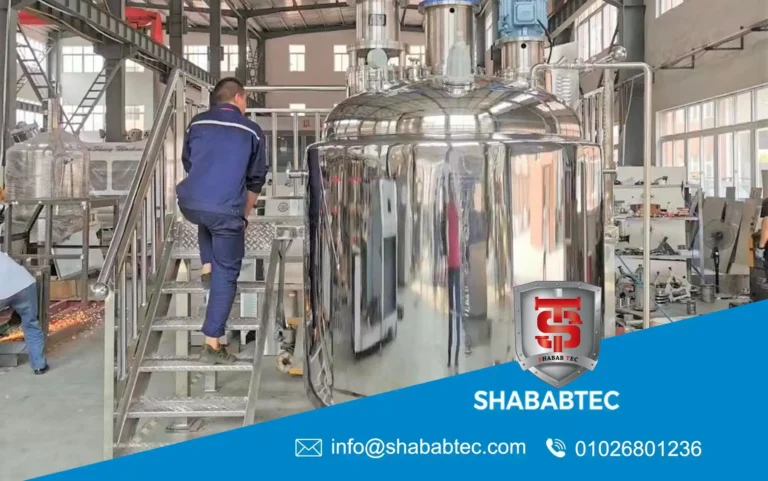
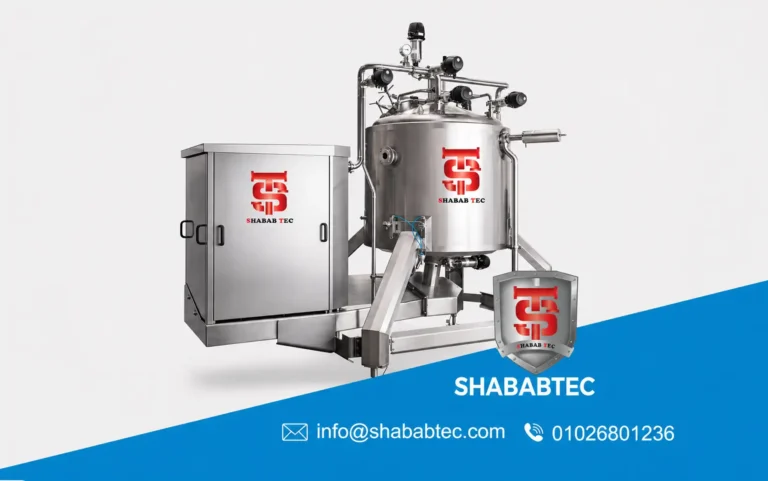
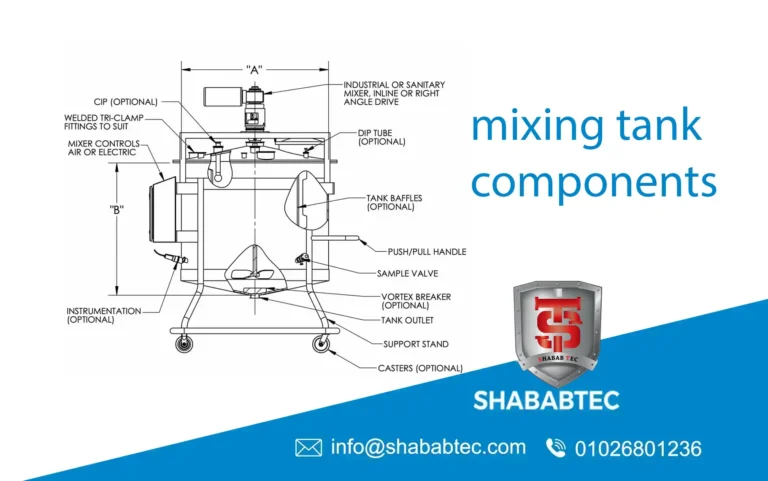
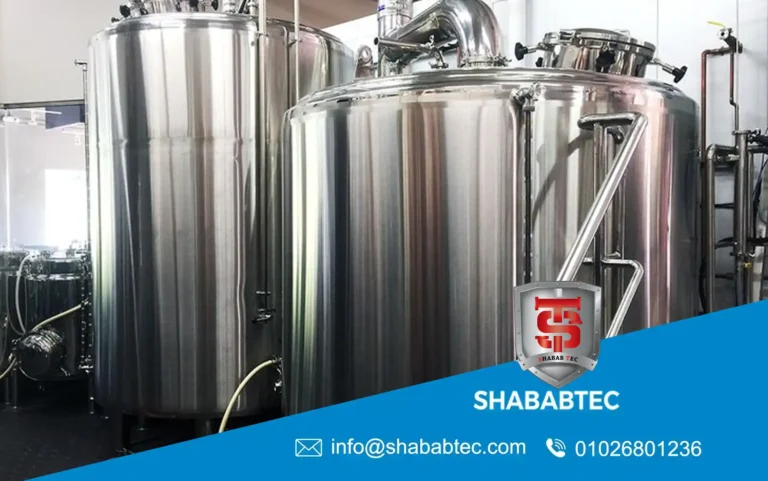
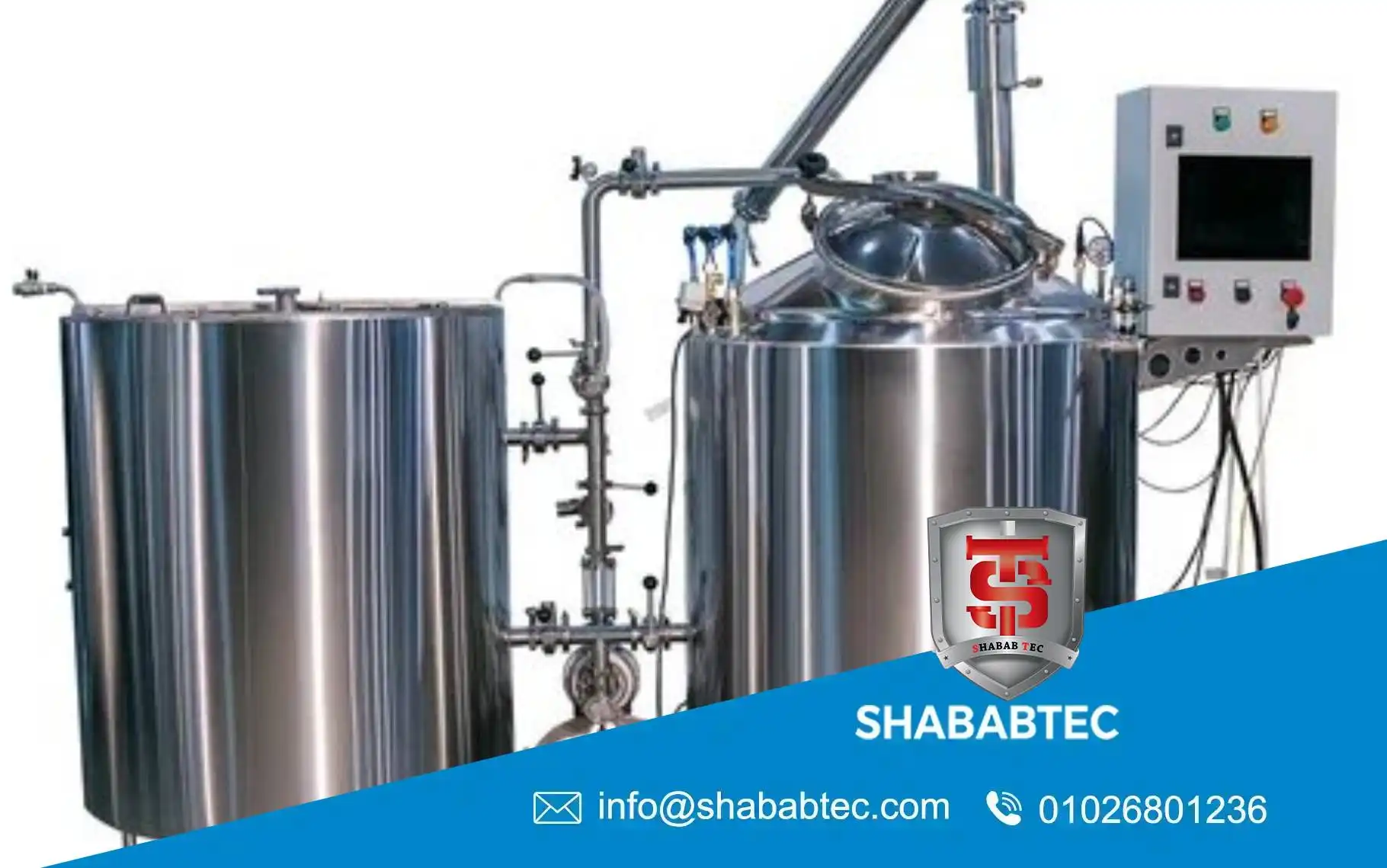
An emulsifying tank is an industrial tank designed to mix, heat, cool, homogenize, and emulsify products under controlled conditions. It is commonly used in cosmetics, pharmaceuticals, food, and chemical production.
A professional emulsifying tank may include:
- Stainless steel tank body
- Anchor agitator
- Scraper system
- High-shear emulsifier
- Homogenizer
- Heating jacket
- Cooling jacket
- Vacuum system
- Temperature control
- Discharge valve
- Control panel
The tank is designed to support the full emulsification process, from phase preparation to final cooling and discharge.
Why Normal Mixing is Not Enough for Emulsification
Normal mixing can blend ingredients, but it may not create a stable emulsion. A simple agitator can move oil and water around the tank, but it may not break droplets finely enough. This can lead to separation after production.
Mixing emulsification needs stronger mechanical action. The mixer must reduce droplet size and distribute the phases evenly across the batch. This is where an emulsifier machine or homogenizer becomes important.
Common problems caused by weak emulsification include:
- Oil and water separation
- Uneven texture
- Grainy cream or lotion
- Unstable viscosity
- Floating oil layer
- Air bubbles inside the product
- Poor product appearance
- Shorter shelf stability
Homogenizer Working Principle
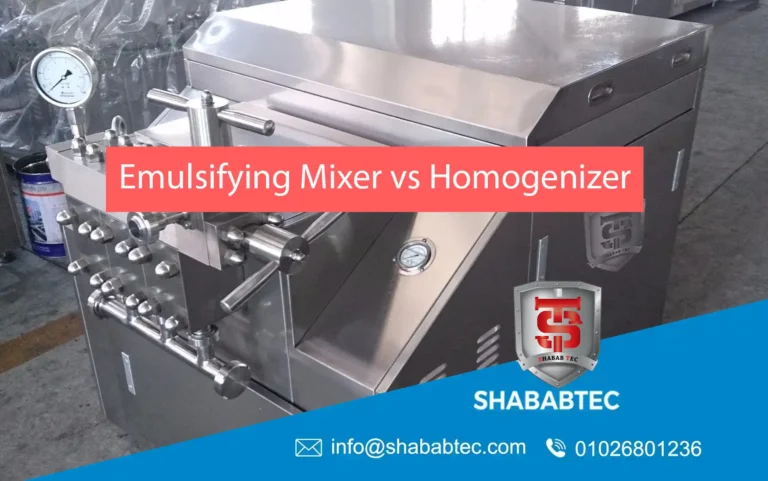
The homogenizer working principle is based on applying strong mechanical force to reduce droplet size and create a more uniform product. A homogenizer pulls the product into a high-shear zone, where it is exposed to intense cutting, turbulence, and pressure differences.
This action breaks larger droplets into smaller droplets and spreads them evenly throughout the product. The result is a smoother texture, better stability, and more consistent appearance.
In cosmetic cream production, the homogenizer helps create a smooth skin feel. In pharmaceutical emulsions, it helps distribute active ingredients more evenly. In food products, it helps improve texture and consistency.
Emulsifier Machine: What Does It Do?
An emulsifier machine is equipment used to create emulsions by applying strong mixing and shear force. It is used when normal mixing is not enough to combine oil and water phases properly.
The emulsifier machine can help with:
- Breaking oil droplets into smaller size
- Improving product smoothness
- Reducing separation risk
- Improving ingredient distribution
- Creating stable cream and lotion texture
- Improving sauce or food emulsion consistency
- Supporting pharmaceutical emulsion quality
Depending on the product, the emulsifier may be installed inside an emulsifying tank, connected inline, or used as part of a vacuum emulsifying system.
Main Types of Emulsions
Oil-in-Water Emulsion
Oil-in-water emulsion means small oil droplets are distributed inside a continuous water phase. This type is common in lotions, light creams, milk-like products, sauces, and many cosmetic emulsions.
Water-in-Oil Emulsion
Water-in-oil emulsion means small water droplets are distributed inside a continuous oil phase. This type is used in some heavy creams, ointments, protective creams, and special cosmetic or pharmaceutical products.
Multiple Emulsions
Some advanced products may contain more complex emulsion structures. These require more careful formula design and process control.
The type of emulsion affects the emulsification process, mixer selection, temperature, and ingredient addition order.
Step-by-Step Emulsification Process
Step 1: Prepare the Water Phase
The water phase is prepared by adding water-soluble ingredients into the tank or a separate vessel. This may include water, humectants, thickeners, preservatives, and water-soluble active ingredients.
The phase may be heated if needed to dissolve ingredients or prepare for emulsification.
Step 2: Prepare the Oil Phase
The oil phase includes oils, waxes, butters, fatty alcohols, emulsifiers, and oil-soluble ingredients. Heating is often used to melt solid materials and make the phase uniform.
Step 3: Match the Temperature
In many formulas, the oil and water phases should be close in temperature before mixing. Large temperature differences may affect emulsion quality, viscosity, and texture.
Step 4: Combine the Phases
The oil and water phases are combined according to the formula type. The emulsifying tank keeps the product moving while the phases are added together.
Step 5: Start Mixing Emulsification
Mixing emulsification begins when mechanical action breaks one phase into small droplets and distributes it inside the other phase. The agitator moves the full batch, while the emulsifier or homogenizer creates finer droplet breakdown.
Step 6: Homogenize the Product
The homogenizer improves the emulsion by reducing droplet size and making the product more uniform. This step supports better smoothness and stability.
Step 7: Cool Under Mixing
After emulsification, the product is cooled while mixing continues. Cooling helps build final viscosity and structure. Scraper movement may help improve heat transfer and prevent product buildup on tank walls.
Step 8: Add Heat-Sensitive Ingredients
Ingredients such as fragrance, some active ingredients, preservatives, vitamins, and extracts may be added at lower temperature. Gentle mixing helps distribute them evenly.
Step 9: Final Quality Check
The final product is checked for texture, viscosity, appearance, smell, color, and stability before discharge or filling.
Factors That Affect the Emulsification Process
Emulsifier Type
The type of emulsifier in the formula affects stability. Different products need different emulsifiers depending on whether the product is oil-in-water or water-in-oil.
Mixing Speed
Speed affects droplet size and product texture. Too little speed may cause poor emulsification, while too much speed may introduce air or damage sensitive formulas.
Temperature
Temperature affects viscosity, melting, ingredient solubility, and emulsion formation. Controlled heating and cooling are important in many products.
Ingredient Addition Order
Adding ingredients in the wrong order can cause lumps, poor dispersion, or separation. A clear process method is important.
Homogenizing Time
Homogenizing time should be enough to create a smooth product, but excessive homogenizing may affect some sensitive formulas.
Product Viscosity
Thicker products need stronger bulk movement. A homogenizer alone may not move the full batch if the product is too viscous. In this case, an anchor agitator or scraper system is needed.
Cooling Rate
Cooling too fast or too slowly can affect final texture. Controlled cooling inside an emulsifying tank helps produce more stable results.
Mixing Emulsification in Cosmetic Production
Mixing emulsification is widely used in cosmetic production, especially for creams, lotions, body butter, hair creams, sunscreen creams, masks, and cosmetic emulsions.
Cosmetic products need smooth texture, pleasant skin feel, stable appearance, and proper fragrance distribution. An emulsifier machine helps create fine droplets and smoother texture, while the agitator keeps the full batch moving.
For premium cosmetic products, vacuum may be used to reduce air bubbles and improve the final appearance.
Mixing Emulsification in Pharmaceutical Production
Pharmaceutical emulsions, creams, ointments, gels, and liquid products may require accurate active ingredient distribution and stable texture. The homogenizer working principle is useful because it improves uniformity and reduces particle or droplet size.
A pharmaceutical emulsifying tank should focus on hygiene, stainless steel grade, easy cleaning, sealing, and process control.
Mixing Emulsification in Food Production
Food products such as mayonnaise, sauces, dressings, chocolate emulsions, cream fillings, and dairy-like products may need emulsification to achieve stable texture and prevent separation.
A food-grade emulsifier machine helps create smooth texture and consistent product quality. Heating and cooling may be required depending on the recipe.
Mixing Emulsification in Chemical Production
Chemical products such as creams, coatings, specialty liquids, emulsified cleaners, and some adhesive products may require stable emulsions. The correct emulsification process depends on product chemistry, viscosity, and required final performance.
In chemical production, material compatibility is very important. The tank body, seal, shaft, blades, and valves should match the product formula.
Common Problems in Emulsification
Separation After Production
Separation happens when the emulsion is not stable. This may be caused by weak emulsifier selection, poor homogenizing, wrong temperature, or incorrect ingredient ratio.
Grainy Texture
Grainy texture may happen when waxes or solids are not fully melted, or when cooling is not controlled properly.
Air Bubbles
Air bubbles can enter the product during high-speed mixing. Vacuum and controlled speed can help reduce this issue.
Weak Viscosity
Weak viscosity may happen if the emulsion structure is poor or if thickeners are not hydrated correctly.
Overheating Sensitive Ingredients
Some active ingredients, fragrances, vitamins, and extracts may be damaged by high temperature. They should be added at the correct stage.
Poor Droplet Reduction
If the homogenizer working principle is not applied properly, droplets may remain large, and the product may separate faster.
Dead Zones Inside the Tank
Thick products can remain unmixed in some areas if the tank does not include proper bulk agitation. An anchor or scraper system helps reduce dead zones.
How to Choose the Right Emulsifying Tank
Choosing the right emulsifying tank depends on product type, viscosity, batch size, temperature requirements, and quality target.
Important questions include:
- What product will be emulsified?
- Is it oil-in-water or water-in-oil?
- What is the final viscosity?
- What batch capacity is required?
- Does the formula need heating?
- Does the formula need cooling?
- Is vacuum needed to reduce air bubbles?
- Is a homogenizer required?
- Does the product need scraper movement?
- What stainless steel grade is suitable?
- How will the product be discharged?
- How will the tank be cleaned?
These answers help define the correct tank design, mixer type, homogenizer power, jacket system, vacuum option, and discharge method.
How to Choose the Right Emulsifier Machine
The right emulsifier machine should match the product and production process. A light lotion does not need the same machine as a thick cream or ointment. A food sauce does not need the same design as a pharmaceutical emulsion.
Important selection points include:
- Product viscosity
- Required droplet size reduction
- Batch size
- Need for high shear
- Need for vacuum
- Heating and cooling requirements
- Material compatibility
- Cleaning method
- Discharge requirements
- Control panel options
A professional emulsifier machine should support stable production and repeatable product quality.
Why ShababTec is a Practical Choice for Emulsifying Tank Solutions
ShababTec provides stainless steel equipment and industrial mixing systems for liquid and semi-solid production. The company supports factories working with cosmetics, pharmaceuticals, food, chemicals, creams, lotions, ointments, gels, sauces, syrups, adhesives, detergents, and other emulsified products.
For factories that need to understand how emulsifier works in real production, ShababTec can help connect the process with the right equipment. This includes selecting the proper emulsifying tank, mixer type, homogenizer power, heating and cooling system, vacuum option, and discharge design.
Whether the factory needs an emulsifier machine for cosmetics, a hygienic tank for pharmaceutical emulsions, or a food-grade system for sauces and dressings, the equipment should be designed around the formula and final product target.
Maintenance Tips for Emulsifying Tank and Emulsifier Machine
Regular maintenance helps keep the emulsifying tank and emulsifier machine working efficiently. Since emulsified products can be sticky or viscous, cleaning should be done carefully after each batch.
- Clean the tank before product residue dries
- Check agitator blades for buildup
- Inspect scraper blades if available
- Check the homogenizer head regularly
- Monitor motor and gearbox sound during operation
- Inspect shaft seals for leakage
- Clean the discharge valve properly
- Check heating and cooling jacket connections
- Inspect stainless steel surfaces for scratches or residue
- Review process speed when changing formulas
Final Thoughts
Understanding how emulsifier works helps factories produce smoother, more stable, and more consistent products. The emulsification process depends on combining the right formula with controlled temperature, proper mixing, and suitable equipment.
A professional emulsifying tank supports phase preparation, mixing, homogenizing, heating, cooling, vacuum, and discharge. The homogenizer working principle helps reduce droplet size and improve product uniformity, while the emulsifier machine creates the strong mechanical action needed for stable emulsions.
For factories that need reliable mixing emulsification solutions, ShababTec offers practical stainless steel systems designed around real production needs, product viscosity, and final quality targets.
FAQ – How Emulsifier Works
How emulsifier works in production?
An emulsifier works by helping oil and water phases combine during mixing and reducing the chance of separation after production. The machine breaks droplets into smaller size, while the emulsifier in the formula helps stabilize them.
What is the emulsification process?
The emulsification process is the controlled mixing of two phases, usually oil and water, using emulsifiers and mechanical force to create a smooth and stable product.
What is an emulsifying tank used for?
An emulsifying tank is used to mix, heat, cool, homogenize, and emulsify products such as creams, lotions, sauces, ointments, gels, and pharmaceutical emulsions.
What is the homogenizer working principle?
The homogenizer working principle is based on applying strong shear and turbulence to reduce droplet or particle size and create a more uniform and stable product.
What does an emulsifier machine do?
An emulsifier machine applies strong mechanical mixing to break droplets, improve phase distribution, create smoother texture, and support stable emulsions.
What is mixing emulsification?
Mixing emulsification is the process of using mixing and emulsifying equipment to combine phases that normally separate, creating a uniform product with stable texture and appearance.
See Also: industrial soap making | mixing tank paste