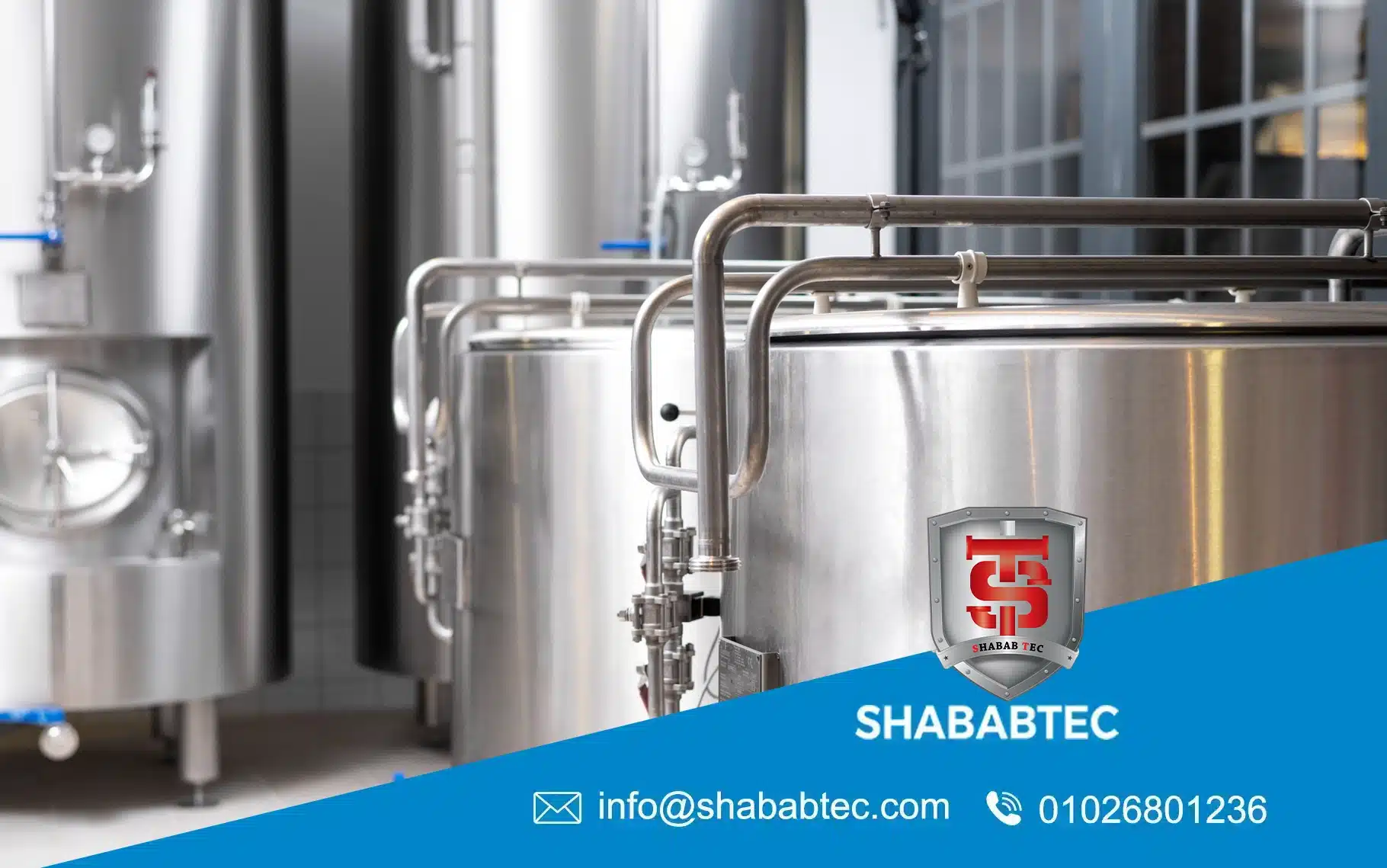
Stainless Steel Mixing Tank Types and Industrial Uses
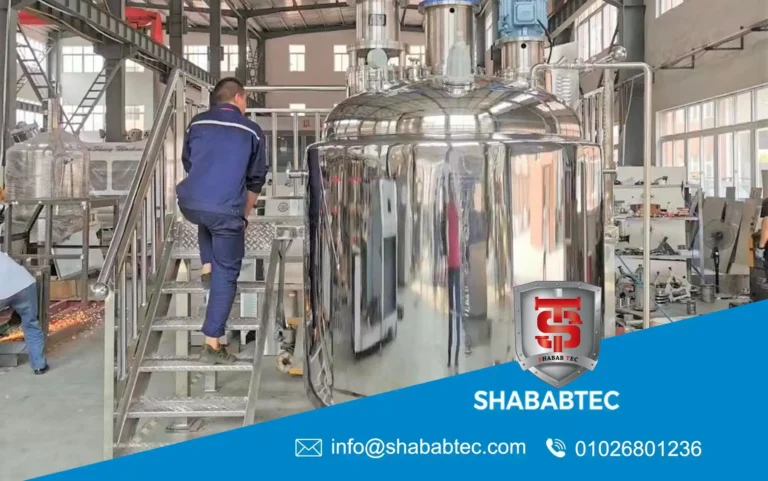
A stainless steel mixing tank is one of the most essential pieces of equipment in modern industrial processing. Whether used in cosmetics, pharmaceuticals, food production, or chemical manufacturing, these systems are designed to deliver precise mixing, consistent product quality, and efficient processing.
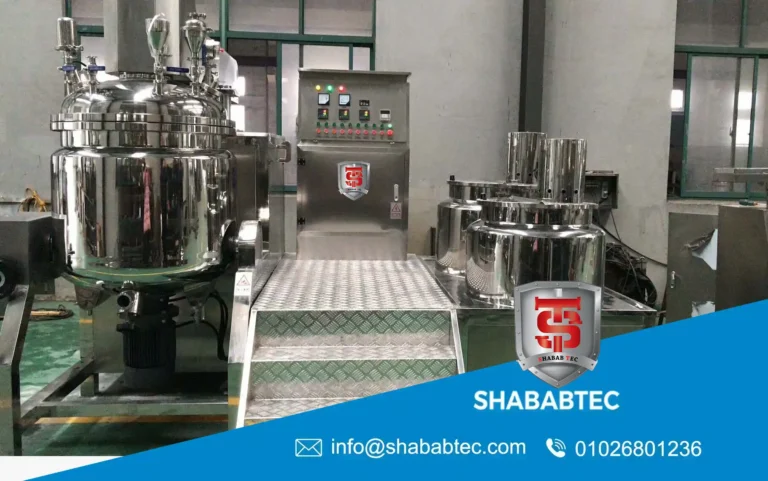
From small-scale operations to large industrial mixing tanks, manufacturers rely on these systems to handle liquids and semi-solids with varying viscosities. A properly designed steel mixing tank integrates mixing, heating, cooling, and sometimes homogenizing functions into a single unit—making it a complete process tank solution.
At Shabab Tec, stainless steel tanks are engineered to support liquid and semi-solid production lines, ensuring durability, operational efficiency, and adaptability across industries.
know more about: Industrial Stainless Steel Mixing Tanks – Complete Guide
What is a Stainless Steel Mixing Tank?
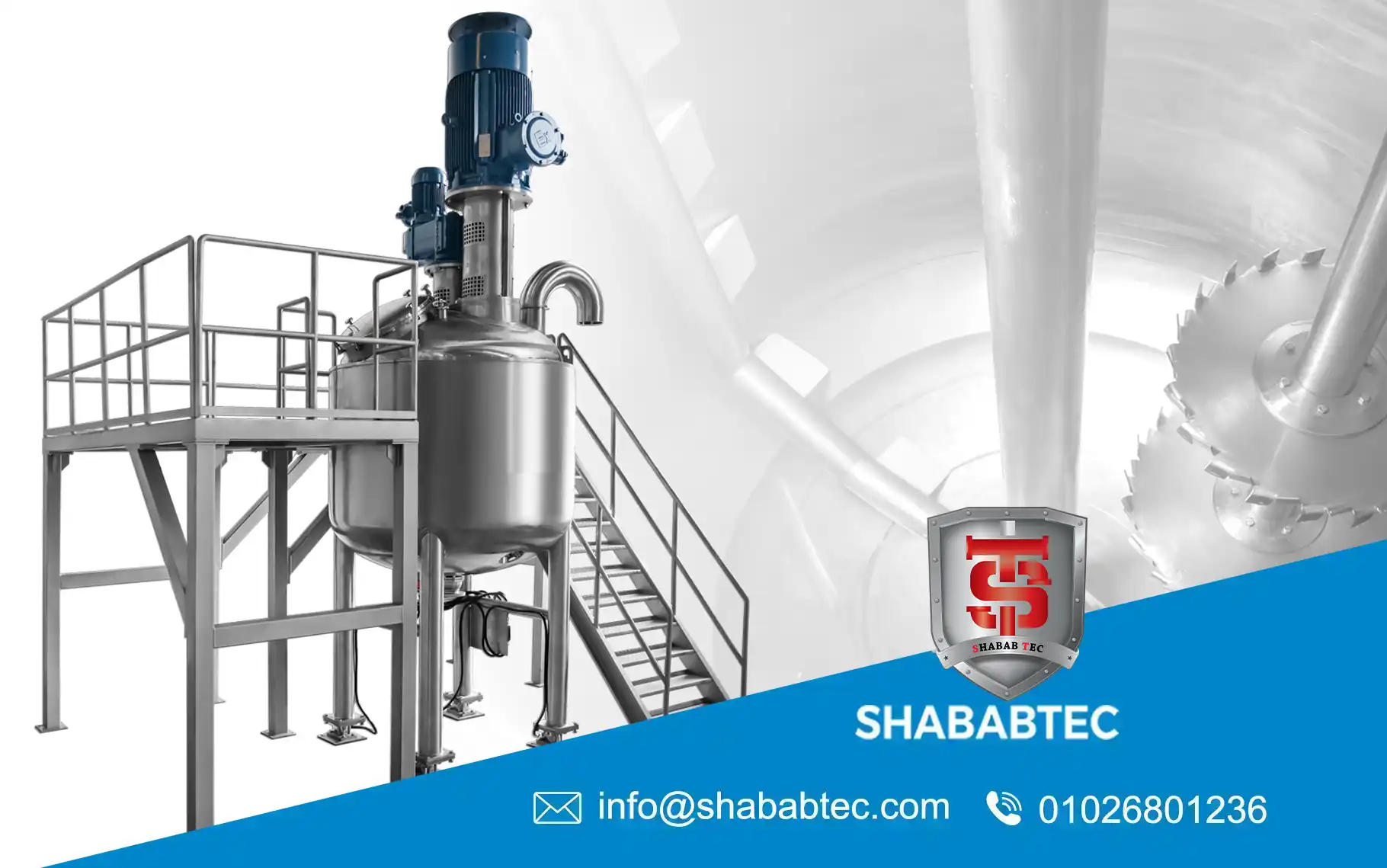
A mixing tank industrial system is a vessel equipped with an internal agitator that ensures uniform blending of materials. These tanks are typically constructed using high-grade stainless steel such as 304, 304L, or 316L to meet hygiene and corrosion resistance requirements.
The tank operates through a tank agitator, driven by a motor or reducer, which rotates mixing elements inside the vessel to create controlled flow patterns.
Core Components:
- Tank body
- Cover (sealed or open)
- Agitator system
- Transmission device (motor/reducer)
- Shaft sealing system
- Support structure
These elements form the foundation of any efficient Industrial Mixing Tank Design and Working Principle system.
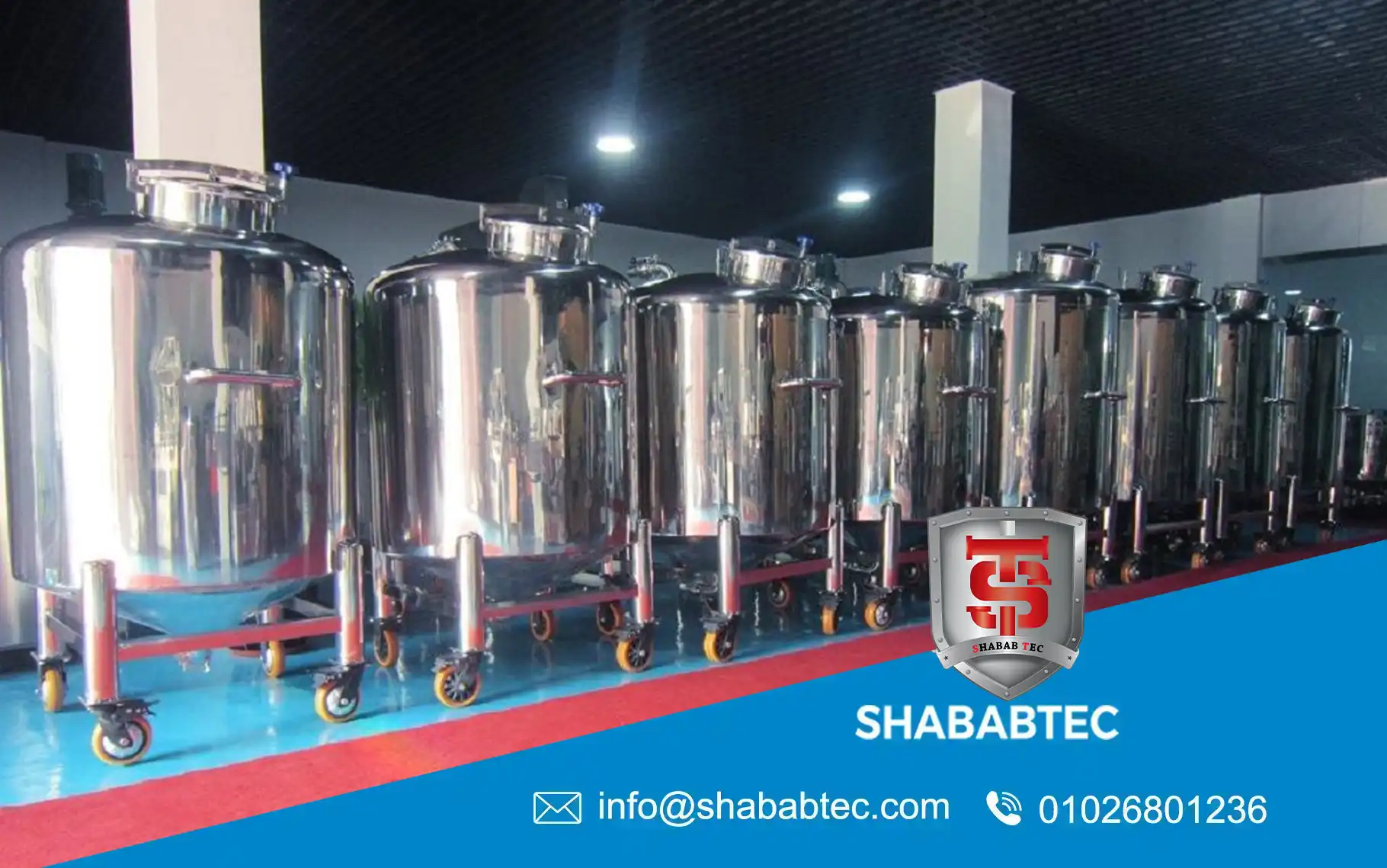
Types of Stainless Steel Mixing Tanks
Understanding the different types of stainless steel mixing tanks is critical for selecting the right equipment for your process.
1. Standard Mixing Tank
This is the most basic type of mixing tank industrial system, designed for:
- Low-viscosity liquids
- Simple blending processes
Used in:
- Water-based solutions
- Syrups
- Basic chemical mixtures
2. Agitator Tank
An agitator tank is equipped with a mechanical mixing system that ensures continuous agitation.
Key features:
- Rotating impeller
- Adjustable speed
- Efficient mixing performance
Common applications:
- Chemical mixing tank operations
- Detergent production
- Liquid soap manufacturing
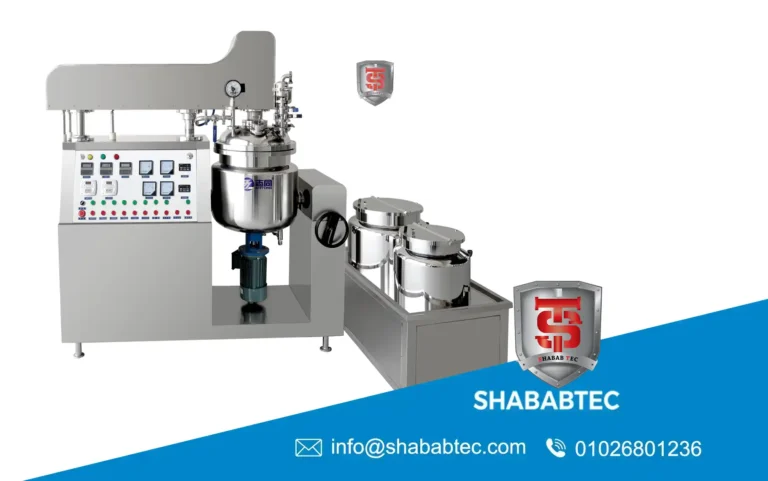
3. Emulsifying Mixing Tank
This type is designed for handling high-viscosity materials and creating stable emulsions.
Used in:
- Cream production
- Lotion manufacturing
- Cosmetic formulations
Shabab Tec systems highlight that emulsifying tanks are especially effective for materials with high base viscosity.
4. Homogenizer Mixing Tank
A homogenizer tank provides high shear force to:
- Reduce particle size
- Achieve uniform consistency
Ideal for:
- Pharmaceutical products
- Food emulsions
- High-quality cosmetic production
5. Vacuum Mixing Tank
Vacuum systems are designed to:
- Remove air bubbles
- Improve product stability
- Enhance texture
Widely used in:
- Cream and ointment production
- High-end cosmetic processing
6. Jacketed Mixing Tank
A jacketed process tank includes a heating or cooling layer around the vessel.
Heating options include:
- Electric jacket heating
- Coil heating systems
This allows precise temperature control during production.
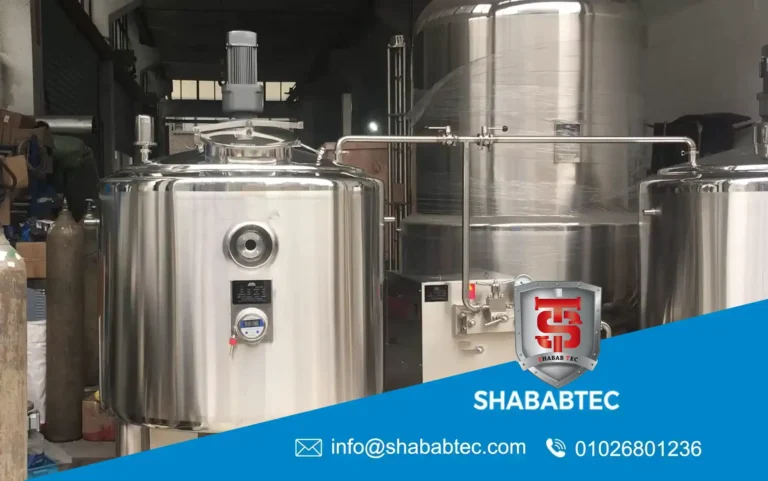
7. Storage & Process Tanks
In many production lines, used stainless steel tanks or newly manufactured tanks serve dual purposes:
- Storage tanks → hold finished or intermediate products
- Process tanks → perform mixing, heating, or reactions
These tanks are essential for continuous industrial workflows.
Industrial Uses of Stainless Steel Mixing Tanks
The versatility of industrial mixing tanks allows them to serve multiple industries effectively.
1. Cosmetics Industry
Applications include:
- Skin creams
- Hair gels
- Lotions
- Shampoo
- Liquid soap
These products often require emulsification and precise viscosity control.
2. Food Industry
Common uses:
- Sauce production
- Chocolate mixing
- Jam processing
Food-grade stainless steel ensures hygiene and safety.
3. Pharmaceutical Industry
Used for:
- Syrup preparation
- Ointments
- Medicinal pastes
High-grade materials like 316L are preferred for strict hygiene standards.
4. Chemical Industry
Applications include:
- Paint mixing
- Adhesive production
- Detergent manufacturing
A chemical mixing tank must resist corrosion and handle reactive substances.
Why Stainless Steel is the Preferred Material
A steel mixing tank made from stainless steel offers several advantages:
1. Corrosion Resistance
Suitable for chemical and pharmaceutical applications.
2. Hygienic Surface
Easy to clean and maintain.
3. Durability
Long operational life with minimal maintenance.
4. Material Options
- 304 → general applications
- 304L → improved weldability
- 316L → high corrosion resistance
These materials are standard in Shabab Tec equipment design.
Structural Design of a Mixing Tank
A typical stainless steel mixing tank includes:
Tank Body
- Main processing chamber
- Designed for pressure and temperature control
Cover System
- Flanged or welded
- Includes ports for:
- Feeding
- Discharge
- Observation
- Temperature and pressure measurement
Agitator System
- Driven by a motor
- Provides consistent mixing
Shaft Seal System
Options include:
- Mechanical seal
- Packing seal
- Labyrinth seal
Transmission System
- Motor or reducer installed on top
- Drives the agitator shaft
This integrated structure ensures efficient operation and process stability.
How to Choose the Right Stainless Steel Mixing Tank
Selecting the correct stainless steel mixing tank is not just about capacity—it is a process-driven engineering decision. The right choice ensures optimal mixing efficiency, product consistency, and long-term operational reliability.
1. Define the Process Requirements
Before choosing a mixing tank industrial system, you must clearly define:
- Type of product (liquid / semi-solid)
- Viscosity level
- Required functions (mixing only or full processing)
Shabab Tec systems are designed to handle a wide range of viscosity levels, especially emulsions and semi-solid materials, making them suitable for complex production processes.
know more about: Clean Room System Complete Guide to Modular Design, GMP Compliance Turnkey Solutions
2. Select the Appropriate Tank Type
Each application requires a specific configuration:
- Agitator tank → for continuous mixing
- Emulsifying tank → for creams and lotions
- Homogenizer tank → for fine particle distribution
- Jacketed tank → for temperature-controlled processes
Choosing the wrong type can result in:
- Poor mixing quality
- Increased production time
- Higher energy consumption
3. Material Selection
Material choice is critical for durability and product safety.
Available options:
- Stainless steel 304 → general applications
- Stainless steel 304L → better weldability
- Stainless steel 316L → high corrosion resistance
For industries like pharmaceuticals and food, 316L is typically preferred due to stricter hygiene requirements.
4. Heating and Cooling Requirements
If your process involves temperature control, you must choose the right system:
- Electric jacket heating → fast and efficient
- Coil heating system → uniform heat distribution
These features are essential for:
- Emulsification
- Chemical reactions
- Food processing
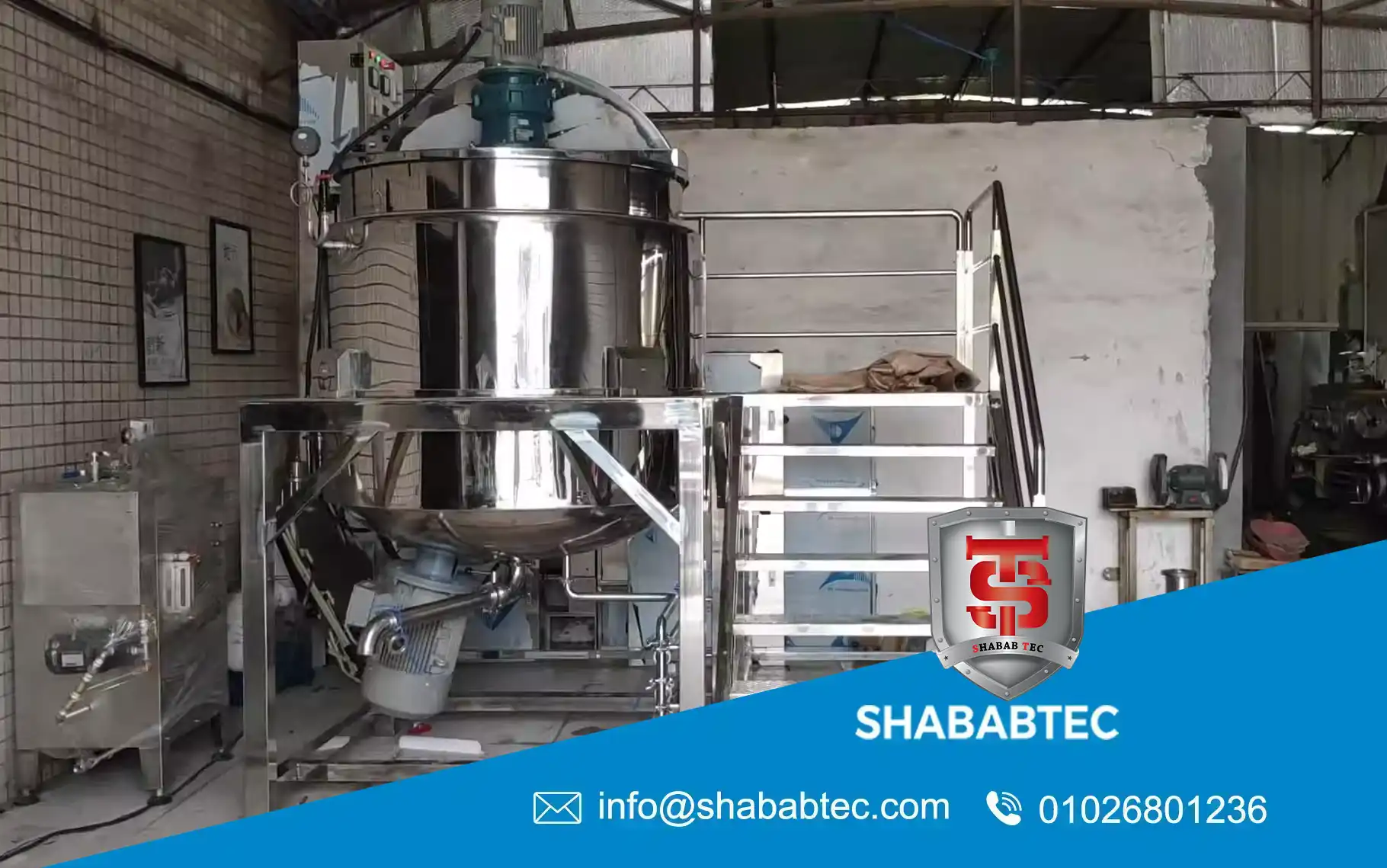
Used Stainless Steel Tanks vs New Tanks
When evaluating used stainless steel tanks, manufacturers often consider cost savings. However, there are important trade-offs.
Advantages of Used Stainless Steel Tanks
- Lower initial investment
- Faster availability
- Suitable for simple processes
Limitations
- Unknown wear and tear
- Limited customization
- Potential hygiene risks
When to Choose New Tanks
For advanced production systems like:
- Cosmetics manufacturing
- Pharmaceutical production
- Integrated processing lines
New tanks from Shabab Tec offer:
- Full customization
- Integrated functions (mixing, heating, cooling, homogenizing)
- Higher efficiency and reliability
Industrial Process Optimization Using Mixing Tanks
A properly designed industrial mixing tank improves overall production performance.
1. Cycle Time Reduction
Integrated systems combine:
- Mixing
- Heating
- Cooling
- Homogenization
This reduces the total processing time significantly.
2. Product Consistency
A well-designed tank agitator ensures:
- Uniform mixing
- Stable emulsions
- Consistent product quality
3. Energy Efficiency
Efficient systems:
- Use optimized motor power
- Reduce heat loss
- Improve mixing performance
4. Operational Simplicity
Shabab Tec tanks are designed for:
- Easy operation
- Minimal maintenance
- Long service life
Advanced Industrial Applications
Beyond basic mixing, process tanks are used in complex industrial operations:
1. Emulsion Production
Used in:
- Creams
- Lotions
- Cosmetic products
Requires:
- High shear mixing
- Temperature control
2. Chemical Reactions
A chemical mixing tank supports:
- Controlled reactions
- Safe handling of reactive materials
3. Food Processing
Applications include:
- Sauce preparation
- Chocolate mixing
- Syrup production
Food-grade stainless steel ensures hygiene and safety.
4. Pharmaceutical Manufacturing
Used for:
- Syrups
- Ointments
- Medicinal pastes
Requires:
- Precise control
- High-quality materials
Key Design Considerations for Industrial Tanks
When designing or selecting a steel mixing tank, consider:
1. Tank Geometry
- Diameter and height ratio
- Affects mixing efficiency
2. Agitator Design
- Type of impeller
- Speed control
- Power capacity
3. Sealing System
Options include:
- Mechanical seal
- Packing seal
- Labyrinth seal
Each is selected based on process requirements.
4. Instrumentation
Modern tanks include:
- Temperature sensors
- Pressure gauges
- Safety valves
These ensure safe and controlled operation.
Role of Shabab Tec in Industrial Mixing Solutions
Shabab Tec provides a complete range of:
- Liquid & semi-solid preparation mixers
- Storage tanks
- Heating & cooling tanks
Their systems are engineered to:
- Handle multiple viscosities
- Integrate multiple processing functions
- Deliver high efficiency and durability
This makes them ideal for industries requiring reliable and scalable production systems.
Frequently Asked Questions (FAQ)
What are the different types of mixing tanks?
The main types of stainless steel mixing tanks include: Standard mixing tank → for low-viscosity liquids Agitator tank → continuous mixing with a mechanical impeller Emulsifying tank → for creams, lotions, and high-viscosity materials Homogenizer tank → high shear mixing for uniform particle size Vacuum mixing tank → removes air bubbles and improves stability Jacketed mixing tank → provides heating or cooling during processing These types are widely used across industrial mixing tanks applications depending on the process requirements.
What are the different types of tanks?
Industrial tanks are generally classified into: Mixing tanks (process tanks) → used for blending and reactions Storage tanks → used for holding raw materials or finished products Heating/cooling tanks → used for temperature-controlled processes This classification is standard in integrated production systems like those used by Shabab Tec.
What are the different types of mixing machines?
Mixing machines used with a mixing tank industrial system include: Agitators (tank agitator systems) High shear mixers Homogenizers Planetary mixers Ribbon mixers (for semi-solids) Each type is selected based on viscosity and required mixing performance.
What is type 1, type 2, type 3 chemical tanker?
Chemical tankers are classified based on the level of hazard of the chemicals they carry: Type 1 → highest hazard chemicals, requires maximum protection Type 2 → moderate hazard chemicals Type 3 → lower hazard chemicals Each type has different design and safety requirements for transport and storage.
What are the three types of mixers?
The three main types of mixers are: Agitator mixers → for general mixing High shear mixers → for emulsification Homogenizers → for fine particle distribution These are commonly integrated into industrial mixing tanks.
What are the two types of tanks?
The two main categories are: Storage tanks → for holding materials Process tanks (mixing tanks) → for processing and mixing
What are the top 5 tanks?
The most widely used tanks in industry include: Stainless steel mixing tank Chemical mixing tank Jacketed process tank Storage tank Emulsion tank Each serves a specific role in production systems.
Which type of tank is best?
There is no single “best” tank—it depends on your application. For cosmetics → emulsifying mixing tank For food → hygienic stainless steel mixing tank For chemicals → corrosion-resistant chemical mixing tank For pharmaceuticals → 316L stainless steel tank The best choice is the one that matches your process requirements, material properties, and production goals.
Final Conclusion
A stainless steel mixing tank is not just a container—it is a complete processing solution that directly influences production quality, efficiency, and scalability.
Whether you are working with:
- Cosmetics
- Food products
- Pharmaceuticals
- Chemicals
Choosing the right industrial mixing tank ensures:
- Consistent product quality
- Reduced production time
- Lower operational costs
From standard agitator tanks to advanced process tanks with integrated heating, cooling, and homogenizing systems, the right configuration can transform your entire production line.
With Shabab Tec’s engineering approach and system integration, manufacturers can achieve a balance between performance, durability, and profitability—making these tanks a critical investment for any industrial operation.