Industrial Stainless Steel Mixing Tanks – Complete Guide
In modern manufacturing, achieving consistent product quality, efficient production cycles, and scalable operations depends heavily on the right processing equipment. Among the most critical systems used across industries is the stainless steel mixing tank, a versatile solution designed for blending, heating, cooling, and homogenizing a wide range of liquid and semi-solid materials.
From cosmetics like creams, lotions, and shampoos to food products such as sauces and chocolate, and even pharmaceutical formulations like syrups and ointments, industrial mixing tanks play a central role in ensuring uniformity and process control. Their ability to handle different viscosities and integrate multiple functions—such as mixing, vacuuming, and temperature control—makes them an essential component in any production line.
At the core of these systems is the tank agitator, which drives the mixing process and determines the efficiency of material blending. Combined with robust construction using materials like stainless steel 304 and 316L, these tanks offer durability, corrosion resistance, and compliance with hygienic standards required in sensitive industries.
This comprehensive guide explores everything you need to know about mixing tanks, including their applications, types, design structure, sizing methods, and power calculations. Whether you are selecting a chemical mixing tank, a stirring tank, or a fully integrated emulsifying system, understanding these fundamentals will help you make informed decisions and optimize your production process.
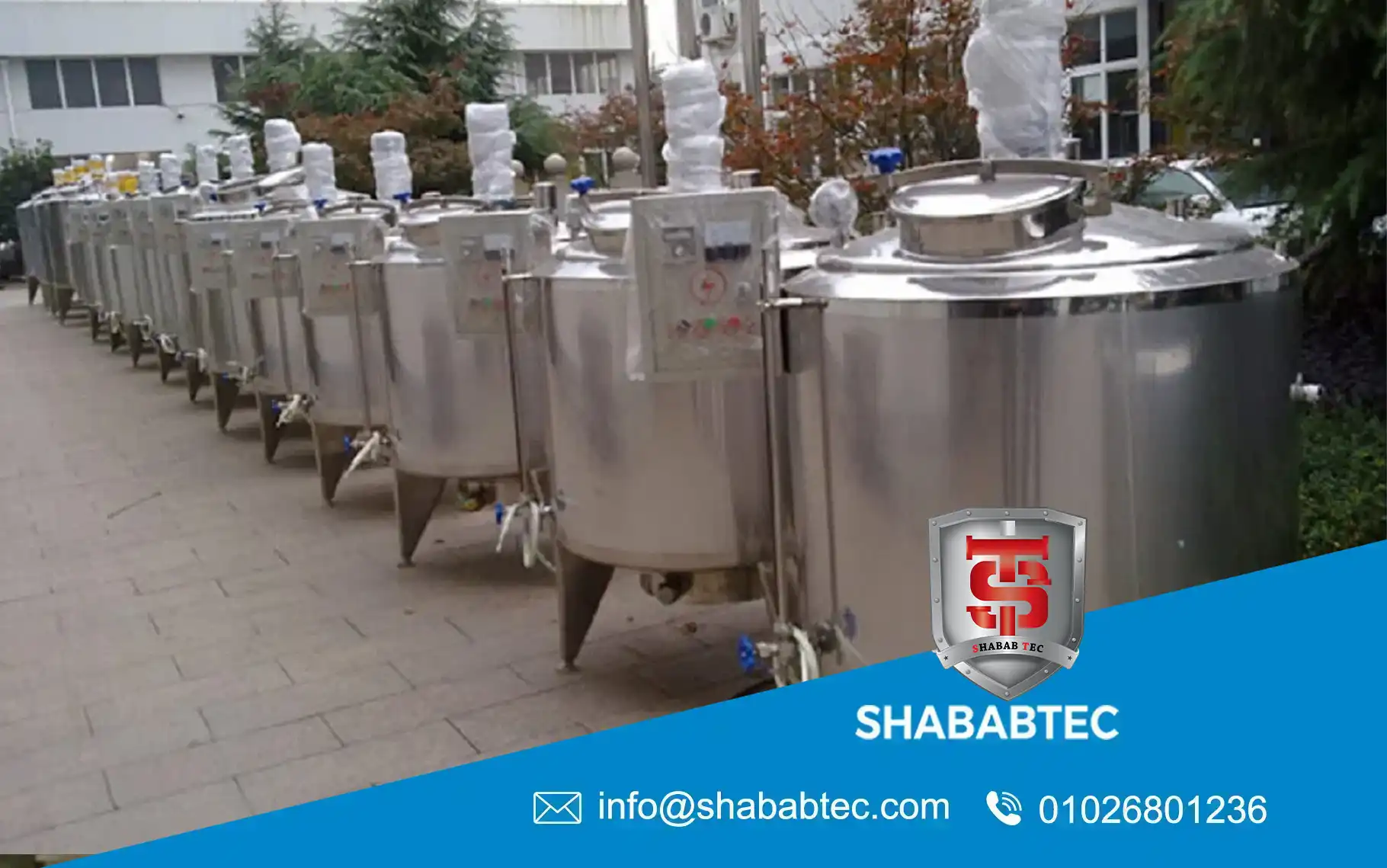
Introduction to Stainless Steel Mixing Tanks
A stainless steel mixing tank is a core piece of industrial processing equipment used across multiple sectors including cosmetics, food, pharmaceuticals, and chemicals. These systems are engineered to handle blending, homogenizing, heating, cooling, and storing liquid and semi-solid materials efficiently within a controlled environment.
At Shabab Tec, the focus is on liquid & semi-solid processing systems, delivering integrated solutions such as preparation mixers, storage tanks, and heating/cooling tanks designed for industrial-scale production.
The versatility of industrial mixing tanks, also referred to as agitator tanks, stirring tanks, or chemical mixing tanks, makes them indispensable in modern manufacturing workflows.
What is a Stainless Steel Mixing Tank?
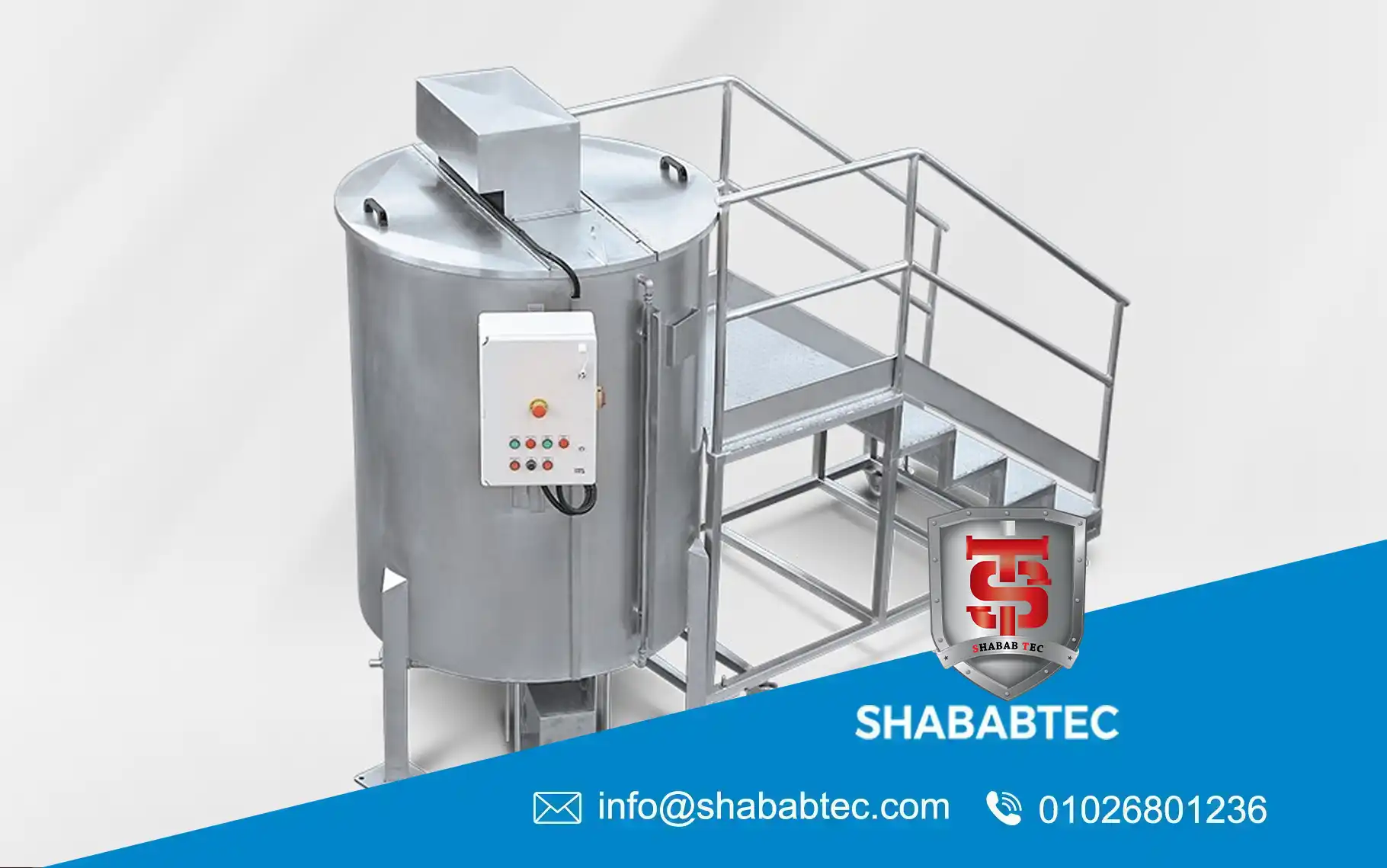
A mixing tank is a vessel equipped with an internal tank agitator driven by a motor or reducer system. Its primary function is to ensure uniform blending of materials with varying viscosities.
The system typically includes:
- Tank body
- Cover (sealed or open)
- Agitator (mixing shaft + impeller)
- Transmission system (motor/reducer)
- Shaft sealing system
- Supporting structure
These components work together to provide controlled mixing, ensuring consistency and product quality.
Applications of Industrial Mixing Tanks
One of the strongest advantages of a stainless steel mixing tank is its wide application range. According to Shabab Tec’s equipment scope, these tanks are used in:
1. Cosmetics Industry
- Skin creams
- Hair gels
- Lotions
- Liquid soap
- Shampoo
2. Food Industry
- Jam
- Chocolate
- Sauces
3. Pharmaceutical Industry
- Ointments
- Syrups
- Pastes
4. Chemical Industry
- Paints
- Adhesives
- Detergents
These industries rely heavily on industrial mixing tanks because they allow precise control over viscosity, temperature, and mixing intensity.
Know More About: Clean Room System Complete Guide to Modular Design, GMP Compliance & Turnkey Solutions
Key Features of Stainless Steel Mixing Tanks
Shabab Tec systems are designed with a strong engineering focus. The main features include:
1. Material Flexibility
Mixing tanks can be manufactured using:
- Stainless steel 304
- Stainless steel 304L
- Stainless steel 316L
This ensures compatibility with different chemical and hygienic requirements.
2. Heating and Cooling Options
To meet process demands, tanks can include:
- Electric jacket heating
- Coil heating systems
These features enable temperature-sensitive production such as emulsions and syrups.
3. Multi-Function Integration
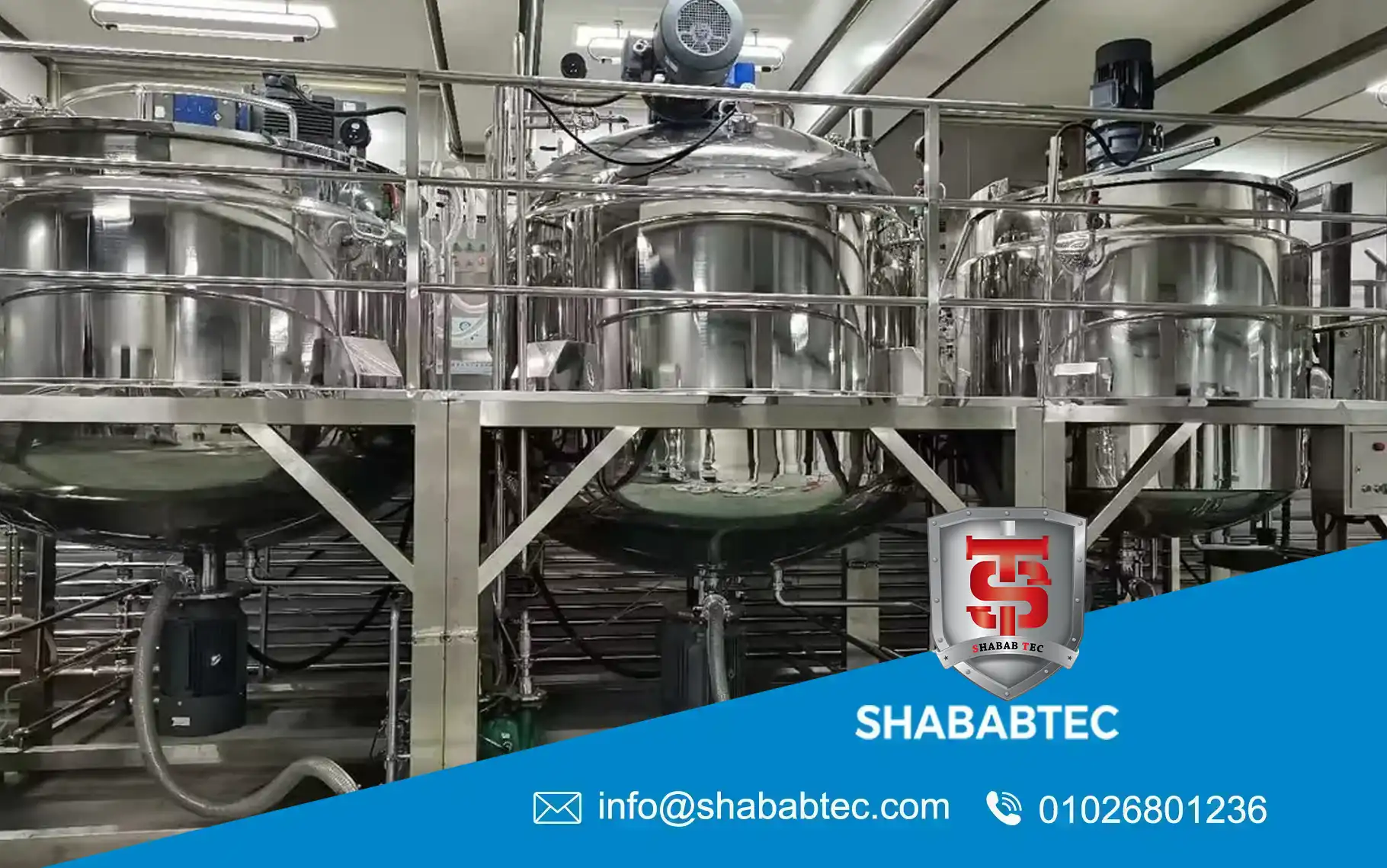
Modern agitator tanks are not just mixers—they integrate:
- Mixing
- Vacuuming
- Heating
- Cooling
- Homogenizing
This integration significantly reduces production cycle time and increases efficiency.
4. High Efficiency & ROI
Key operational advantages:
- Simple operation
- Durable construction
- Low investment cost
- Fast production cycles
- High profitability
These factors make them ideal for both small-scale and large-scale industrial production.
Types of Mixing Tanks (Based on Function)
Industrial mixing tanks can be categorized based on their processing function:
1. Preparation Mixing Tank
Used for:
- Initial blending
- Ingredient dispersion
- Liquid formulation
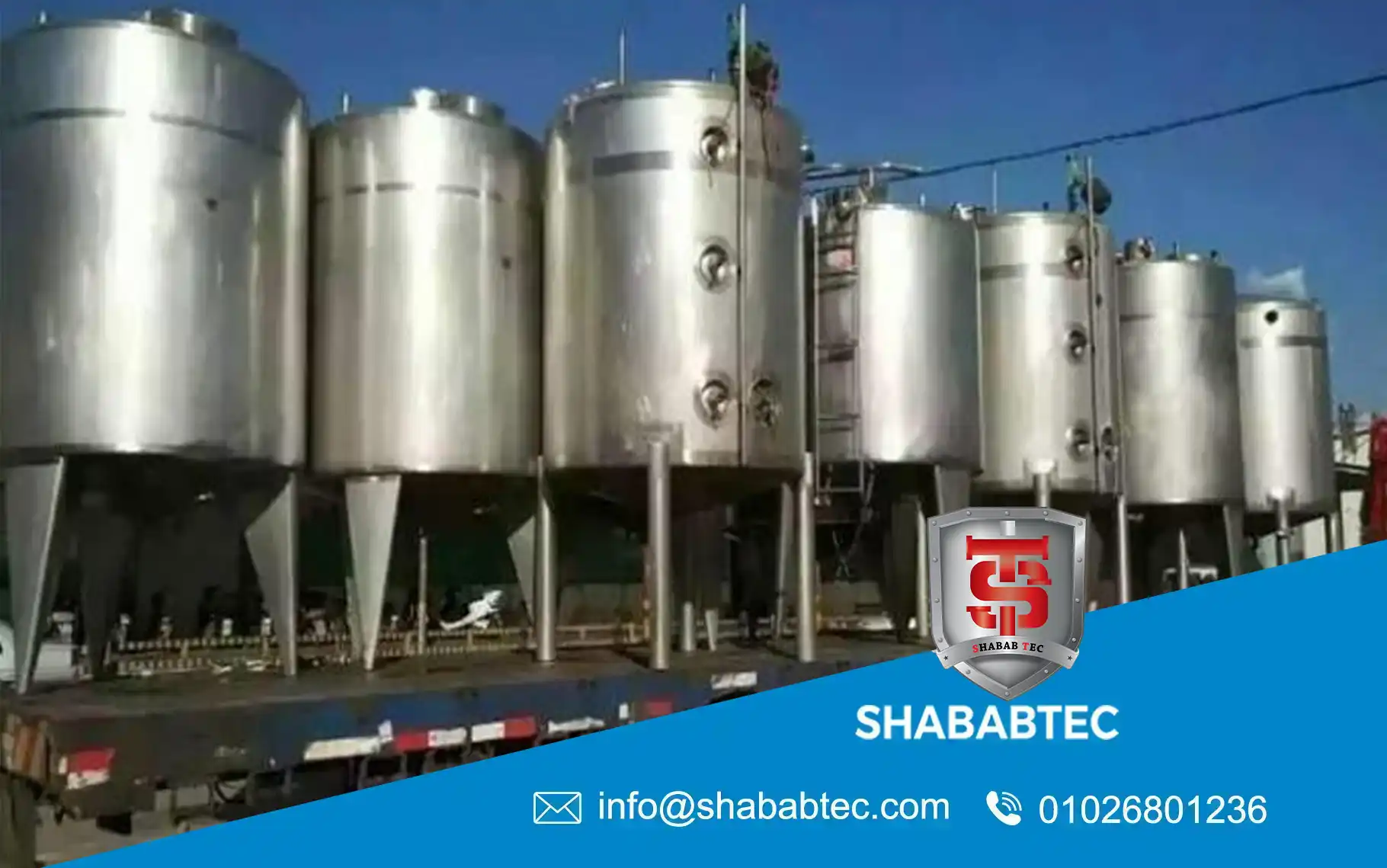
2. Storage Tank
Used for:
- Holding finished products
- Maintaining stability before packaging
3. Heating / Cooling Tank
Used for:
- Temperature-controlled processing
- Thermal reactions
These three categories form the backbone of liquid and semi-solid production systems.
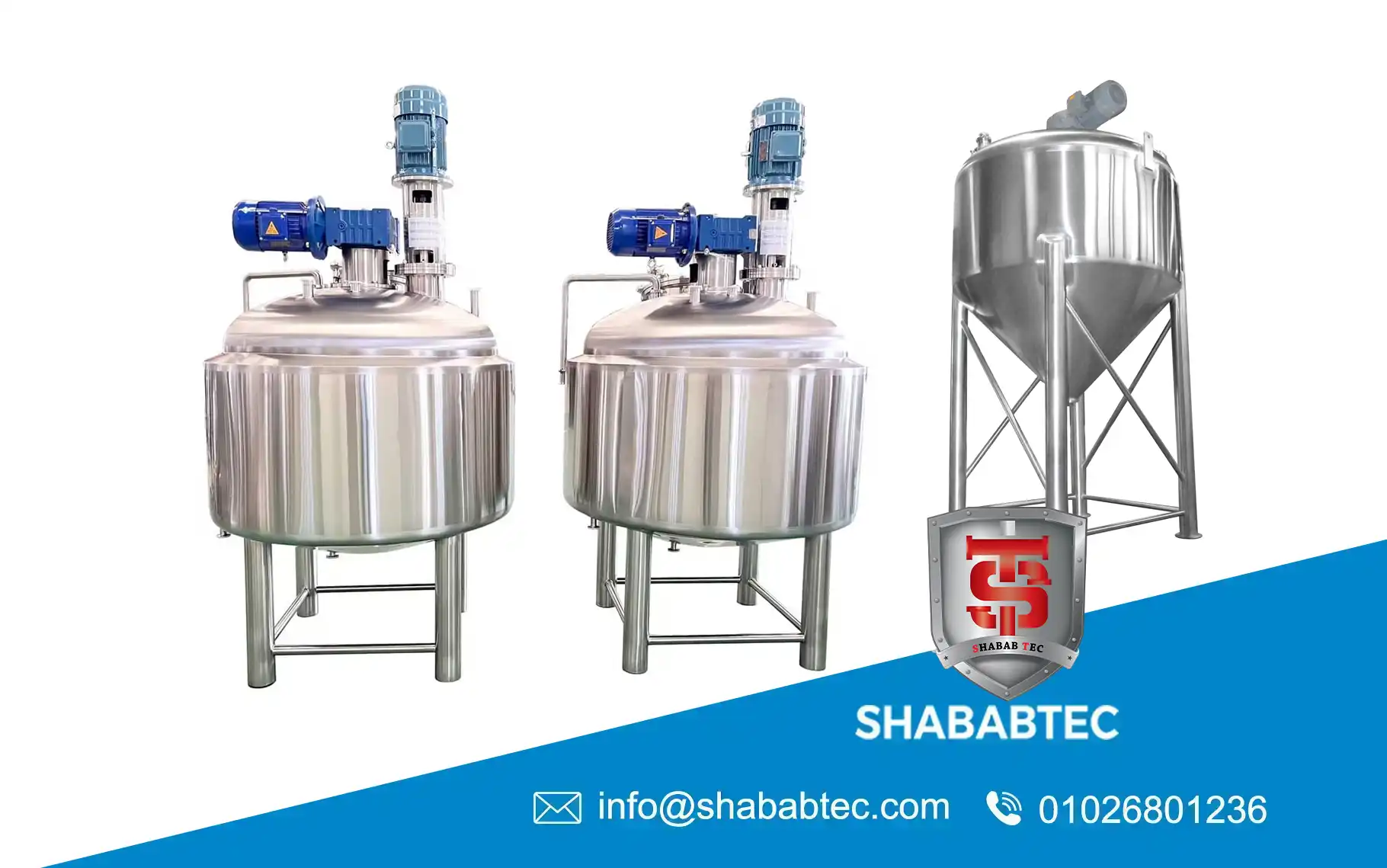
Types of Mixing Tanks (Based on Process Capability)
1. Standard Mixing Tank
- Basic agitation
- Suitable for low-viscosity liquids
2. Emulsifying Mixing Tank
- Designed for emulsions
- Ideal for creams, lotions, and viscous materials
3. Homogenizer Mixing Tank
- High shear mixing
- Produces uniform particle size
4. Vacuum Mixing Tank
- Removes air bubbles
- Improves product stability
These are commonly used in industries where consistency and product texture are critical.
Equipment Structure in Detail
A stirring tank from Shabab Tec follows a well-defined structure:
Tank Body
- Main vessel
- Designed for pressure and temperature control
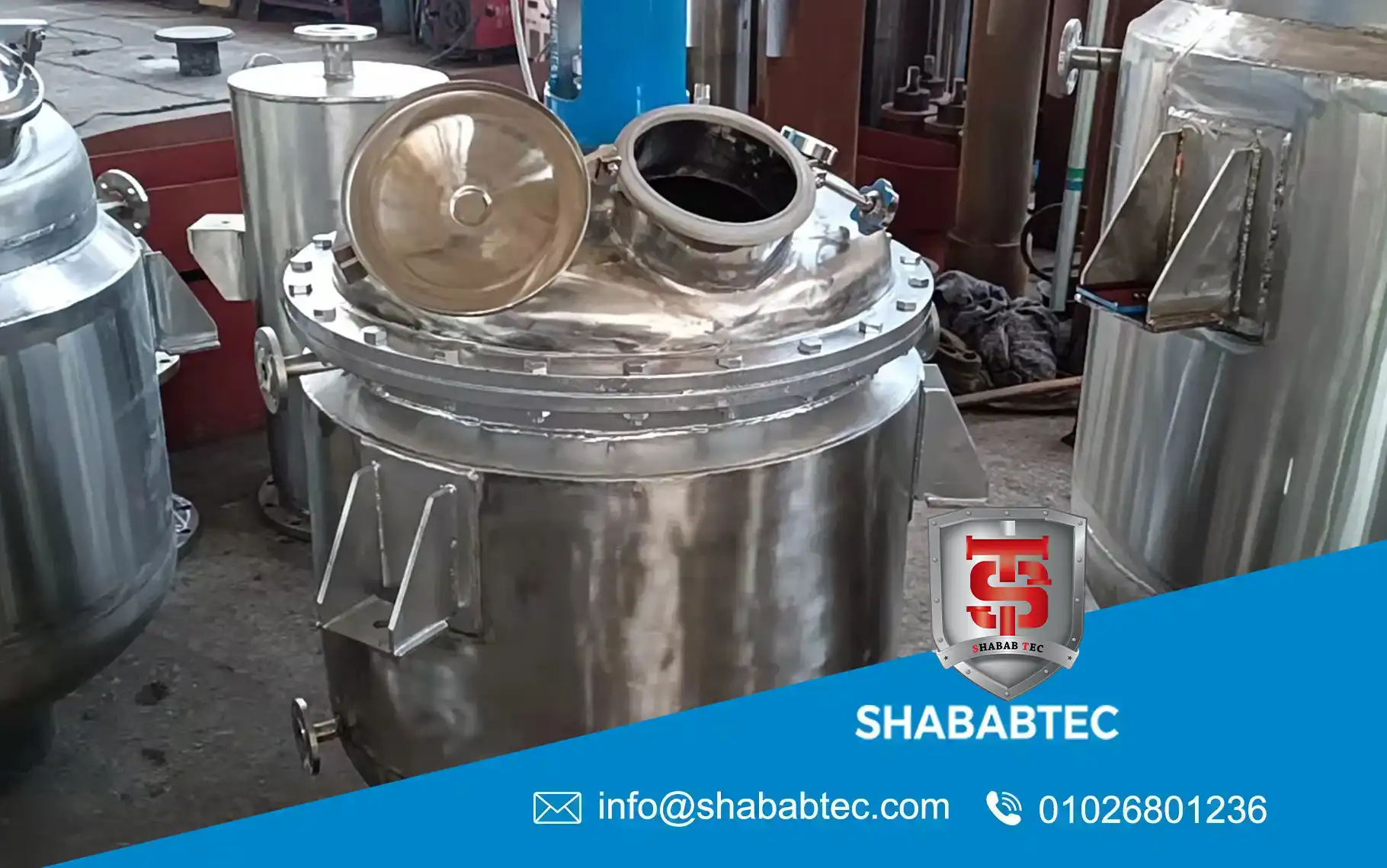
Cover
- Can be flange-sealed or welded
- Includes ports for:
- Feeding
- Discharging
- Observation
- Temperature measurement
- Pressure monitoring
Agitator System
- Installed inside the tank
- Driven by a motor via shaft
Transmission Device
- Motor or reducer mounted on top
Shaft Seal System
Options include:
- Mechanical seal
- Packing seal
- Labyrinth seal
Each type is selected based on product requirements and process conditions.
What Are the Uses of Stainless Steel Tanks?
Stainless steel tanks are used for:
- Mixing raw materials
- Dissolving solids into liquids
- Creating emulsions
- Heating or cooling products
- Storing intermediate or final products
They are especially critical in processes involving:
- High viscosity materials
- Hygienic production requirements
- Chemical reactions
Because stainless steel is corrosion-resistant and easy to clean, it ensures product purity and long equipment life.
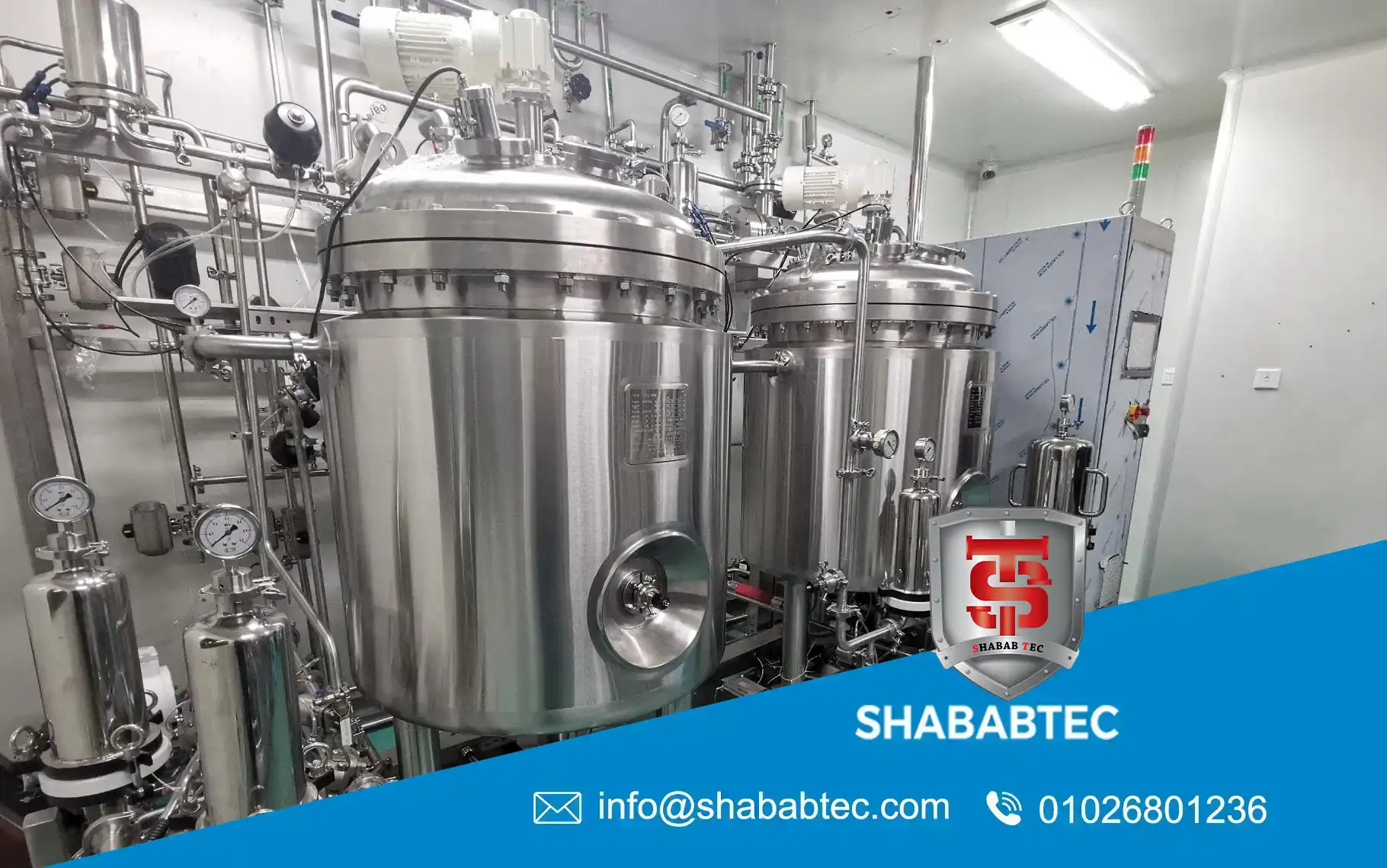
What Are the Different Types of Mixing Tanks?
Based on Shabab Tec systems and industrial classification, mixing tanks can be divided into:
By Application:
- Chemical mixing tank
- Paint mixing tank
- Syrup tank
- Glue tank
- Fertilizer mixing tank
By Function:
- Agitator tank
- Emulsion tank
- Stirring tank
- Slurry tank
By Design:
- Jacketed tank
- Vacuum tank
- Homogenizer tank
These variations allow manufacturers to choose the exact configuration needed for their process.
What Are the 4 Types of Stainless Steel?
The mixing tanks discussed are typically made from:
1. Stainless Steel 304
- General-purpose
- Good corrosion resistance
2. Stainless Steel 304L
- Lower carbon version of 304
- Better weldability
3. Stainless Steel 316
- Higher corrosion resistance
- Suitable for chemical environments
4. Stainless Steel 316L
- Low carbon + high corrosion resistance
- Ideal for pharmaceutical and food-grade applications
These materials are selected based on the product being processed and required hygiene standards.
What Are the Three Types of Tanks?
From a production system perspective, the three main tank types are:
- Mixing Tank – for processing
- Storage Tank – for holding materials
- Heating/Cooling Tank – for temperature control
This classification aligns with full production line integration used by Shabab Tec.