
Integrated Industrial Solutions for Your Facility
Engineering, fabrication, and turnkey execution of
Clean Rooms, Processing Systems, RO Units, CIP/SIP Systems,
and Sanitary Stainless Steel Equipment.
Free Engineering Consultation
CLEANROOM QUALIFICATION & DOCUMENTATION • EGYPT
Cleanroom Validation, Qualification & Documentation Services in Egypt
Qualification and documentation support integrated with cleanroom engineering, installation, commissioning and controlled-environment project execution.
ShababTec supports cleanroom validation readiness, DQ/IQ/OQ documentation, commissioning and project handover for pharmaceutical, laboratory, healthcare and controlled-production facilities.
Transparent qualification scope
Individual performance tests, PQ execution, accreditation
requirements and third-party certification responsibilities
are defined separately for each project.
DQ Documentation Support
IQ Documentation Support
OQ Documentation Support
Commissioning Support
QUALIFICATION STRATEGY
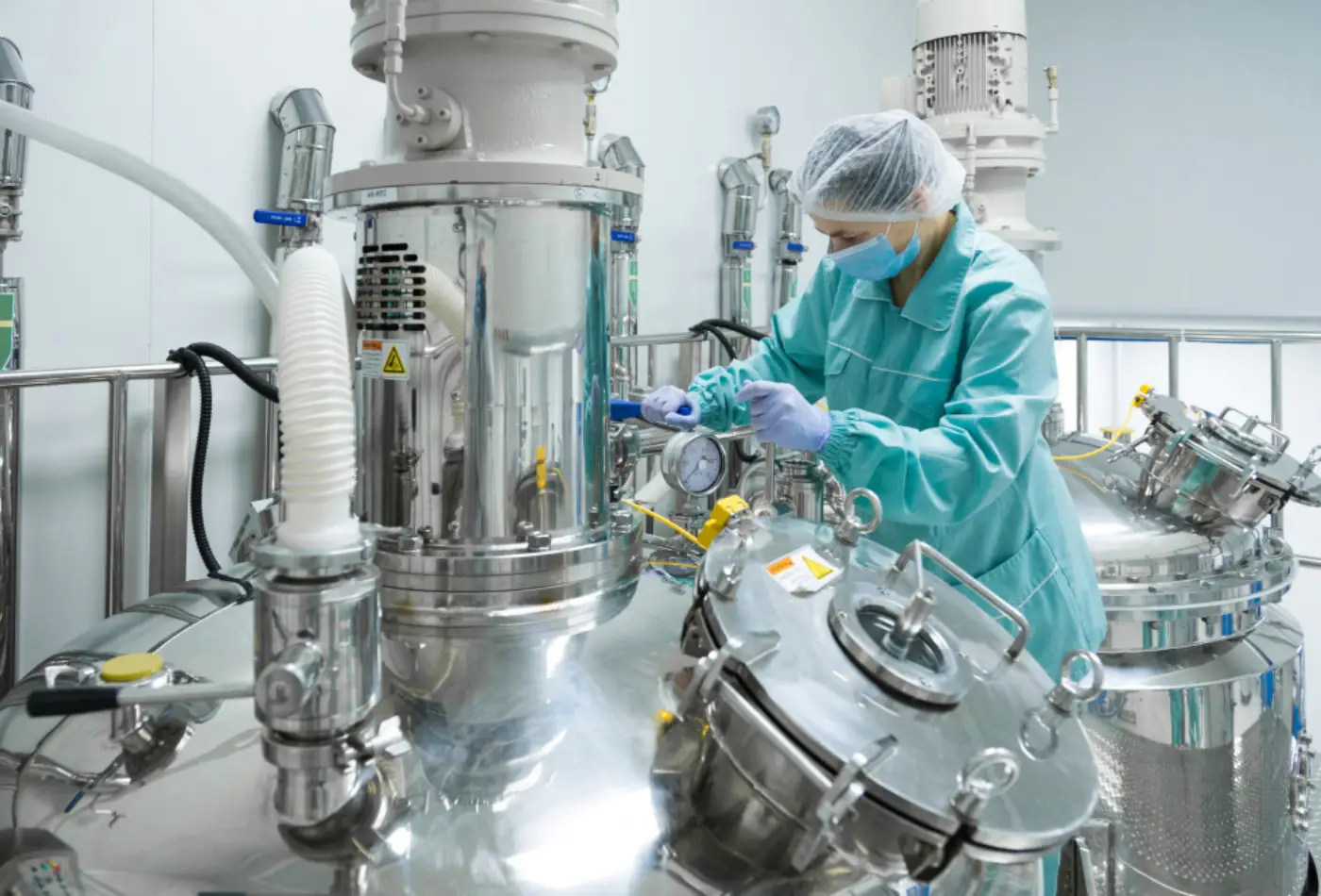
Validation Is More Than a Particle Count
Cleanroom qualification begins with requirements, acceptance criteria and clearly assigned responsibilities.
An airborne particle result can support classification, but one measurement does not define the complete qualification programme.
The cleanroom, HVAC interfaces, pressure zoning, filtration, room construction, access systems, controls and operating conditions all need to be considered according to the approved scope.
START WITH THIS QUESTION
What must be demonstrated before this cleanroom is accepted for its intended use?
SERVICE RESPONSIBILITY MATRIX
Define Who Performs Each Qualification Activity
The cleanroom contractor, client QA team, HVAC contractor, validation team and specialist testing provider can have different responsibilities. Define those responsibilities before execution.
| Qualification Activity | Current ShababTec Position |
|---|---|
| DQ Documentation Support | Confirmed ShababTec Support |
| IQ Documentation Support | Confirmed ShababTec Support |
| OQ Documentation Support | Confirmed ShababTec Support |
| Testing & Commissioning Support | Confirmed ShababTec Support |
| Cleanroom Validation Assistance | Confirmed ShababTec Support |
| PQ Execution | Define in Project Scope |
| Airborne Particle Classification | Test Responsibility to Be Defined |
| HEPA Integrity Testing | Test Responsibility to Be Defined |
| Airflow / Air Volume Testing | Test Responsibility to Be Defined |
| Differential Pressure Verification | Test Responsibility to Be Defined |
| Temperature / Humidity Testing | Test Responsibility to Be Defined |
| Recovery / Smoke / Airflow Visualization | Define if Required |
| Accredited Third-Party Certification | External Requirement if Applicable |
No accreditation is implied by this table.
If the client, consultant or regulator requires testing by an
accredited independent organization, that requirement and
responsible party should be identified before quotation.
QUALIFICATION LIFECYCLE
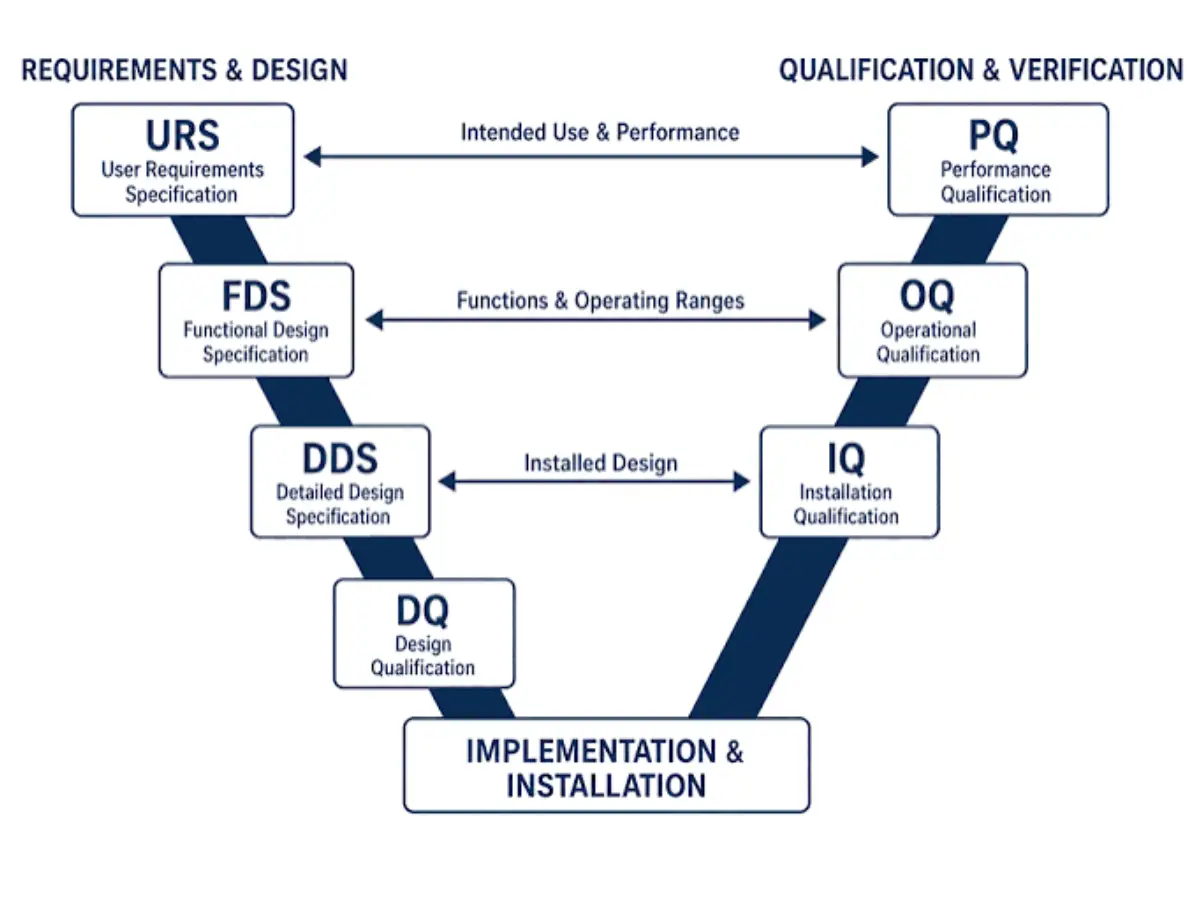
DQ, IQ, OQ & PQ
Each stage addresses a different question about the cleanroom and its intended performance.
Design Qualification
Was the system designed around the approved requirements?Reviews design intent, cleanroom layout, zoning, components, filtration, pressure requirements and system interfaces.
ShababTec documentation support confirmed.Installation Qualification
Was the defined system installed as intended?Addresses installed components, system configuration, equipment information, drawings and installation evidence.
ShababTec documentation support confirmed.Operational Qualification
Does the installed system operate against predefined requirements?Operational checks and test requirements should follow the approved qualification protocol.
ShababTec documentation support confirmed; tests defined per project.Performance Qualification
Does the facility perform under the defined intended-use conditions?PQ scope and execution should follow the facility's approved qualification strategy and production requirements.
PQ execution must be confirmed per project.
STANDARDS REFERENCE
Where ISO 14644 Fits into Cleanroom Qualification
Applicable cleanroom standards should be used according to the facility, intended classification and approved qualification scope.
Addresses cleanroom classification by airborne particle concentration.
Addresses monitoring used to provide evidence of cleanroom performance related to airborne particle concentration.
Provides cleanroom test methods for controlled conditions and performance assessment.
Standards reference does not mean certification.
The applicable ISO parts, acceptance criteria, test methods and responsible testing organization should be defined for the actual project.
PROJECT-SPECIFIC PERFORMANCE TESTING
Typical Cleanroom Performance Tests
These are common cleanroom qualification parameters. Their inclusion and execution responsibility must be confirmed for each ShababTec project.
Airborne Particle Count
Used where particle concentration must be measured for cleanroom classification or qualification.
HEPA Filter Integrity
Can form part of the qualification scope where installed final-filter integrity needs to be verified.
Airflow & Air Volume
Can support evaluation of the air-delivery conditions defined for the controlled environment.
Differential Pressure
Relevant where pressure relationships between rooms form part of the contamination-control strategy.
Temperature & Humidity
Environmental conditions can require verification against facility or process requirements.
Airflow Visualization
May be required to demonstrate airflow behaviour around critical areas or equipment.
Recovery Testing
May assess the room's recovery toward specified environmental conditions after a defined disturbance.
Additional Project Tests
Other tests can be required by the client, consultant, regulatory framework or approved qualification protocol.
This section defines possible qualification scope — not a blanket claim that ShababTec performs every listed test.
TEST CONDITION
As-Built, At-Rest or Operational?
Qualification results should be evaluated under the occupancy condition defined in the approved project requirement.
As-Built
The cleanroom construction is complete and services operate as defined, before the room represents normal production occupancy.
At-Rest
Installed production equipment is present in the condition defined by the qualification plan, without normal operating personnel.
Operational
The space is assessed under the operating condition specified for the production process and qualification strategy.
The required state should be agreed before testing. A result obtained
in one occupancy condition should not automatically be presented
as evidence for another.
QUALIFICATION DELIVERABLES
What Should the Documentation Package Define?
The final package should make the project requirements, responsibilities and qualification evidence clear to the client.
Intended cleanroom use, classification and controlled-environment requirements.
Relevant room layouts, systems, components, zoning and interfaces.
Define DQ, IQ, OQ, PQ and performance-testing responsibilities.
Establish what will be assessed and what result is considered acceptable.
Identify relevant systems and testing equipment where required.
Capture results and supporting evidence for activities included in scope.
Record differences from requirements through the applicable project process.
Compile the agreed qualification and project information for final handover.
VALIDATION READINESS
Qualification Readiness Starts During Design & Installation
Performance issues discovered only at final testing can create expensive rework. Cleanroom components should therefore be coordinated with qualification requirements earlier in the project.
Personnel, material and equipment flow influence the controlled environment.
Room relationships should match the approved contamination-control strategy.
Final filtration and room interfaces form part of environmental control.
Joints, penetrations, sealing and interfaces affect the cleanroom envelope.
Door operation, airlocks and transfer systems interact with room conditions.
Large equipment and process layout can influence airflow and access.
ShababTec advantage:
Cleanroom engineering, installation, commissioning and validation support can be considered within the same wider project lifecycle.
LIFECYCLE CONTROL
When Should a Cleanroom Be Requalified?
Requalification should be reviewed whenever a change can affect the conditions that the cleanroom is required to maintain.
New Cleanroom
Establish the required baseline qualification before routine use.
HVAC Modification
Changes to airflow, AHUs or pressure strategy can affect room performance.
HEPA Filter Work
Replacement or significant final-filter work can require relevant performance reassessment.
Room Modification
Changes to walls, ceilings, doors or room volume can influence controlled conditions.
Equipment Relocation
Significant equipment movement can alter airflow behaviour or operational conditions.
Major Maintenance
Work affecting HVAC, filtration or room integrity can trigger a qualification review.
Periodic Requalification
Frequency should follow the facility quality system, applicable standards and regulatory requirements.
COMPLETE CLEANROOM SYSTEM
Qualification Is Affected by the Complete Controlled Environment
Parent System
Clean Room Systems
Review the complete controlled-environment engineering scope.
Room Envelope
Walls & Ceilings
Sealing, interfaces, penetrations and cleanable room construction.
Access Control
Clean Room Doors
Door sealing and integration with controlled room conditions.
Material Transfer
Pass Boxes
Controlled transfer between cleanroom areas.
Personnel & Zoning
Air Showers & Airlocks
Access and contamination-control components for cleanroom entry.
Project Evidence
Clean Room Projects
Review ShababTec cleanroom engineering and project execution scope.
APPLICATIONS
Qualification Support for Controlled Production Facilities
Pharmaceutical Manufacturing
Cleanroom engineering, commissioning and qualification support for regulated production environments.
Laboratories
Controlled environments supporting technical, QC, research and laboratory operations.
Healthcare Facilities
Clean and controlled areas requiring appropriate environmental and contamination-control engineering.
Biotechnology
Controlled facilities where environmental performance forms part of reliable production or laboratory operation.
Cosmetics & Personal Care
Controlled manufacturing areas requiring cleanable construction and managed production environments.
Industrial Controlled Environments
Technical manufacturing areas where particle or environmental control is required by the process.
PROJECT WORKFLOW
From Cleanroom Engineering to Qualification Support
Requirement Review
Define intended use, room classification, facility conditions and qualification expectations.
Engineering Review
Review cleanroom envelope, filtration, zoning, access systems and required interfaces.
Installation & Site Execution
Install and integrate the approved cleanroom components and project systems.
Commissioning Readiness
Check system operation and project readiness for the required qualification activities.
Qualification Documentation
Support agreed DQ, IQ and OQ documentation and associated project information.
Testing & Validation Activities
Perform or assign required activities according to the approved project responsibility matrix.
Handover & Future Support
Complete agreed documentation and support future maintenance, modification and requalification planning.
QUALIFICATION RFQ
What to Send for a Cleanroom Validation & Qualification Quote
A useful quotation requires the facility requirement and testing responsibility — not only the cleanroom area in square metres.
Facility Type
Pharmaceutical, laboratory, healthcare, biotech or other use.
Room Use
Describe the production or operation performed in the area.
Required Classification
Provide ISO class, GMP grade or project-defined requirement.
Project Stage
New design, construction, commissioning, operating or modified.
Cleanroom Drawings
Share layouts, zoning, pressure plans and available drawings.
HVAC Information
Provide available AHU, filtration and airflow information.
Qualification Stage
DQ, IQ, OQ, PQ, commissioning or requalification requirement.
Required Tests
List particle, HEPA, airflow, pressure or environmental tests.
Acceptance Criteria
Send URS, consultant requirement or existing protocol.
Documentation
Define protocols, reports, records and handover expectations.
Accreditation Requirement
State if any test must be performed by an accredited external organization.
NO QUALIFICATION PLAN YET?
Request a Qualification Review
Start with the Cleanroom Design & Facility Requirement
ShababTec can review the available project information and help define the required documentation and qualification-support scope.
FAQ
Cleanroom Validation & Qualification FAQ
Does ShababTec provide cleanroom validation services in Egypt?
ShababTec provides cleanroom validation assistance, DQ/IQ/OQ documentation support, testing and commissioning support and project documentation in Egypt. Individual performance tests and testing responsibilities are confirmed according to each project's qualification scope.
What is the difference between cleanroom testing and qualification?
Testing measures specific performance parameters. Qualification is the wider documented process of confirming that the cleanroom has been designed, installed and operated against predefined requirements and the approved qualification strategy.
What do DQ, IQ, OQ and PQ mean?
DQ addresses design against requirements, IQ addresses the installed configuration, OQ addresses operation against defined requirements, and PQ addresses performance under the conditions specified by the facility's qualification strategy.
Does ShababTec support DQ, IQ and OQ documentation?
Yes. DQ, IQ and OQ documentation support is included in ShababTec's published engineering capabilities.
Does ShababTec perform PQ?
PQ execution is not presented as a universal ShababTec deliverable on this page. Where PQ is required, its scope, responsibilities, protocols and acceptance criteria should be defined for the individual project.
Does cleanroom qualification include particle-count and HEPA testing?
These are common cleanroom performance tests, but they should not be assumed automatically in every ShababTec scope. Required tests, responsible testing party, instrumentation, acceptance criteria and report format should be confirmed before quotation.
What does ISO 14644 cover?
ISO 14644-1 covers air-cleanliness classification by airborne particle concentration, ISO 14644-2 addresses monitoring related to particle-cleanliness performance, and ISO 14644-3 provides cleanroom test methods. The applicable parts depend on the project.
Is ShababTec an ISO 14644 accredited testing laboratory?
This page does not claim laboratory accreditation. If a project requires testing or certification by an accredited independent organization, that requirement and responsible party should be defined in the project scope.
When should a cleanroom be requalified?
Requalification should be reviewed after changes that can affect controlled-environment performance, such as major HVAC work, filter replacement, cleanroom modifications, equipment relocation or significant maintenance, as well as at any periodic interval required by the facility quality system or applicable requirements.
Can ShababTec support validation of a cleanroom it designed or installed?
Yes. Cleanroom engineering, installation, commissioning and validation assistance are all included in ShababTec's wider published project lifecycle, allowing qualification readiness to be considered alongside the actual cleanroom execution.
What information is needed for a cleanroom qualification quotation?
Provide the facility type, room use, required classification, project stage, cleanroom drawings, HVAC information, qualification stage, required tests, acceptance criteria, documentation expectations and any accreditation requirements.
DEFINE THE QUALIFICATION SCOPE FIRST
Prepare the Cleanroom for Qualification & Professional Handover
Share your room classification, cleanroom drawings, HVAC information, qualification stage, required tests and documentation expectations. ShababTec can review the project and define the appropriate validation and documentation support scope.
Request a Validation Review
Send Your Qualification Requirements
ShababTec • Egypt