
Integrated Industrial Solutions for Your Facility
Engineering, fabrication, and turnkey execution of
Clean Rooms, Processing Systems, RO Units, CIP/SIP Systems,
and Sanitary Stainless Steel Equipment.
Free Engineering Consultation
PHARMACEUTICAL POWDER MIXING • EGYPT
Ribbon Blenders & High-Shear Powder Mixers
Select the mixing intensity around the powder and process — not around which machine appears more powerful.
ShababTec supports pharmaceutical and industrial powder mixing applications with Ribbon Blenders and High-Shear Mixers selected around powder behaviour, batch requirements, required mixing action, feeding, discharge, cleaning and production workflow.
Process-Based Selection
Ribbon Mixing
High-Shear Mixing
Installation & Commissioning
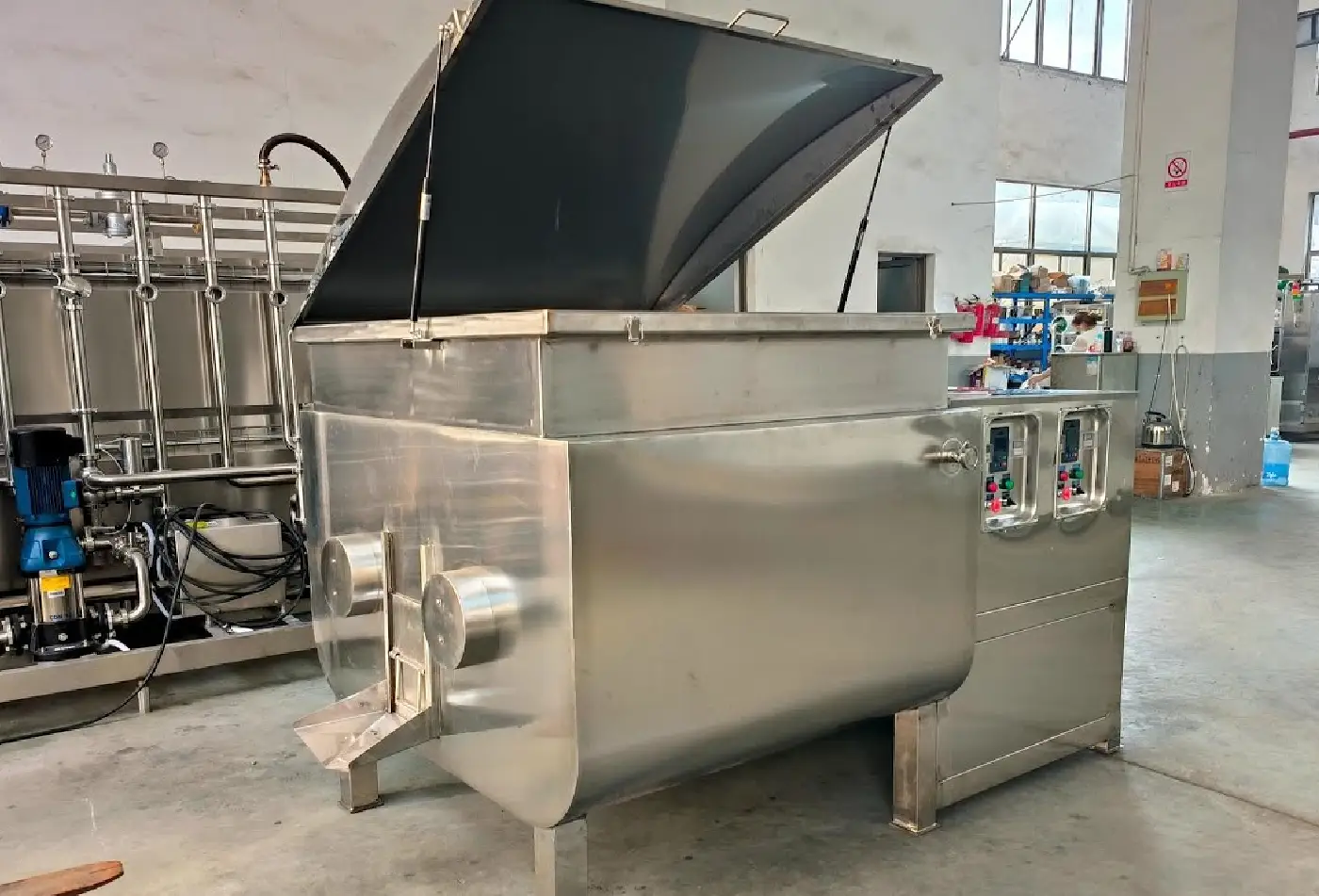
MIXING TECHNOLOGY COMPARISON
Ribbon Blender vs High-Shear Powder Mixing
The two technologies should not be treated as interchangeable. One focuses on bulk powder blending; the other applies a more intensive mechanical action when the process genuinely needs it.
| Decision Area | Ribbon Blender | High-Shear Powder Mixer |
|---|---|---|
| Primary Process Role | Bulk blending of powders and granules using an internally driven ribbon agitator. | More intensive mechanical processing where conventional blending is not sufficient. |
| Mixing Intensity | Active convective mixing, generally less intensive than dedicated high-shear technologies. | Greater mechanical interaction with the product. |
| Typical Starting Point | Dry blending where effective bulk movement is required. | Processes requiring stronger dispersion, deagglomeration or another defined high-intensity mixing action. |
| Shear-Sensitive Material | May be the better starting point when unnecessary shear should be avoided, subject to product evaluation. | Requires careful evaluation because stronger action can affect fragile or shear-sensitive material. |
| Liquid Addition | Possible only if the selected configuration is designed for the required addition method. | May be relevant in some process configurations, but availability and function are model-specific. |
| Wet Granulation | Not the normal purpose of a conventional Ribbon Blender. | Do not assume granulation capability. HSMG/RMG functionality must be separately confirmed. |
| Cleaning | Ribbon elements, shaft, seals, chamber and outlet must remain accessible for the required cleaning method. | Cleaning complexity depends on the actual mixing tools, vessel and selected configuration. |
The comparison provides an engineering direction only. Final suitability depends on the actual powder, formulation, equipment design and approved process.
TECHNICAL TERMINOLOGY
High-Shear Mixer Is Not Automatically a Granulator
Equipment terminology in the market is not always consistent, which makes this distinction important when preparing an RFQ.
Ribbon Blender
A horizontal powder blender using internal ribbon elements for active bulk movement of powders or granules.
High-Shear Mixer
A general description for equipment applying more intensive mechanical mixing than conventional blending.
High-Shear Mixer Granulator
A specific pharmaceutical equipment category associated with wet-granulation processes. It should not be assumed from the words “high shear mixer” alone.
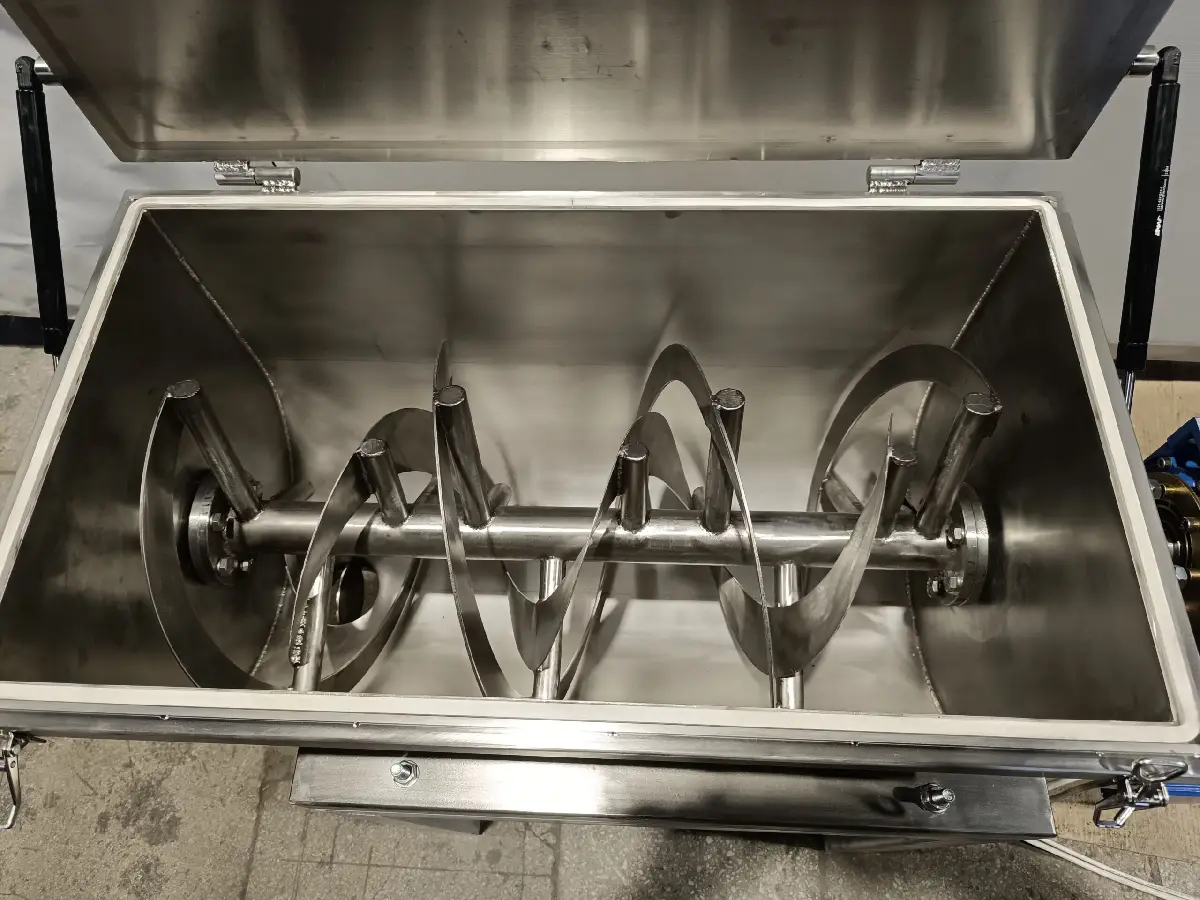
PHARMACEUTICAL RIBBON BLENDER
Active Bulk Blending with a Ribbon Agitator
A Ribbon Blender normally uses inner and outer helical ribbon elements mounted on a horizontal shaft. Their geometry moves material through the chamber to create active bulk circulation and redistribution.
It can be evaluated for pharmaceutical and industrial dry-powder or granule applications where mechanically driven bulk blending is more appropriate than tumble blending.
Dry powder blending
Granule blending
Active bulk movement
Project-specific discharge
Cleaning-access review
Feeding integration
Ribbon design does not by itself guarantee a defined blend homogeneity percentage. Performance must be evaluated for the actual formulation and operating process.
Discuss a Ribbon Blender Application →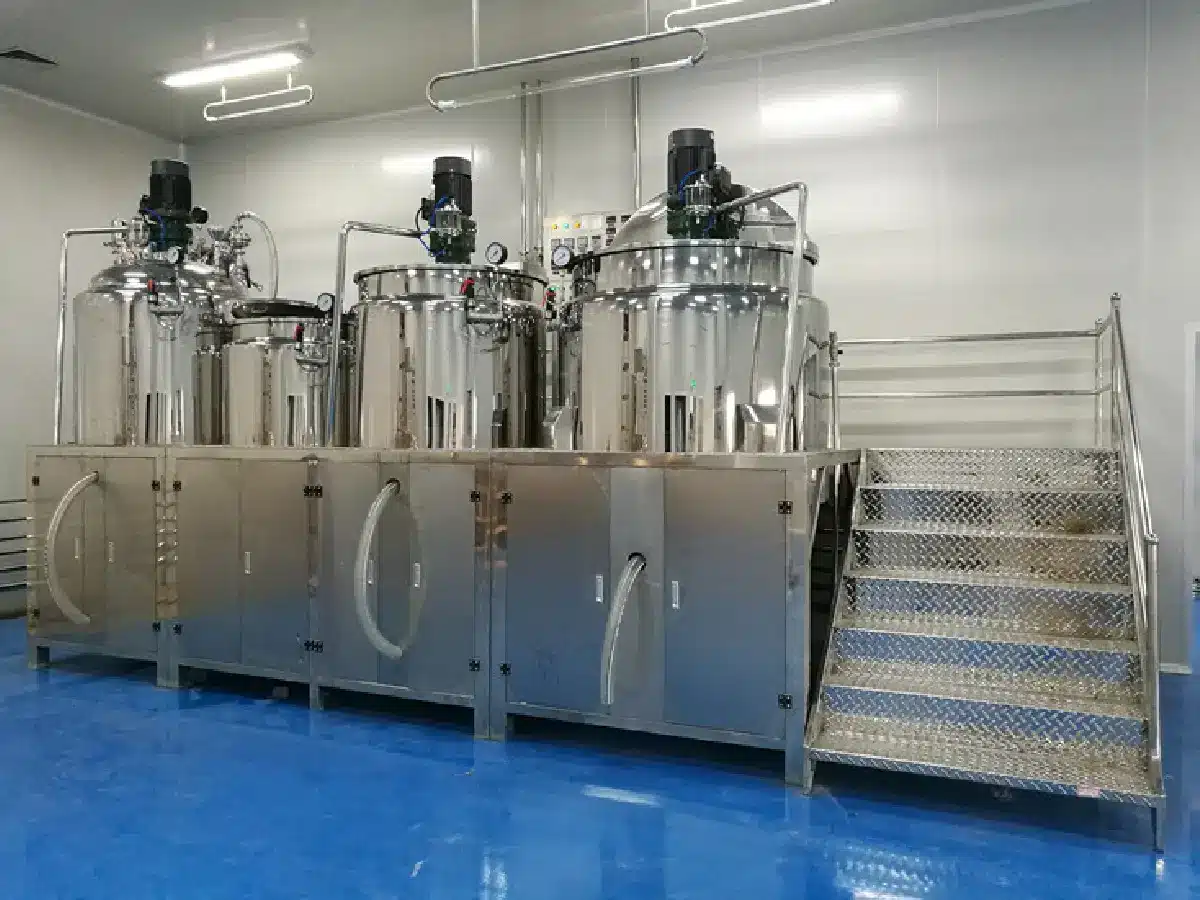
HIGH-SHEAR POWDER MIXING
When Does the Process Need More Intensive Mixing?
A high-shear mixing approach should be considered when the production objective requires more intensive mechanical interaction than a conventional bulk blender can provide.
Possible reasons can include stronger dispersion or deagglomeration requirements, but final suitability depends on the powder and the actual ShababTec equipment configuration.
Higher mixing intensity
Process-specific selection
Powder sensitivity review
Heat-generation review
Cleaning review
Model-specific configuration
This section does not claim wet-granulation, binder-addition, impeller/chopper or RMG functionality.
Review a High-Shear Application →
MIXER SELECTION
Match Mixing Intensity to the Actual Process
Selecting the strongest mixing action by default can be just as problematic as selecting equipment that cannot provide enough process intensity.
How freely does material move during charging, mixing and discharge?
Does the powder resist redistribution or form persistent lumps?
Could stronger mechanical action damage particles or granules?
Does the process require intentional breakup of powder agglomerates?
Particle size, bulk density and ingredient ratio can affect blending behaviour.
Define whether any liquid is a minor addition or part of a different processing step.
Mixer geometry and internal components affect inspection and changeover.
Discharge and transfer must preserve a suitable material workflow.
PROCESS BOUNDARY
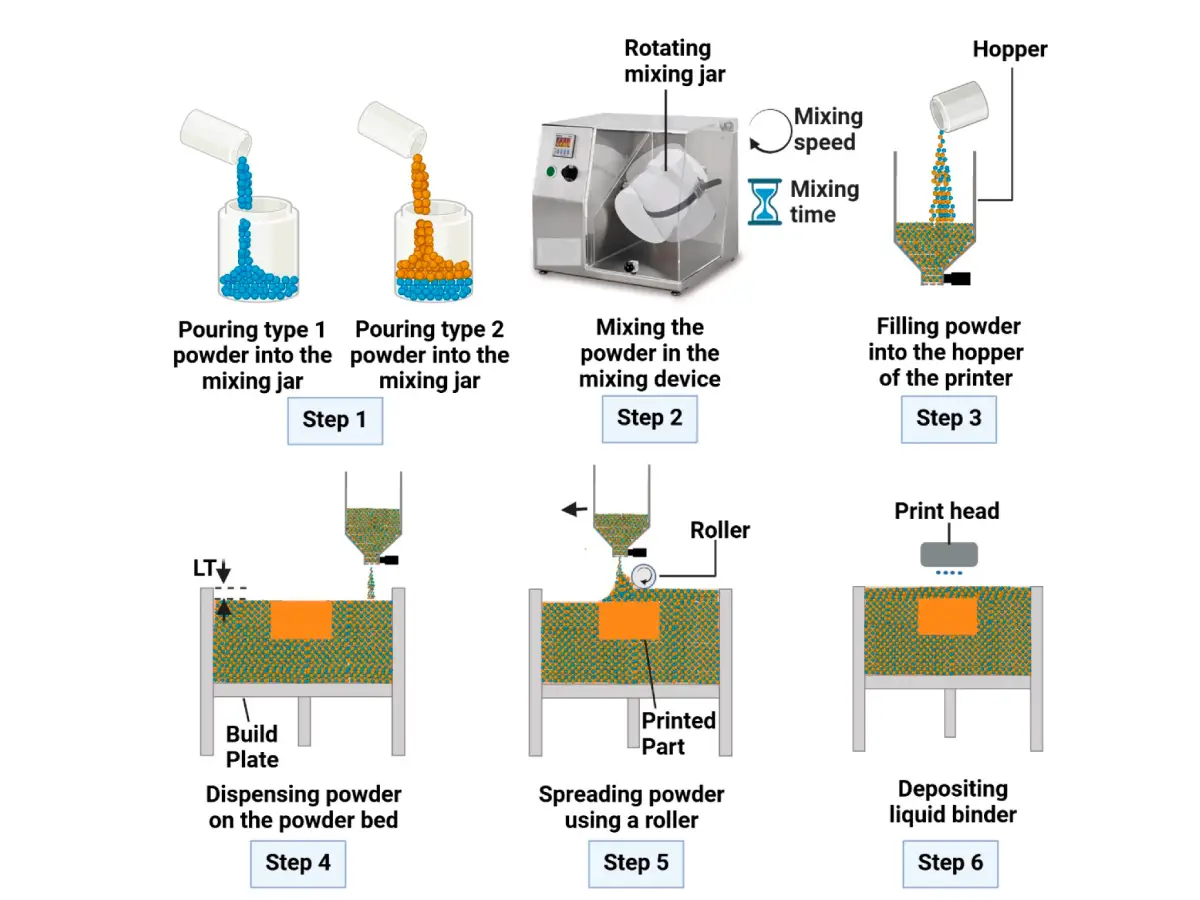
Dry Blending, Liquid Addition & Wet Granulation Are Different Requirements
Dry Powder Blending
The objective is to distribute dry ingredients using the selected mixing technology without deliberately forming wet granules.
Minor Liquid Addition
Some mixer configurations can support controlled liquid addition, but distribution, cleaning and material discharge must be engineered.
Wet Granulation
Deliberately forming granules using binder addition is a separate process requirement and must use equipment specifically confirmed for that purpose.
HYGIENE & MATERIAL HANDLING
Cleaning, Dust & Containment Should Be Defined Before Fabrication
Ribbon elements, shaft, chamber and high-shear tools must be accessible according to the required cleaning method.
Seal arrangement and maintenance access should be considered against powder properties and facility requirements.
Powder input can create operator and room-cleaning challenges if the charging approach is not considered.
The mixer outlet and receiving equipment should be coordinated to minimise unnecessary open handling.
Any defined containment or operator-exposure requirement must be specified and engineered as part of the project.
If automated wet cleaning or CIP/SIP is required, compatibility and integration must be confirmed for the actual equipment design.
PROCESS INTEGRATION
Mixing Is Only One Step in the Powder Route
Powder must reach the mixer, be processed, discharge correctly and continue to the next production step.
Feeding and downstream handling can affect operator interaction, dust, product loss and segregation after mixing.
ShababTec's powder-processing range includes Powder Feeding Systems, allowing mixer interfaces to be reviewed as part of the wider production workflow where required.
Explore Powder Feeding Systems →
SELECTION RISKS
Common Powder Mixer Selection Mistakes
Assuming High Shear Is Better
More mechanical action is only useful when the process actually requires it.
Calling Every High-Shear Mixer an RMG
Granulation functionality requires a specific process and confirmed equipment design.
Ignoring Product Sensitivity
Fragile granules or shear-sensitive material can be affected by excessive mechanical action.
Ignoring Liquid Addition
Even a small liquid-addition requirement can change cleaning and discharge considerations.
Ignoring Discharge
Powder must leave the mixer and reach downstream equipment in a practical way.
Assuming Compliance from a Label
GMP, containment and cleaning requirements must be defined against the actual project.
PROJECT EXECUTION IN EGYPT
From Mixer Selection to Commissioning
ShababTec coordinates equipment selection with the wider production environment.
 01
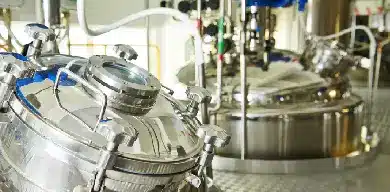
01Requirement Study
Review powder, batch, process objective, facility and cleaning requirements.
 02
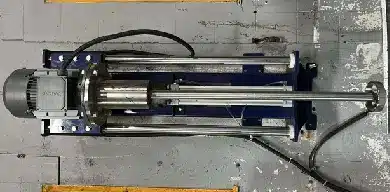
02Engineering Selection
Define mixing intensity, equipment concept and process interfaces.
 03
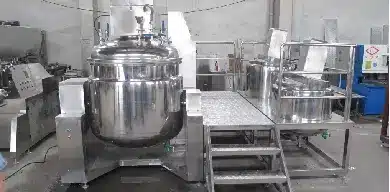
03Manufacturing & Fabrication
Prepare equipment and project components according to the approved scope.
 04
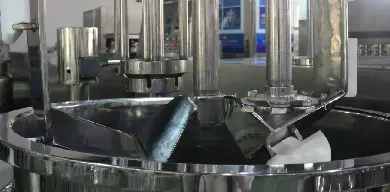
04Installation
Coordinate positioning and relevant site integration requirements.
 05
05Testing & Commissioning
Check supplied equipment and prepare it for operation and handover.
 06
06Documentation & Support
Agreed documentation, maintenance guidance and after-sales support follow.
BEFORE REQUESTING A QUOTE
What to Send Before Selecting the Mixer
Powder / Product
Identify the formulation and materials being processed.
Batch Requirement
State the intended production or batch requirement.
Powder Behaviour
Describe flowability, cohesiveness and known handling issues.
Mixing Objective
Define whether the process needs blending, dispersion or deagglomeration.
Product Sensitivity
Identify fragile granules or ingredients sensitive to mechanical action.
Liquid Addition
State whether any liquid or binder is introduced during processing.
Cleaning / Containment
Define cleaning expectations and any special containment requirement.
Feeding & Discharge
Explain how the powder enters the mixer and where it goes next.
ENGINEERING REVIEW
Send Your Requirements
Not sure whether a Ribbon Blender or higher-shear system is appropriate?
Send the available product and process information so the required mixing action can be reviewed before equipment selection.
FAQ
Ribbon Blender & High-Shear Mixer FAQ
What is a pharmaceutical Ribbon Blender?
A Ribbon Blender is a horizontal powder mixer normally using inner and outer helical ribbon elements to create active bulk movement through powders or granules.
When should a Ribbon Blender be considered?
It can be evaluated for dry powder and granule blending when mechanically driven bulk mixing is appropriate. Final suitability depends on powder behaviour, product sensitivity, ingredient differences, charging, discharge and cleaning requirements.
When is a high-shear powder mixer required?
Higher-shear equipment should be considered when the process requires more intensive mechanical action than conventional blending can provide. The specific reason for higher shear should be identified before equipment selection.
Is a high-shear mixer the same as a Rapid Mixer Granulator?
No. High-shear mixing is a broad description of mixing intensity. A Rapid Mixer Granulator or High-Shear Mixer Granulator is a more specific equipment category associated with wet granulation. ShababTec's exact high-shear equipment configuration should be confirmed from the project datasheet.
Is high shear better for cohesive powders?
Not automatically. Cohesiveness is only one process variable. Particle properties, required blend, product sensitivity, deagglomeration requirements and downstream handling also influence the correct mixer.
Can liquid be added in a Ribbon Blender?
Liquid addition is possible in some mixer configurations, but it should not be assumed as a standard feature. The required liquid quantity, distribution method, cleaning and resulting material behaviour must be reviewed during engineering.
Can the equipment be integrated with CIP or automated wet cleaning?
If CIP, WIP or another automated cleaning method is required, it must be specified and confirmed against the actual mixer construction and project scope.
Does ShababTec provide installation and commissioning?
ShababTec's published project workflow includes engineering, fabrication, installation, testing, commissioning, documentation support and after-sales technical assistance.
What information should I send for a powder mixer quotation?
Send the powder or formulation, batch requirement, powder behaviour, required mixing action, ingredient differences, product sensitivity, any liquid addition, cleaning or containment requirements, feeding method and downstream equipment.
DEFINE THE MIXING ACTION FIRST
Select the Powder Mixer Around the Process
Share the powder, batch requirement, mixing objective, product sensitivity, liquid-addition requirements, cleaning method and handling information. ShababTec can review the required mixing technology before the final configuration is defined.