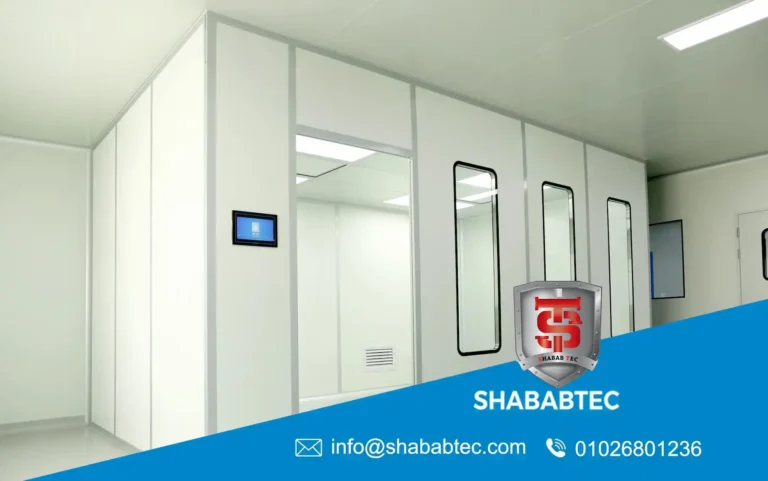
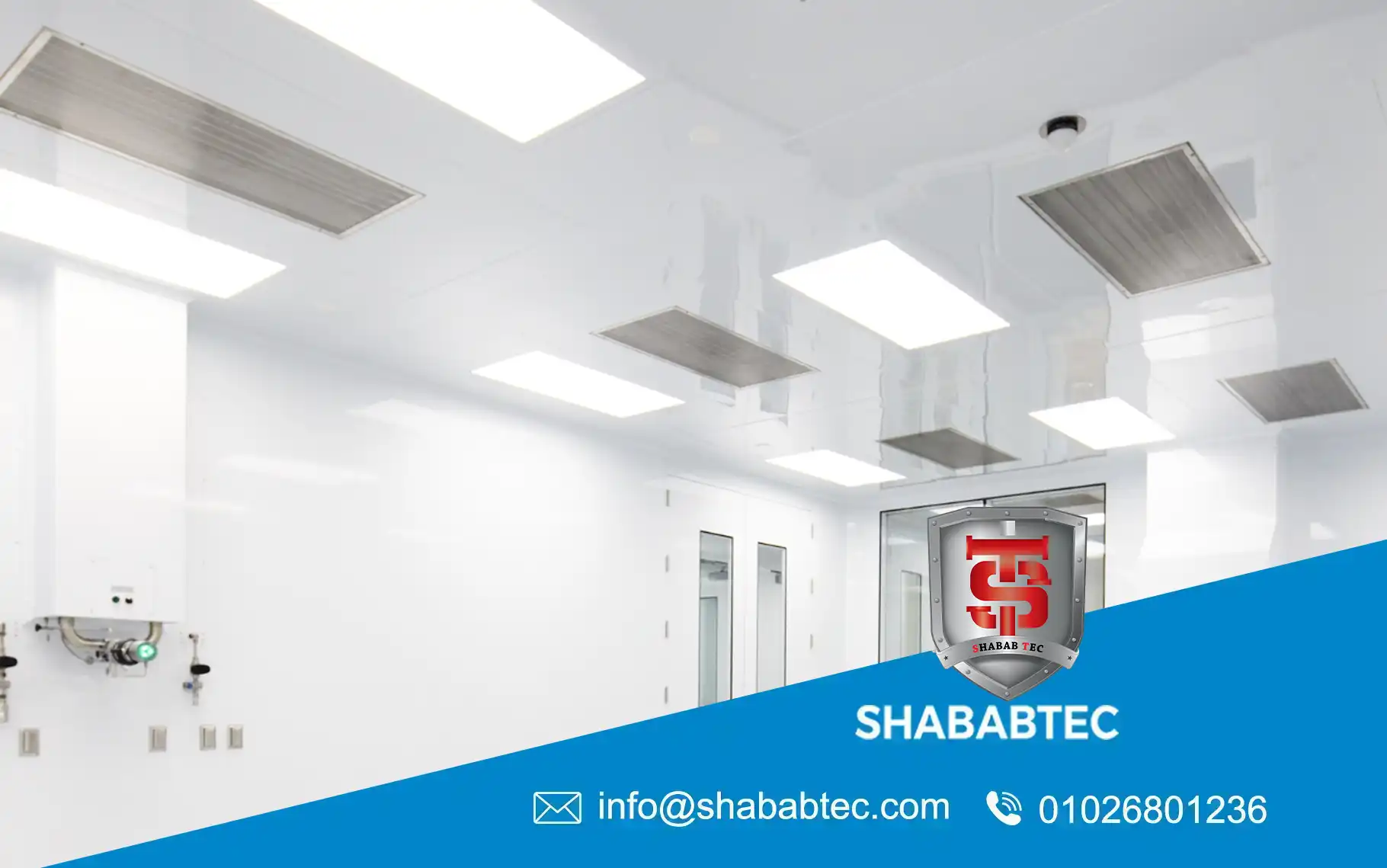
Clean Room System GMP Compliance & Turnkey Solutions
Pharmaceutical manufacturing, food and beverage processing, hospitals, and medical laboratories depend on controlled environments to prevent contamination, stabilize processes,
and maintain consistent quality batch after batch.Shababtec designs, manufactures, supplies, and installs advanced modular clean room systems aligned with international GMP requirements, with strong local delivery capability in Egypt
and expanding coverage across GCC markets such as Saudi Arabia. The result is a Clean Room System envelope engineered for hygiene, airflow performance, and long-term durability—delivered
faster and with higher flexibility than traditional construction.
What Is a Clean Room System?
Definition Controlled Environment & Contamination Limits
A clean room system is a controlled environment where airborne particles, dust, microorganisms, and other contaminants are maintained within defined limits.
Control is achieved by combining an airtight architectural envelope (walls, ceilings, doors, windows, junction profiles) with a clean room HVAC system
that manages airflow patterns, filtration, air changes per hour, temperature, humidity, and pressure differentials.
Unlike standard rooms, Clean Room System are engineered as a complete system: the enclosure prevents leakage and dust traps, while the air filtration and air conditioning system
reduces particle concentration and maintains stable operating conditions. In high-criticality areas, Clean Room System monitoring system requirements may include continuous particle monitoring,
differential pressure monitoring, temperature and humidity logging, and alarms to support GMP documentation and deviation control.
Why Clean Rooms Are Critical in Pharma Food & Hospitals
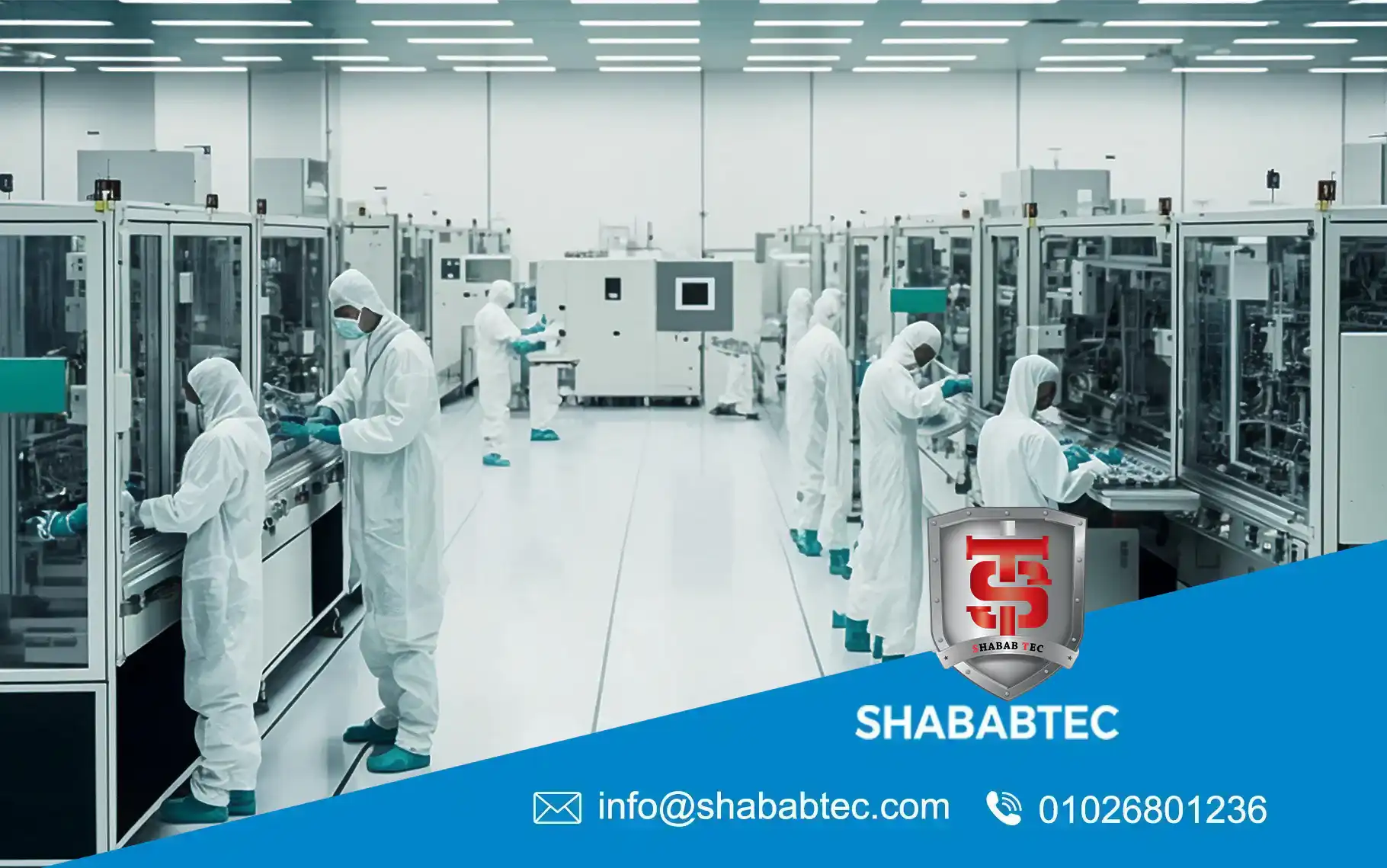
In pharmaceutical and sterile areas, the clean room system in sterile pharmaceutical operations protects drug product from bioburden and particulate contamination
and supports controlled workflows such as dispensing, compounding, filling, and packaging. In food processing, controlled zones reduce cross-contamination risk and protect
sensitive steps that require hygienic separation. In hospitals and medical laboratories, clean rooms support infection control strategies, safeguard diagnostic accuracy,
and maintain controlled pressure regimes for isolation or sensitive procedures.
Clean Room Classification Overview (ISO 14644 + GMP Context)
Clean room classification typically references ISO 14644 for airborne particle concentration. GMP requirements add operational expectations such as hygienic design,
cleaning validation support, documentation discipline, and robust contamination control strategy. ISO classes define particle limits at specified particle sizes,
while GMP context ties the environment to process risk and product impact.
What a Complete Clean Room System Includes
Modular Partition Walls
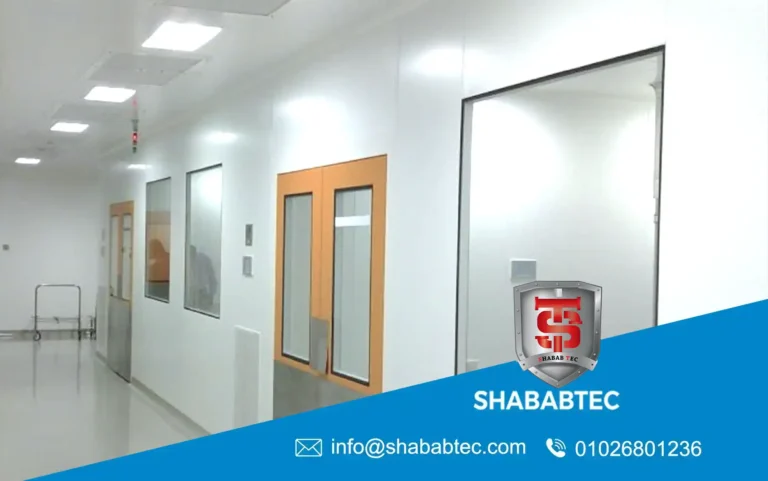
Modular partitioning systems form the clean room envelope and deliver mechanical strength, insulation, flush surfaces, and support for integrated openings and utilities.
Panels are manufactured to precise dimensions and installed with aluminum frame profiles to maintain alignment and sealing.
See also: Partition Walls & Ceilings
Clean Room Ceilings
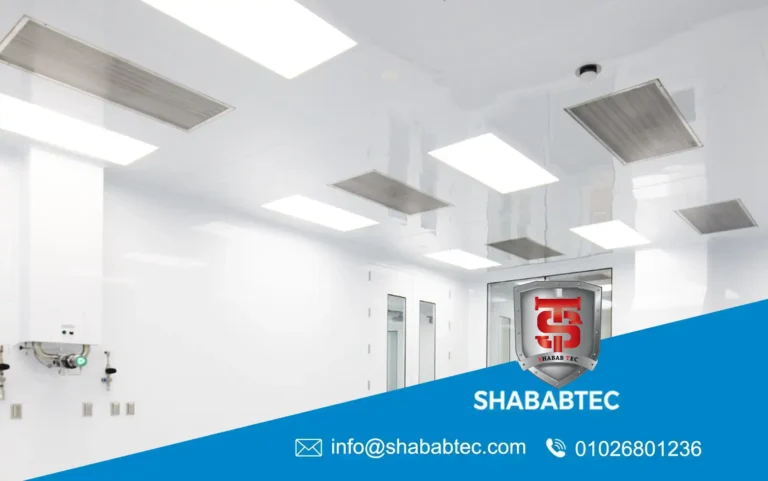
Ceiling systems complete the sealed envelope and support integration of HEPA filters, lighting, and service utilities. A hidden suspension bar system reduces visible joints
and improves cleanability in GMP facilities.
Clean Room Doors
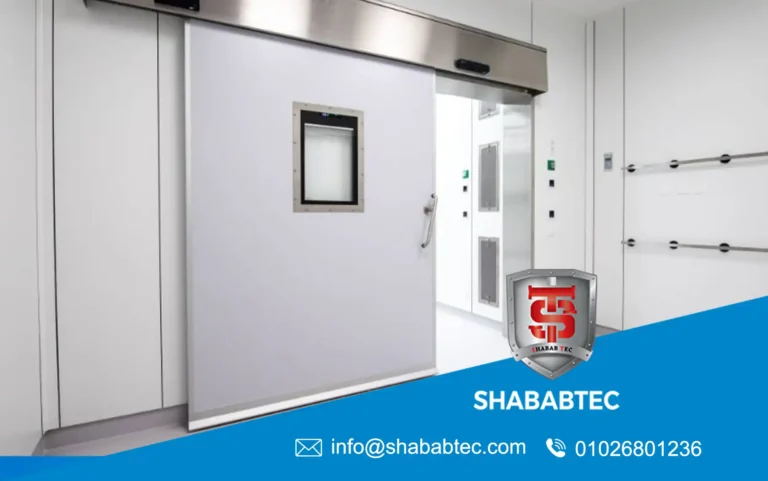
Clean room doors maintain pressure stability, control personnel movement, and reduce leakage. Door sealing systems, hardware durability, and flush installation are critical
to prevent dust accumulation and protect pressure differentials.
See also: Doors
Vision Windows
Vision windows enable supervision and safer operations without opening doors or disrupting airflow. A double glass flush system supports airtight integrity and simplifies cleaning.
Pass Boxes (Static & Dynamic)
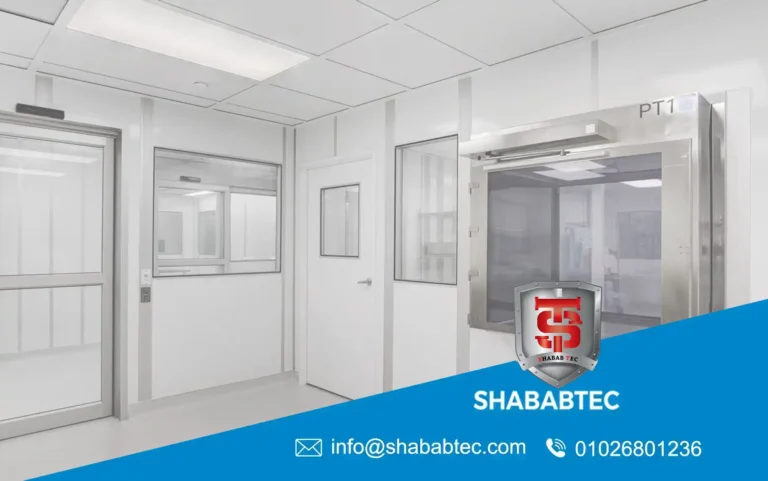
Pass boxes (also called clean room pass through system units) enable material transfer between zones while minimizing cross-contamination. Static pass boxes use interlocking doors,
while dynamic pass boxes add airflow and HEPA filtration to control particle migration.
See also:Pass Boxes
Air Showers & Airlocks
Air showers remove surface particles from personnel or materials prior to entry. Airlocks stabilize pressure differentials between zones and enforce controlled movement.
In GMP workflows, air showers and airlocks are combined with doors and pass boxes to maintain a clean directional flow.
See also: Air Showers & Airlocks
Hygienic Corner & Connection Profiles
Junctions between wall-to-wall, wall-to-ceiling, and wall-to-floor are the most common hygiene risk points. Hygienic rounded profiles and arc corner systems eliminate dust traps,
improve cleaning speed, and support smoother airflow.
Why Modular Clean Room Systems?
Limitations of Traditional Clean Room Construction
Traditional construction often results in fixed layouts, longer timelines, and higher risk of workmanship variability at joints and penetrations.
These limitations become costly when facilities need future expansion, process changes, or re-zoning for new product lines.
Traditional approaches may also introduce more on-site cutting, dust, and uncontrolled finishing—creating additional contamination risk during construction.
Key Advantages of Modular Systems (Speed Hygiene Flexibility)
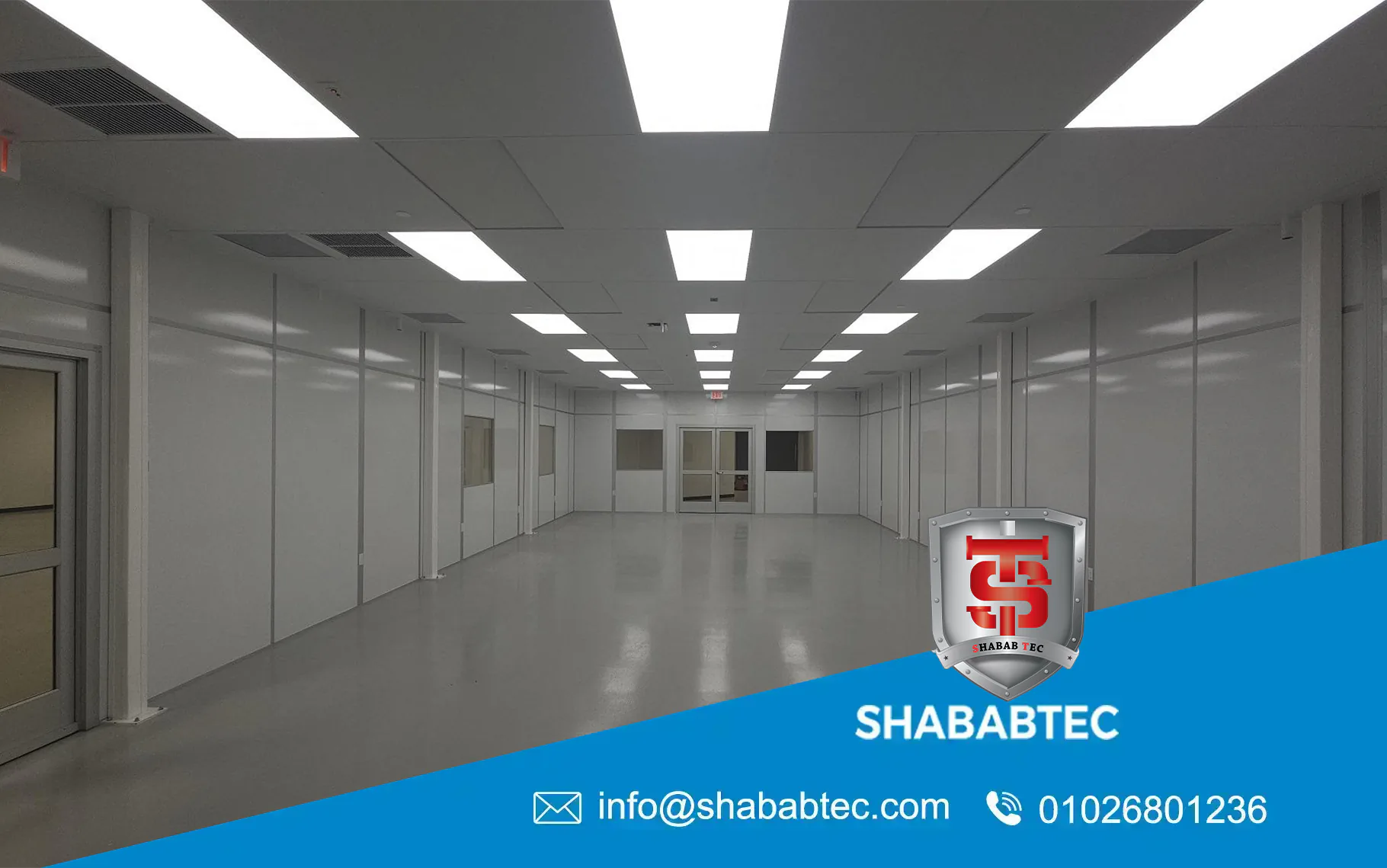
Modular systems use factory-made precision panels and profiles. This improves fit-up quality, reduces site disruption, and accelerates commissioning readiness.
Flush surfaces and engineered junctions simplify cleaning and support hygiene compliance. Modular clean room systems are also more adaptable to utility upgrades,
monitoring sensors, and future zoning changes.
Expansion Relocation & Future-Proofing
A modular approach supports future-proofing: panels can be demounted, replaced, or reconfigured, and openings for doors, windows, pass boxes, or utilities can be planned
to match workflow evolution. This flexibility is valuable when companies scale sterile suites, add new packaging lines, or require additional controlled corridors.
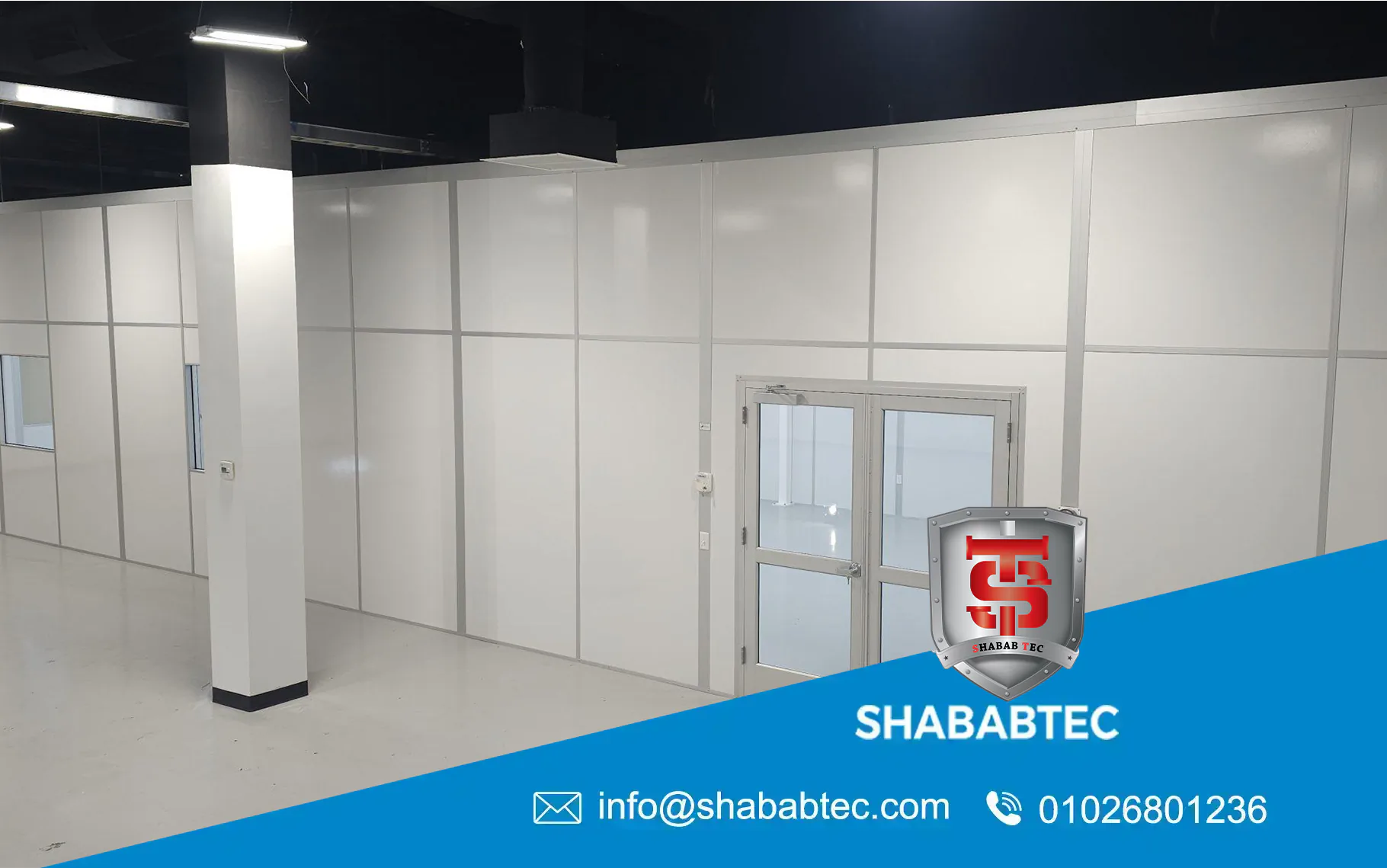
Shababtec Modular Wall System (Partition Walls)
| Specification | Shababtec Standard |
|---|---|
| Standard partition size | 1230 mm × 3000 mm (extendable up to 6000 mm height) |
| Panel thickness | 50 mm |
| Skin options | Steel 0.5 mm / Stainless Steel 304 (optional) |
| Core insulation (in-fill) | PU Polyurethane (40 kg/m³) / EPS (30 kg/m³) |
| Frame system | Precision aluminum profiles |
Technical Specifications (Sizes Thickness Skins Core Options)
The wall panel build-up is selected to balance mechanical strength, insulation, hygiene, and cost. Steel skins deliver a robust surface suitable for frequent cleaning and disinfectant use,
while Stainless Steel 304 is preferred for higher chemical exposure or specific hygienic requirements. PU core offers strong insulation performance and structural stability; EPS is a cost-efficient
option used where insulation and compliance requirements allow.
Structural Design Aluminum Frame + Flush Surfaces
Each panel is installed within precision aluminum framing to achieve perfect alignment and a continuous flush composite wall surface. Flush surfaces reduce ledges and protrusions,
minimizing dust accumulation and simplifying wiping, sanitization, and routine inspections. Aluminum profiles also deliver reliable mechanical stability for doors, pass boxes, and windows.
Factory Cut-Outs for Doors Windows & Utilities
Factory-made cut-outs reduce on-site cutting and improve sealing quality. Openings can be engineered for clean room doors, vision windows, pass boxes, electrical conduits,
data and clean room communication system cabling, and utility penetrations. Correct planning of penetrations is essential to avoid leakage paths that harm pressure stability and HVAC performance.
Product Advantages (Demountable Chemical Resistant Easy Cleaning)
Shababtec modular walls support fast installation, easy reconfiguration, and long-term maintainability. The intermediate locking concept allows panel removal or replacement during future upgrades.
Material selection and finishing support compatibility with commonly used clean room cleaning chemicals and disinfectants. The result is a partitioning system suitable for continuous operation
with minimal hygiene risk.
Hygienic Design Engineering (Connection Profiles & Arc Corners)
Why Corners & Junctions Are the #1 Hygiene Risk
In real facilities, contamination risk increases where cleaning is hardest: sharp internal corners, poorly sealed junctions, and irregular transitions.
These areas become dust traps, moisture retention points, and microbial risk zones. From an airflow perspective, corner geometry can also create recirculation pockets and dead zones
that reduce the effectiveness of the clean room air filtration system.
Aluminum Connection Profiles (Rounded Transitions Dust Trap Elimination)
Shababtec uses extruded aluminum connection profiles designed to eliminate right angles at key intersections. Rounded transitions improve cleanability, reduce particulate accumulation,
and improve visual inspection. Profiles are applied consistently across wall junctions, false ceiling intersections, and floor-to-wall junctions, maintaining a continuous hygienic envelope.
See also: Hygienic Profiles for Clean Rooms
Arc Corner System (50 mm Radius) Airflow Safety Cleaning
Arc corners with 50 mm radius reduce collision risk in narrow corridors and improve airflow behavior at wall transitions. Smooth curvature supports better airflow attachment and reduces small-scale
turbulence near corners—helpful when designing for stable pressure differentials and consistent particle control. Operationally, rounded corners make cleaning faster and more reliable, supporting GMP hygiene discipline.
PVC Corner Components (Options & Use Cases)
Specialized PVC corner connection components can be configured as eighth-of-a-sphere or quarter-of-a-sphere solutions, improving the continuity of surfaces and simplifying cleaning.
Color options include natural silver grey and white RAL 9016, allowing alignment with facility aesthetics and standard clean room finishes.
Modular Clean Room Ceiling System
| Specification | Shababtec Ceiling System |
|---|---|
| Standard panel size | 1230 mm × 3000 mm (extendable up to 5000 mm height) |
| Panel thickness | 50 mm |
| Skin options | Steel 0.5 mm / Steel 0.4 mm / Stainless Steel 304 (optional) |
| Core insulation | PU Polyurethane (40 kg/m³) / EPS (35 kg/m³) |
| Ceiling suspension | Hidden bar ceiling suspension system |
| Factory cut-outs | HEPA filters, lighting fixtures, service utilities |
Ceiling Panel Specifications (Hidden Suspension System)
The hidden suspension bar design provides a flush appearance with minimal stitching lines, reducing cleaning complexity and improving GMP compatibility.
This approach also supports ceiling integrity under continuous operation and allows safe access for maintenance without damaging the clean room envelope.
Integration HEPA Filters Lighting & Service Utilities
Ceiling cut-outs are engineered in the factory to support accurate installation of HEPA terminal housings, LED light panels, access panels, sprinklers (if required),
and service penetrations. Correct integration is critical to prevent bypass leakage around HEPA filters, which would otherwise compromise the clean room air filtration system.
Installation Methodology (Alignment Sealing Maintenance Access)
Ceiling panels are suspended using concealed aluminum profiles and aligned precisely to the wall system to maintain airtightness.
Sealing at intersections is executed to avoid micro-gaps that can cause pressure instability, particle ingress, or condensation points. The modular ceiling system also supports maintenance access planning,
which is essential for facilities that require periodic filter integrity testing and monitoring device calibration.
Ceiling System Advantages for GMP Facilities
Flush ceilings reduce contamination risk, support better airflow uniformity, and simplify cleaning validation processes. In GMP environments, predictable cleanability and stable HVAC performance
support stronger audit outcomes and reduced deviation risk.
Vision Windows (Double Glass Flush System)
| Specification | Vision Window |
|---|---|
| Frame material | Aluminum extrusion with black powder coating |
| Glass type | Double tempered glass |
| Standard size | 800 mm × 800 mm |
| Thickness | 5 cm |
| Corner radius | 10 mm (pre-assembled into panels) |
Technical Specifications
Vision windows are engineered for clean room environments with double tempered glass and a flush aluminum frame system. Pre-assembly into wall panels improves installation quality
and reduces leakage risk at the perimeter.
Flush Installation & Airtight Integrity
The flush installation approach prevents protrusions that catch dust and simplifies wiping. Airtight perimeter sealing supports clean room pressure stability, which is a core requirement
for controlled zoning and containment strategies.
Operational Benefits Supervision Without Contamination Risk
Windows improve supervision, safety, and training, especially in pharmaceutical suites and hospital labs where workflow coordination matters. Visibility reduces unnecessary door opening,
lowering pressure disturbance and particle intrusion risk.
Clean Room Door Systems (Pressure Control & Durability)
| Specification | Clean Room Door |
|---|---|
| Door thickness | 50 mm |
| Door type | Steel skin swing doors |
| Steel skin thickness | 0.7 mm (double-sided) |
| Core material | Polyurethane / Polystyrene insulation core |
| Door frame | Precision aluminum frame |
Door Construction & Materials
Clean Clean Room System must resist frequent use, cleaning chemicals, and operational wear. A steel skin construction with insulated core improves rigidity and supports stable sealing.
Precision aluminum frames improve alignment and reduce long-term leakage risk caused by misfit or deformation.
Configurations Single Leaf vs Double Leaf
Door configuration depends on workflow, equipment movement, and required clear width. Single leaf doors are common for personnel access, while double leaf doors support larger material movement
and equipment transfer in pharma and food facilities.
| Decision Factor | Single Leaf Door | Double Leaf Door |
|---|---|---|
| Primary use | Personnel entry, controlled corridors | Material transfer, equipment movement |
| Pressure stability | High (smaller opening area) | High when sealed correctly and managed operationally |
| Workflow fit | Standard gowning and access control | High-throughput operations and logistics needs |
Door Vision Window Options
Door vision windows support supervision and reduce unnecessary opening events. The flush-mounted window concept uses double-layer tempered glass and an aluminum frame,
preventing dust traps and simplifying cleaning.
Sealing Systems & Hardware (Drop Seals Hinges Locks)
Door sealing is a performance requirement, not just a detail. Drop-down bottom seals reduce air leakage at the floor line.
Heavy-duty locks and lift-off aluminum hinges support continuous operation and maintenance access. Correct hardware selection prevents misalignment, leakage, and frequent service interruptions.
Recommended Door Selection by Facility Type
Pharmaceutical suites benefit from doors optimized for pressure cascades and frequent cleaning. Food facilities often require robust surfaces and efficient logistics access.
Hospitals and labs require stable pressure control and reliable access management, with window placement that supports supervision and safe movement without disturbing controlled zones.
Pass Boxes (Static vs Dynamic)
Role in Material Transfer & Cross-Contamination Control
Pass boxes protect clean zones by enabling controlled transfer of materials between rooms without opening doors directly between different classifications.
They reduce personnel movement, support unidirectional workflow, and help maintain pressure stability. In regulated environments, pass boxes are often integrated with interlocking logic
and may be connected to clean room monitoring system alarms when door states violate procedure.
Static Pass Boxes Best Use Cases
Static pass boxes are ideal when transferring materials between zones with similar cleanliness levels and when additional airflow control is not required.
Their value is simplicity: smooth internal surfaces, easy cleaning, and interlocked doors to prevent simultaneous opening.
Dynamic Pass Boxes Airflow + HEPA Filtration
Dynamic pass boxes are recommended when transferring materials between zones with different cleanliness classes or when the process risk is higher.
They incorporate active airflow and HEPA filtration to reduce particle migration during transfer events. This approach supports stronger contamination control strategy and improves operational confidence
in pharmaceutical and sterile applications.
When to Choose Static vs Dynamic (Decision Guide)
| Decision Factor | Static Pass Box | Dynamic Pass Box |
|---|---|---|
| Cleanliness difference between rooms | Low to moderate | Moderate to high |
| Process risk level | Standard material transfer | Higher-risk sterile or sensitive transfer |
| Airflow control requirement | Not required | Required (HEPA + active circulation) |
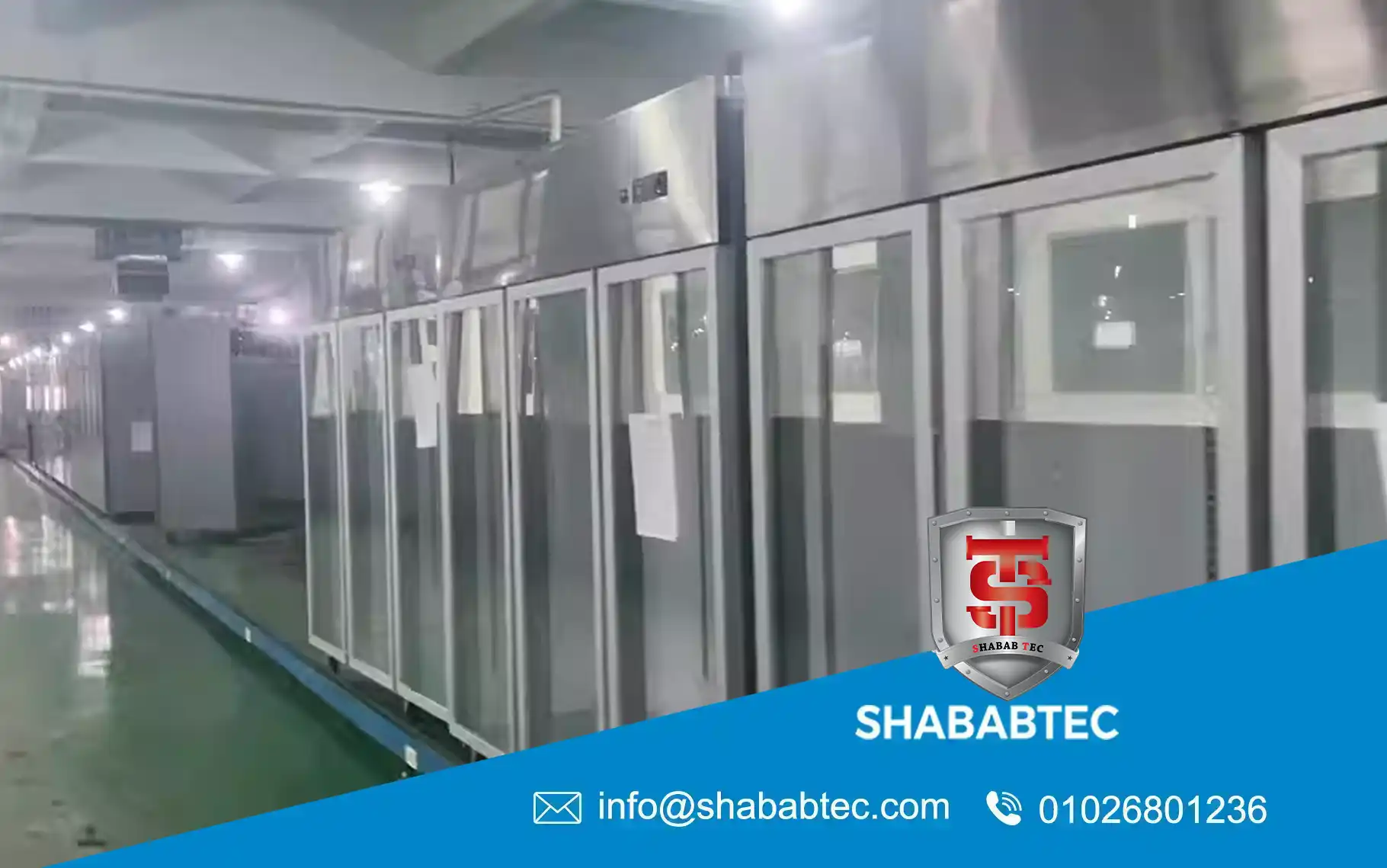
Air Showers & Airlocks
How Air Showers Remove Surface Particles
Air showers use high-velocity filtered air jets to dislodge particles from gowns, clothing, and surfaces prior to entry. This reduces particle load entering controlled zones
and supports improved clean room classification stability during active operations. Air showers are often used at entry points for pharmaceutical production and high-precision manufacturing areas.
Airlocks Pressure Stabilization Between Zones
Airlocks maintain pressure differentials between rooms and prevent contamination migration by enforcing staged door opening behavior. Interlocking logic ensures that only one door
opens at a time, stabilizing containment strategy. Airlocks are particularly important when designing clean room air conditioning system performance to maintain pressure cascade from cleaner to less clean zones.
Integrated Strategy Doors + Pass Boxes + Airlocks (GMP Workflow)
Effective contamination control depends on how people and materials move. A typical GMP workflow uses:
airlocks for personnel entry, pass boxes for material transfer, and correctly sealed doors to maintain the pressure cascade.
Combined with clean room continuous monitoring system practices (pressure, temperature, humidity, particle data where required), this integrated approach improves compliance and reduces deviation risk.
Integration With HVAC & Airflow Performance
Air Changes Per Hour (ACH) and Airflow Patterns
HVAC clean room system design begins with air volume and airflow pattern selection. Air Changes Per Hour (ACH) is a practical metric used to estimate how frequently
the room air is replaced or recirculated through filtration. Higher cleanliness requirements and higher process generation loads typically require higher ACH.
However, ACH should never be treated as a single number target without considering airflow pattern (unidirectional vs non-unidirectional), heat loads, occupancy,
equipment placement, and the required recovery time after disturbances.
In practice, airflow patterns must support consistent sweeping of particles toward returns without creating turbulence around operators or critical process points.
A clean room air filtration system is only as effective as the airflow distribution that carries particles to filtration. Poor diffuser placement can cause short-circuiting,
dead zones, and localized contamination risk—even if HEPA filters are correctly specified.
Pressure Differentials & Containment Strategy
Pressure differential management controls where air moves when doors open or small leakage occurs. A standard approach is a pressure cascade:
higher pressure in cleaner zones and lower pressure in adjacent less clean zones. This keeps leakage flow outward from cleaner rooms, reducing ingress risk.
In containment scenarios, the strategy may invert or use dedicated exhaust control depending on hazard profile.
Architectural integrity matters here: if doors and junctions are not sealed correctly, the HVAC system will struggle to maintain stable pressure.
That instability can trigger alarms, increase energy consumption, and compromise GMP confidence. For facilities that require continuous monitoring,
differential pressure sensors and alarm setpoints become part of the clean room monitoring system framework.
Reducing Turbulence and Dead Zones
Turbulence is a common hidden failure mode. It can lift settled particles, disrupt directional airflow, and increase particle counts at critical locations.
Typical contributors include sharp corners, protruding frames, poor equipment layout, and misaligned supply/return placement.
Hygienic arc corners and rounded connection profiles reduce geometric causes of local recirculation near boundaries.
A practical engineering approach is to coordinate the clean room envelope design with HVAC layout early:
define critical work zones, keep returns positioned to pull airflow away from sensitive processes, avoid obstructing supply jets with high equipment,
and ensure that door locations do not create frequent crossflows through critical areas.
Practical Notes for GMP & ISO Compliance
Compliance is built from repeatable performance and documentation discipline. For GMP and ISO alignment, a facility typically needs:
stable HVAC operation, verified filtration integrity, validated cleaning and disinfectant routines, defined personnel/material flow,
and monitoring where required (particles, pressure, temperature, humidity). The clean room system must be engineered to support this discipline:
flush surfaces for cleaning, sealed penetrations, stable pressure, and maintenance access that does not damage the envelope.
When companies apply clean room systems successfully, they treat the architectural envelope, HVAC, and monitoring as one controlled platform.
That is the core case for how companies apply clean room systems in regulated manufacturing: predictable airflow + predictable cleaning + predictable documentation.
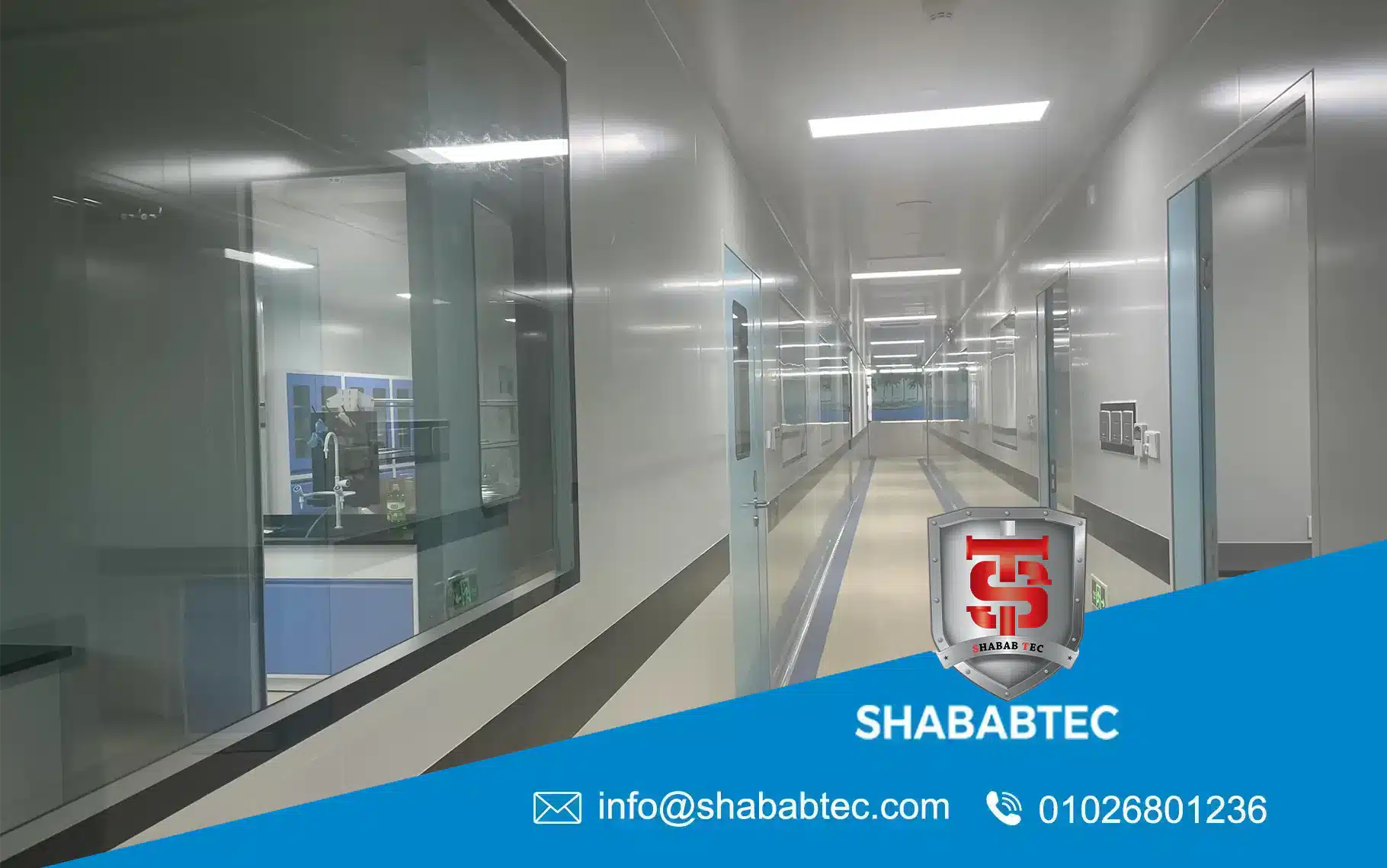
Turnkey Clean Room Solutions by Shababtec
Scope Design → Manufacturing → Supply → Installation → Commissioning
Shababtec delivers turnkey Clean Room System solutions as a manufacturer, supplier, and installation contractor. Turnkey scope reduces timeline and coordination risk by aligning:
engineering design, modular panel production, component supply (doors, windows, pass boxes, air showers), site installation, and commissioning readiness.
This approach supports faster project delivery and more consistent quality control across the Clean Room System envelope.
Single Point of Responsibility
A Clean Room System project is sensitive to interface failures—especially at junctions between disciplines (architecture, HVAC, electrical, monitoring).
Single point of responsibility reduces gaps and rework. Quality control is applied at the component level (panel manufacturing, cut-outs, profiles)
and at the installation level (alignment, sealing, finishing), supporting reliable pressure stability and cleanability.
Typical Project Workflow
- Requirements definition: target ISO class and GMP expectations, room functions, workflow, utilities, monitoring needs.
- Concept layout: zoning, pressure cascade, airlock positioning, material transfer points, equipment constraints.
- Engineering design: panel schedule, openings, ceiling layout, integration points for HEPA and services.
- Manufacturing: factory production of wall/ceiling panels, profiles, and pre-assembly where required.
- Installation: modular assembly, sealing, door and window integration, pass box and access system fit-up.
- Commissioning readiness: support for HVAC start-up coordination, integrity checks, and operational handover.
Our EPCM Clean Room Services
We provide end-to-end EPCM (Engineering Procurement, Construction
and Management) solutions for clean room projects:
Engineering: Complete design and engineering solutions tailored to your specific requirements and industry standards.
Procurement: Sourcing and supply of high-quality equipment, materials, and components from trusted manufacturers.
Construction: Professional installation and construction by our certified technicians with strict quality control.
Management: Full project management from concept to commissioning, ensuring on-time and on-budget delivery.
Industries Served
Pharmaceutical Manufacturing
Pharmaceutical facilities require Clean Room System environments that support contamination control strategy, pressure cascade stability, and repeatable cleaning performance.
Modular walls and ceilings provide flush surfaces and reliable sealing that helps maintain ISO classification targets in production and support areas.
Pass boxes and airlocks support defined personnel and material flow, while engineered cut-outs support HVAC terminal integration and future expansions.
Food & Beverage Processing
Food processing benefits from controlled hygienic zoning, reduced cross-contamination risk, and efficient logistics. Modular clean room systems allow fast installation
with minimal disruption and support future capacity growth. Smooth surfaces and hygienic junctions simplify cleaning regimes, supporting consistent hygiene performance
across high-traffic operational cycles.
Hospitals & Medical Laboratories
Hospitals and labs require stable pressure regimes, easy-to-clean interior surfaces, and controlled access for personnel and materials.
Vision windows improve supervision and reduce unnecessary door opening. Airlocks help maintain pressure stability between corridors and critical rooms.
Where monitoring is required, clean room monitoring system points can be integrated to support audit trails and operational alarms.
Why Choose Shababtec?
Local Manufacturing in Egypt + Faster Delivery
Local production enables improved delivery timelines, responsive customization, and reduced logistics risk. This helps projects meet deadlines without sacrificing
component quality and fit-up precision.
GMP-Oriented Hygienic Design
Rounded profiles, arc corners, flush panels, and controlled openings reduce hygiene risk points and support easy cleaning and sanitization. This hygienic architecture
is engineered to align with GMP expectations for cleanability and contamination prevention.
Modular Flexibility + Competitive Cost
Modular design provides expansion capability and reduced downtime for future changes. Cost efficiency comes from factory precision, faster installation, and reduced rework,
while maintaining structural durability and hygiene performance.
Experience Across Egypt (and GCC readiness)
Shababtec combines proven execution in Egypt with the capability to support projects across GCC markets such as Saudi Arabia.
This supports consistent standards and scalable delivery for regional operations.
Clean Room System Cost
What Affects Clean Room Pricing? (Area Class Materials HVAC)
Clean room system cost is determined by the total scope and performance requirements. Key cost drivers typically include:
total area and ceiling height, target ISO class, wall and ceiling material selections (steel vs stainless, PU vs EPS),
number and type of access components (doors, windows, pass boxes, air showers), and the clean room HVAC system design requirements
(air volume, filtration stage, terminal HEPA quantity, control strategy, and monitoring points).
Cost is also influenced by complexity: number of rooms, pressure cascade design, airlock count, penetrations, service integration density, and required commissioning support.
For facilities requiring continuous monitoring, additional sensors, data logging, and alarm integration can be part of the clean room monitoring system scope.
Modular vs Traditional Cost Comparison
A fair comparison includes both direct construction cost and lifecycle impact. Modular systems often reduce on-site labor time, limit delays, and lower rework risk.
They also provide future flexibility: the ability to reconfigure or expand can reduce the cost of future projects compared with demolition and rebuild typical of traditional construction.
Traditional construction may appear lower in early line items but frequently increases timeline risk and maintenance complexity.
How to Get an Accurate Quote (Data Checklist)
The fastest way to receive an accurate proposal is to send a focused data package. Use the checklist below to reduce back-and-forth and get a clear cost baseline.
| Quotation Data Checklist | What to Provide |
|---|---|
| Layout and room list | Sketch or drawing with dimensions, heights, and room functions |
| Target cleanliness | Target ISO class and GMP expectations (if applicable) |
| Access points | Door count and sizes, window locations, airlocks, pass boxes |
| Material preferences | Steel vs Stainless 304, PU vs EPS, finish requirements |
| HVAC assumptions | Airflow pattern intent, ACH range, pressure cascade, heat loads |
| Monitoring requirements | Pressure, temperature, humidity logging, particle monitoring needs |
FAQ
What is a clean room system?
A clean room system is a controlled environment that limits airborne particles and contaminants within defined thresholds using a sealed architectural envelope
(walls, ceilings, doors, windows, junction profiles) integrated with a clean room HVAC system that controls airflow, filtration, temperature, humidity, and pressure differentials.
What are the different types of cleanrooms?
Cleanrooms are commonly described by airflow pattern and purpose: non-unidirectional (mixed airflow) cleanrooms, unidirectional (laminar) cleanrooms for higher criticality,
and specialized controlled environments such as gowning rooms, airlocks, sterile suites, and containment rooms. The correct type depends on process risk, ISO class target, and workflow design.
What are the ISO 5 cleanroom standards?
ISO 5 is a high-cleanliness classification under ISO 14644. It requires very low airborne particle concentration limits and is used for high-criticality operations such as sterile processing
and sensitive pharmaceutical steps. Achieving ISO 5 typically requires high-grade HEPA filtration, strong airflow uniformity, and strict operational discipline.
What is the clean room method?
The clean room method is the combination of engineering controls and operating discipline used to prevent contamination:
sealed hygienic envelope, controlled airflow and filtration, defined personnel and material flow, validated cleaning procedures, and monitoring for key parameters such as pressure and particle levels when required.
What is ISO 7 Clean Room System?
ISO 7 is a common controlled environment classification used for many pharmaceutical and medical manufacturing support areas.
It is less strict than ISO 5 but still requires controlled filtration, airflow management, and operational discipline to maintain stable particle limits during use.
What are 5 benefits of a clean environment?
Key benefits include: reduced contamination risk, improved product quality consistency, better regulatory compliance readiness, reduced deviation and rework costs,
and improved process stability through controlled temperature, humidity, and airflow conditions.
What is the ISO standard for a clean room?
ISO 14644 is the primary international standard family that defines cleanroom classification and testing related to airborne particle concentration.
Cleanroom design and operation may also reference GMP guidelines depending on the industry and regulatory environment.
What is a class 4 Clean Room System?
“Class 4” is sometimes used informally or in non-ISO frameworks. In ISO terminology, cleanrooms are classified as ISO 1 through ISO 9.
If a project mentions “class 4,” it should be clarified whether they mean ISO 4 or another legacy classification system before engineering the clean room system.
What are the four categories of cleaning?
In many hygiene programs, cleaning categories can be grouped as: dry cleaning, wet cleaning, disinfection/sanitization, and deep cleaning with periodic detail work.
The correct program depends on process risk, materials, and GMP expectations.
What is a class 10 cleanroom?
“Class 10” is a legacy Federal Standard 209E term and roughly aligns with a very high-cleanliness level.
Modern projects should map legacy “Class 10” requirements to ISO 14644 classification to avoid ambiguity and ensure correct testing criteria.
What are the 5 most popular ISO standards?
In cleanroom contexts, commonly referenced ISO 14644 parts include classification by particles, monitoring/testing methods, and operational guidance.
Outside cleanrooms, “popular ISO standards” varies by industry, so projects should list which ISO standards are required for their compliance scope.
Is ISO class 5 or 7 better?
ISO 5 is cleaner than ISO 7 (stricter particle limits). “Better” depends on process need: ISO 5 is required for high-criticality sterile operations,
while ISO 7 is suitable for many support and preparation areas. The correct choice is based on contamination risk and regulatory expectations.
What are the 7 steps in the 7 step cleaning process?
A typical structured process includes: preparation, dry removal of debris, detergent cleaning, rinsing (when applicable), disinfection/sanitization, drying,
and documentation/verification. Exact steps vary by facility SOPs and validation requirements.
What is ISO 8 Clean Room System classification?
ISO 8 is a controlled environment classification used for less critical areas where clean conditions are still needed.
It typically requires filtration and airflow management but at lower stringency than ISO 7 or ISO 5. Many packaging and controlled support areas operate at ISO 8 depending on risk assessment.
What is the air pressure in a cleanroom?
Cleanroom pressure is set based on containment strategy and zoning. Many facilities use a positive pressure cascade from cleaner rooms to adjacent less clean rooms,
while containment rooms may be negative relative to surrounding areas. The exact differential is engineered to maintain directional airflow during door operations and leakage events.
What is L1, L2, L3, and L4 engineer?
These labels are often organizational levels for engineering support (Level 1 through Level 4) and can vary by company.
In cleanroom projects, it usually relates to escalation tiers for maintenance, troubleshooting, and validation support rather than a universal cleanroom standard definition.
What are the 5 basic cleaning principles?
Common principles include: clean from top to bottom, clean from cleanest to dirtiest zones, use correct chemical concentration and contact time,
avoid recontamination by using proper tools and PPE, and document/verify results as required by GMP.
What are the types of clean rooms?
Clean rooms can be categorized by ISO class, airflow type, and application: pharmaceutical sterile rooms, laboratory clean areas, electronics assembly cleanrooms,
food hygienic zones, gowning and airlock areas, and modular controlled corridors. The correct type is defined by risk, workflow, and compliance scope.
Conclusion
Shababtec delivers modular clean room systems engineered for hygiene, airflow performance, and operational flexibility—manufactured locally in Egypt and ready for GCC execution.
From partition walls and ceilings to doors, pass boxes, air showers, airlocks, and hygienic profiles, each component is designed to support GMP-aligned controlled environments
for pharmaceutical manufacturing, food processing, hospitals, and medical laboratories.